

OSH Campaign
Integrating OSH into Indonesian micro, small and medium enterprises
Occupational safety and health (OSH) is often poorly managed in micro, small and medium enterprises (MSMEs), causing greater risk of workplace accidents and work-related ill health. As part of its 2018 OSH campaign, the ILO conducted a mini business clinic to help Indonesian MSEs building productive, safe and healthy businesses.
31 August 2018
Micro, small and medium enterprises (MSMEs) are an important part of a nation’s activities, including Indonesia. However, due to the deficits in both human and financial resources, MSMEs tend to have higher rates of work-related accidents and diseases.
“Maximizing the productivity and competitiveness of MSMEs is one of the ILO programmes in Indonesia, conducted through its Sustaining Competitive and Responsible Enterprises (SCORE) Project. OSH is an important part of the productivity and competitiveness as good OSH is good for business, linked to improved performance and profitability,” stated Januar Rustandie, the ILO-SCORE Project Manager in his opening remarks.OSH is an important part of the productivity and competitiveness as good OSH is good for business, linked to improved performance and profitability."
Januar Rustandie, the ILO-SCORE Project Manager
The SCORE training packet has five modules with OSH module as the fifth module. The other four modules cover workplace cooperation, quality management, productivity through clean production and workers’ productivity.
The business clinic presented two professional business coaches: Jeff Kristianto, the ILO-SCORE certified global trainer and executive director of BEDO, a non-profit organization aimed to support SMEs and Budi Utoyo, the founder of Smart Entrepreneur Coaching. These two professional coaches provided insights and advices as well as shared best practices and practical guidelines regarding productivity and OSH related issues.Work-related accidents or diseases are very costly and can have many serious direct and indirect effects on lives of workers and their families. For small business, the cost of even one accident can be a financial disaster."
Jeff Kristianto, the ILO-SCORE certified global trainer and director executive of BEDO
Coach Jeff reminded the participating MSMEs about the importance of OSH as most MSMEs still not consider OSH as a priority and are still think implementation of OSH as expenses. He also presented five key safety issues that should be taken into account MSMEs: Welfare and well-being, fire safety, electrical safety, machine guarding and chemical hazards.
He also showcased costs that should be borne the MSMEs as a result occupational accidents or work-related diseases. “Work-related accidents or diseases are very costly and can have many serious direct and indirect effects on lives of workers and their families. For small business, the cost of even one accident can be a financial disaster,” he said.MSMEs are still lacking of business action plan and system. By having an action plan and system, including for OSH, MSMEs can easily identify their business conditions, things that should be improved and ways to expand."
Budi Utoyo, the founder of Smart Entrepreneur Coaching
Meanwhile, Coach Budi provided insights on how to manage and improve business and OSH management. He emphasized the importance of developing a business action plan as well as building a business system. “MSMEs are still lacking of business action plan and system. By having an action plan and system, including for OSH, MSMEs can easily identify their business conditions, things that should be improved and ways to expand,” he explained.
Faisal Hani, a food business owner, said that his workers were still reluctant to use safety gears. “This is an eye opener for me as OSH prevention and action should be involved and developed by both employers and workers. I would focus on developing the sense of ownership to OSH related issues and how it would benefits not only employers but also workers,” he said.This is an eye opener for me as OSH prevention and action should be involved and developed by both employers and workers."
Faisal Hani, a food business owner
As an owner of internet café, Erni Yurlalita has a new awareness on electrical safety. “From the images and videos shown during the event, I realize the urgency of fire and electrical safety. I just learnt that it only around 40 seconds for fire to turn everything into ashes. I also learnt about the safer ways in placing electrical cables, plugs and other devices,” she added.
During the event, best practices on OSH from the ILO-SCORE project were also shared. After joining the programme, the SCORE participating companies have shown improvements, among others, on reduced number of occupational accidents, better quality control, energy safe, reduced number of absenteeism, improved product quality and so forth.From the images and videos shown during the event, I realize the urgency of fire and electrical safety. I just learnt that it only around 40 seconds for fire to turn everything into ashes. I also learnt about the safer ways in placing electrical cables, plugs and other devices."
Erni Yurlalita, an owner of internet café
SCORE is designed to enhance productivity and competitiveness of small and medium enterprises (SMEs). Launched in Indonesia in 2010 and initially led by the ILO, the Programme has now become a tripartite programme, implemented together by government, workers’ organizations and employers’ organizations.
Related content
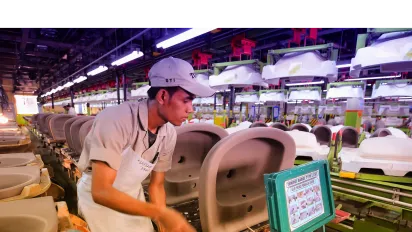
Sustaining Competitive and Responsible Enterprises (SCORE) Project - Phase III

OSH Campaign
ILO Mini Business Clinic: Building Productive, Safe and Healthy Businesses for Indonesian Small and Medium Enterprises
Relevant projects
Sustaining Competitive and Responsible Enterprises (SCORE) Project - Phase III