

Press release
Indonesia launches its five-year national occupational safety and health programme 2024-2029
The Ministry of Manpower, supported by the ILO, is launching the second National Occupational Safety and Health (OSH) Programme for the 2024-2029 period. The OSH programme marks Indonesia's commitment to build a resilient OSH culture in pursuit of its national development goals to achieve Decent Work for all, and many targets under the Sustainable Development Goals 2030.
25 April 2024
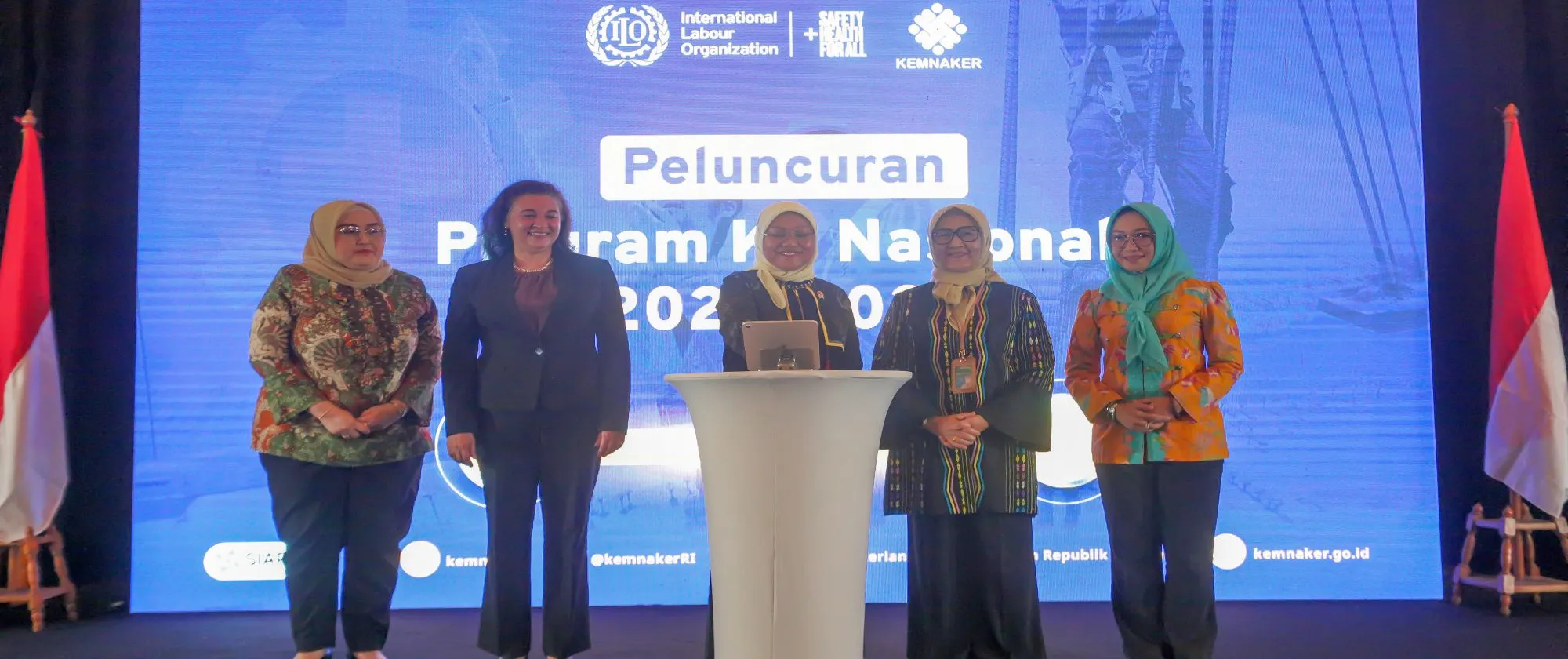
JAKARTA, Indonesia (ILO News) – The Ministry of Manpower, in collaboration with the International Labour Organization (ILO) Country Office for Indonesia and Timor-Leste launched the National Occupational Safety and Health (OSH) Programme 2024-2029 today (25/04) in Jakarta under the auspices of Ida Fauziyah, Minister of Manpower. The launch was witnessed by over 1,000 participants from across Ministries, agencies, ILO and OSH stakeholders.
This strategic and time-bound document is a key component of the comprehensive National OSH Profile 2022 framework which aims at continuous OSH improvement. The Programme provides stakeholders with clear objectives, targets, and indicators to independently and collaboratively implement OSH programmes to achieve the primary target of reducing the number of occupational accidents by at least 10 per cent from the current 298,137 cases in 2022 per year.
“This national OSH programme expresses our collective commitment involving collaboration between ministries and agencies as well as all relevant OSH stakeholders, to enhancing the implementation of OSH at the national level, thereby making a more substantial contribution to our nation's development,” applauded Minister Ida.
The second national OSH programme has been developed in alignment with the National Medium-Term Development Plan (RPJMN) 2025-2029, making it a crucial tool in advancing the nation's development priorities of inclusive economic growth, sustainable development, and social welfare. It also sets out the challenges and opportunities based on current trends in employment and the OSH dynamics that need to be anticipated in the next five years, including changing demographics of the Indonesian labour force, digitalization enhancement, information and communication technology, nanotechnology, automation and robotics, changes in work patterns, and the emerging challenges of climate change.
The programme outlines five key strategies for addressing OSH challenges in Indonesia, including strengthening and shaping the OSH legal framework, OSH culture and norms enforcement, OSH resource capacity, OSH reporting system and information management, and OSH coordination, synergy and collaboration.
Simrin Singh, ILO's Country Director for Indonesia and Timor-Leste, expressed the ILO's continuous commitment to support the Indonesian Government in its implementation, monitoring and evaluation. “The National OSH Programme 2024–2029 effectively coordinates the efforts of the Indonesian government, employers' associations, trade unions and other stakeholders to create a resilient OSH culture and promote OSH implementation across various sectors, from industry to micro and small businesses, the informal economy, and the rural sector,” said Simrin.
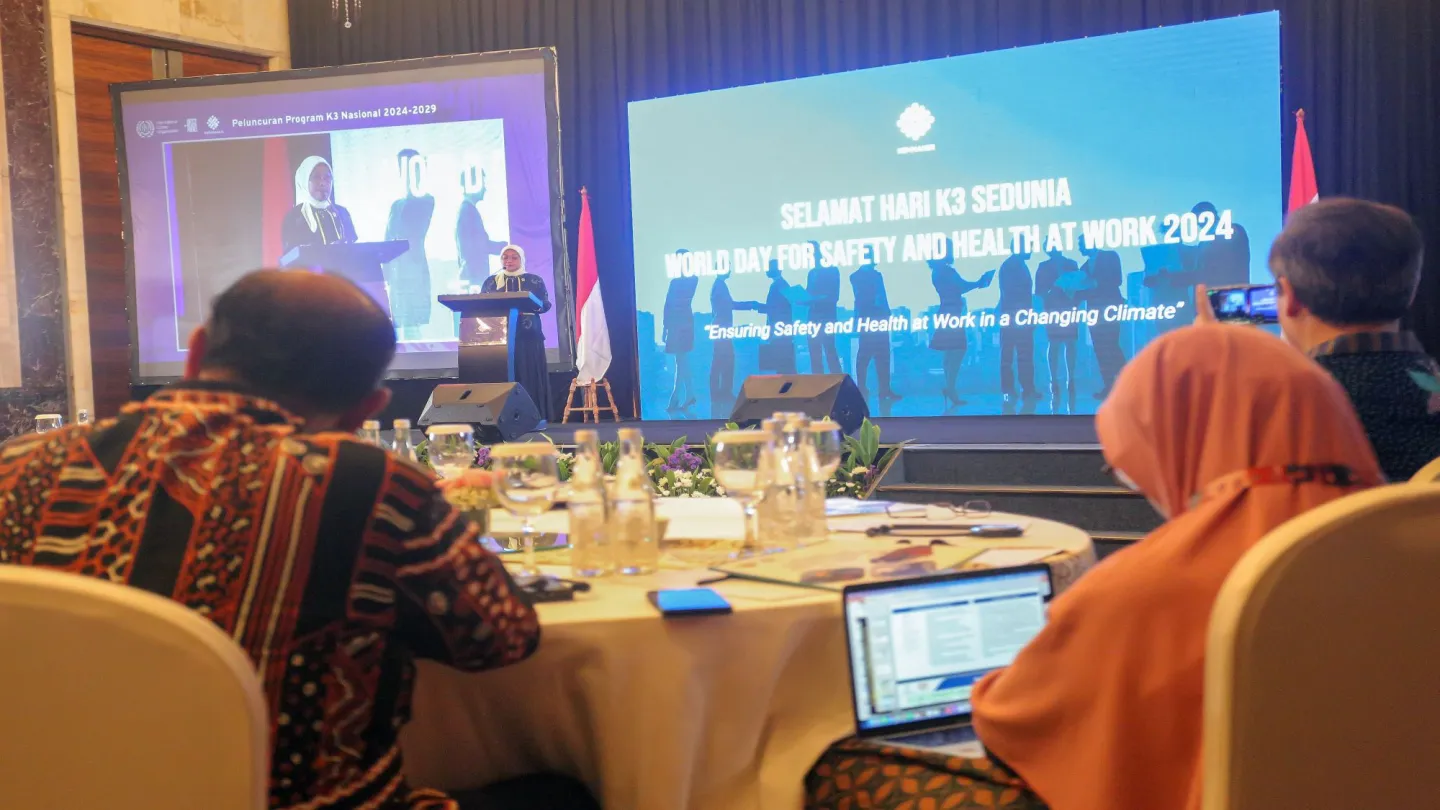
The launch ceremony was followed by a discussion on strengthening OSH culture in anticipating the impact of climate change through the national OSH programme. The discussion stems from this year's theme of the World Day of Safety and Health 2024 on the impacts of climate change on OSH, commemorated on the 28th of April
The discussion echoed the alarming findings of a new ILO report on the impact of climate change on workers’ safety and health, while also identifying approaches to take for developing integrated OSH programs as outlined in the second strategic action of the National OSH Programme on fostering the OSH culture, implementing improved inspection and enforcing OSH norms.
For more information, please contact:
Gita F. Lingga
Senior Communication and Information Management Assistant
[email protected]
Adelin Alexandra
Private Liaison and Partnership-Building Officer for Workers Rights Project
[email protected]
Related content
Improving Workers' Rights in the Rural Sectors of the Indo-Pacific
Relevant projects
Workers' rights in rural sectors
Improving Workers' Rights in Rural Sectors of the Philippines

Workers' rights in rural sectors
Improving Workers’ Rights in Rural Sectors of Indonesia