

ILO's groundbreaking afforestation project in Kurdistan Region of Iraq boosts sustainable development and decent work
The initiative, funded by the Government of the Netherlands under the PROSPECTS Partnership, aims to address climate challenges and create over 700 short-term jobs for local Iraqis, internally displaced persons (IDPs), and Syrian refugees.
17 November 2023
Dohuk, Kurdistan Region of Iraq (ILO News) - The International Labour Organization (ILO) and the Directorate of Environment in Duhok launched the largest afforestation project ever carried out in the Kurdistan Region of Iraq, at a site just outside the city of Duhok—an area that has witnessed consistent deforestation, leading to rocky landscapes and sparse shrub cover.
Governmental and international partners, including the Governor of Duhok, Dutch embassy officials, the Directors of Technical Directorates, the Director of Duhok Municipality, and representatives from local Trade Unions, attended the event, highlighting the collaborative efforts to tackle climate change and promote sustainable development and Decent Work principles across the region.
“I am delighted to announce the continued progress of the forestation intervention in Duhok. Our initiative aims to plant thousands of trees, covering an impressive 250,000 square meters in Duhok,” said Governor of Duhok Ali Tatar. “I extend my gratitude to the Government of the Netherlands, the International Labour Organization, and the Presidency of the Municipality of Dohuk, along with the invaluable support from the Environment and Irrigation directorates and all other dedicated partners involved for their collective commitment and collaboration in this crucial endeavour.”
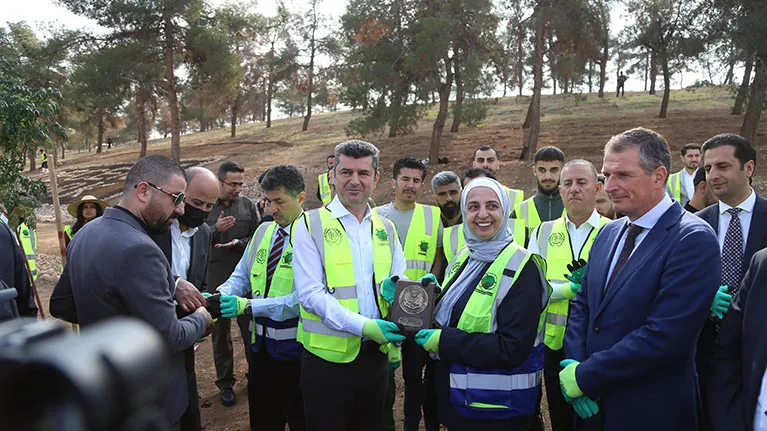
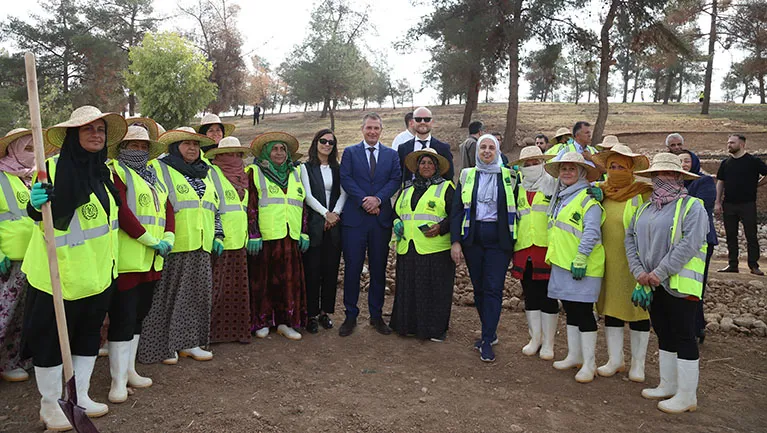
The initiative, funded by the Government of the Netherlands under the PROSPECTS Partnership, sets out to address climate challenges while simultaneously generating over 700 short-term jobs for local Iraqis, internally displaced persons (IDPs), and Syrian refugees residing in the area. Thirty percent of these employment opportunities will be specifically directed towards female workers. The project is part of the implementation of a series of green work activities integrated into the ILO’s Employment Intensive Investment Programme (EIIP). Functioning as an entry point, it aims to improve local infrastructure through Local Resource-Based methods and to create decent jobs.
“This project is exemplary for the PROSPECTS approach in Iraq,” said Jacob Wiersma, Chargé d'affaires, Embassy of the Kingdom of the Netherlands in Iraq. “ILO supports forcibly displaced people to generate a livelihood, while at the same time targeting the issue of climate change through regreening and working with trade unions on decent work principles. We aim to continue this work with ILO, PROSPECTS partners and authorities in Dohuk in the future.”
The ILO will support the Directorate of Environment in Duhok to implement afforestation interventions covering an area of 100 donums (equivalent to 0.25 sq.km), planting and irrigating 12,000 trees over a period of six months. Building upon the success of the ILO's established model for creating decent jobs for host communities and displaced persons, the agency is set to expand its green works interventions spanning the Kurdistan Region of Iraq (KRI) and the broader Iraqi landscape. This comprehensive approach includes targeted efforts to tackle climate change challenges, enhance irrigation systems for local farmers, and devise lasting solutions for solid waste management.
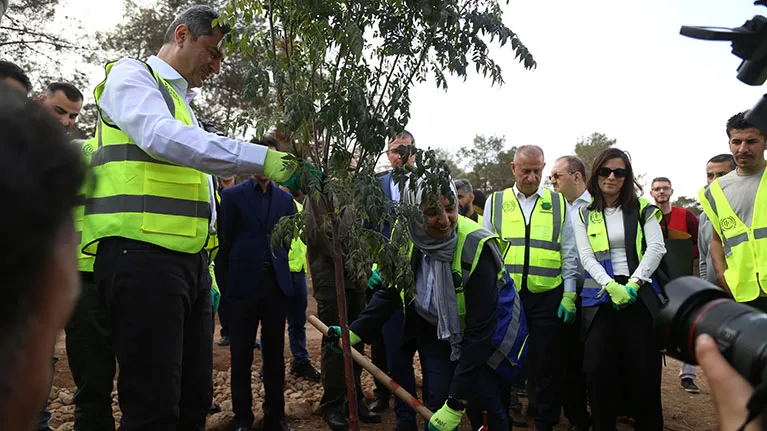
“We are extremely proud of launching this historic initiative with our local partners in Duhok,” said Maha Kattaa, ILO Country Coordinator in Iraq. “This project aligns with various crucial aspects for the ILO in the region and in Iraq: sustainable development, economic empowerment, environmental conservation, and the creation of decent jobs. Climate change and environmental degradation are already disrupting millions of jobs and livelihoods. Focusing on the creation of green jobs can change this. Countless opportunities are on the horizon to stimulate the economy and enhance the quality of working lives in the KRI, Iraq, and beyond through employment intensive investment programme that incorporate climate action.”
The Trade Unions in Duhok are also set to play a vital role in integrating decent work principles, fostering awareness among workers, and empowering them through unionization processes.
“This marks our inaugural engagement with international agencies in workplace settings,” said Sadeeq Hassan, Kurdistan Workers Unions Coordinator in Duhok. “Since 2021, we have been incorporating principles of decent work into ILO infrastructural projects in KRI. Our responsibilities encompass offering expertise on labor laws and rights, as well as enhancing working conditions at construction sites.”
The project is anticipated to have a positive impact on the environment, addressing the alarming rise in pollutants such as Nitrogen dioxide (NOx) and contributing to the broader goal of tackling climate change in the region.
According to the World Bank, Iraq stands as one of the most vulnerable countries to climate change shocks, facing challenges both in financial and physical terms, including rising temperatures and water scarcity. Over the last decade alone, its carbon emissions have more than doubled. The nation grapples with one of the highest levels of carbon intensity (emissions per GDP) compared to its regional and income peers. Almost three-quarters of the country’s emissions are linked to the electricity, oil and gas operations, and transport sectors.
Relevant projects

ILO-Netherlands Partnership
Partnership for improving prospects for forcibly displaced persons and host communities (PROSPECTS) in Iraq
Programme
Partnership for improving prospects for forcibly displaced persons and host communities (PROSPECTS)