

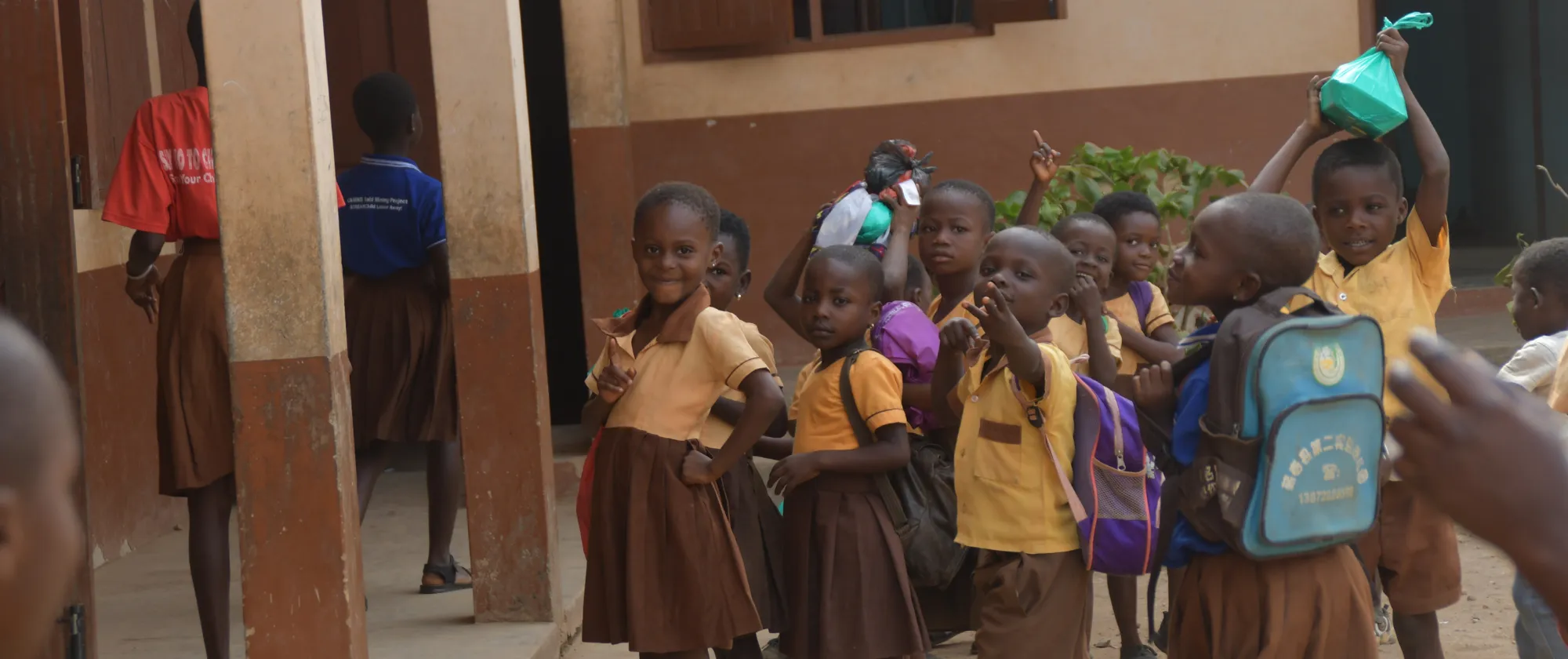
ILO’s GALAB project trains social services in Ghana to address child labour and forced labour
13 October 2024
The GALAB Project has strengthened the capacity of local officials in Ghana to prevent and address child labour. The training equipped participants with strategies for prevention and integration of child protection into development plans. The newly formed Project Advisory Committee will play a crucial role in monitoring and supporting implementation at the local level.
Accra, Ghana - The GALAB Project recently organised a three-day training workshop for 19 members of the social services sub-committee from the Pru East District Assembly in Ghana's Bono East Region. The training addressed key issues, including the project’s objectives, the role of district and community stakeholders, and the mandate of the newly formed Project Advisory Committee. Participants learnt about strategies for integrating child labour and forced labour concerns into local socio-economic development programmes.
The 19 participants received guidance on strategies for integrating child labour and forced labour issues into local socio-economic development programmes. The training aimed to build the capacity of government agencies, community organisations, and social services to mainstream child labour and forced labour prevention into their annual action plans and long-term development strategies. On the final day, the District Director of the Commission for Human Rights and Administrative Justice (CHRAJ) officially inaugurated the Project Advisory Committee, which will play a key role in monitoring and supporting the project’s implementation at the district level.
Empowering stakeholders for a child labour-free future
The training sessions are part of a broader effort to engage government departments and agencies at various levels to build their capacity on addressing forced labour and child labour. By mapping existing agencies with child protection responsibilities, developing specific action plans, and revising existing child labour monitoring systems, GALAB aims to ensure sustainability and effectiveness in addressing these critical issues.
"Some community members engage in child labour unknowingly," explains Ramseyer Ahmed, District Director of Health Services, Ghana Health Service, Pru East District. "By educating and collaborating with them, we can increase understanding and reduce these practices."
This workshop marks a significant step in empowering local stakeholders to address child labour and forced labour in the Pru East District. The training not only enhanced participants' understanding of these issues but also laid the foundation for integrating child protection efforts into district and regional development plans. The newly established Project Advisory Committee will ensure ongoing collaboration and sustainability in the fight against child labour and forced labour in the region.
This comprehensive approach contributes to Ghana's efforts to eliminate child labour and forced labour, aligning with the national plan of action against child labour. By empowering stakeholders and fostering collaboration, GALAB is making a tangible impact in creating a child labour-free future.
About GALAB Project
The Global Accelerator Lab (GALAB) project, funded by the United States Department of Labour (USDOL) with a total budget of $13.4 million, is a major component of the International Labour Organization's (ILO) 8.7 Accelerator Lab initiative. It addresses the critical issue of child labour, a key barrier to achieving Sustainable Development Goal (SDG) Target 8.7 on decent work and economic growth.
The GALAB project operates on a global scale, fostering collaboration and knowledge sharing across regions. Through targeted interventions in several countries (Brazil, Democratic Republic of Congo, Ghana, Malaysia, Mauritania, Nigeria and Somalia) and regions (Africa, Asia and Latin America and the Caribbean), the project also delivers impactful results at the global, regional and national levels.