

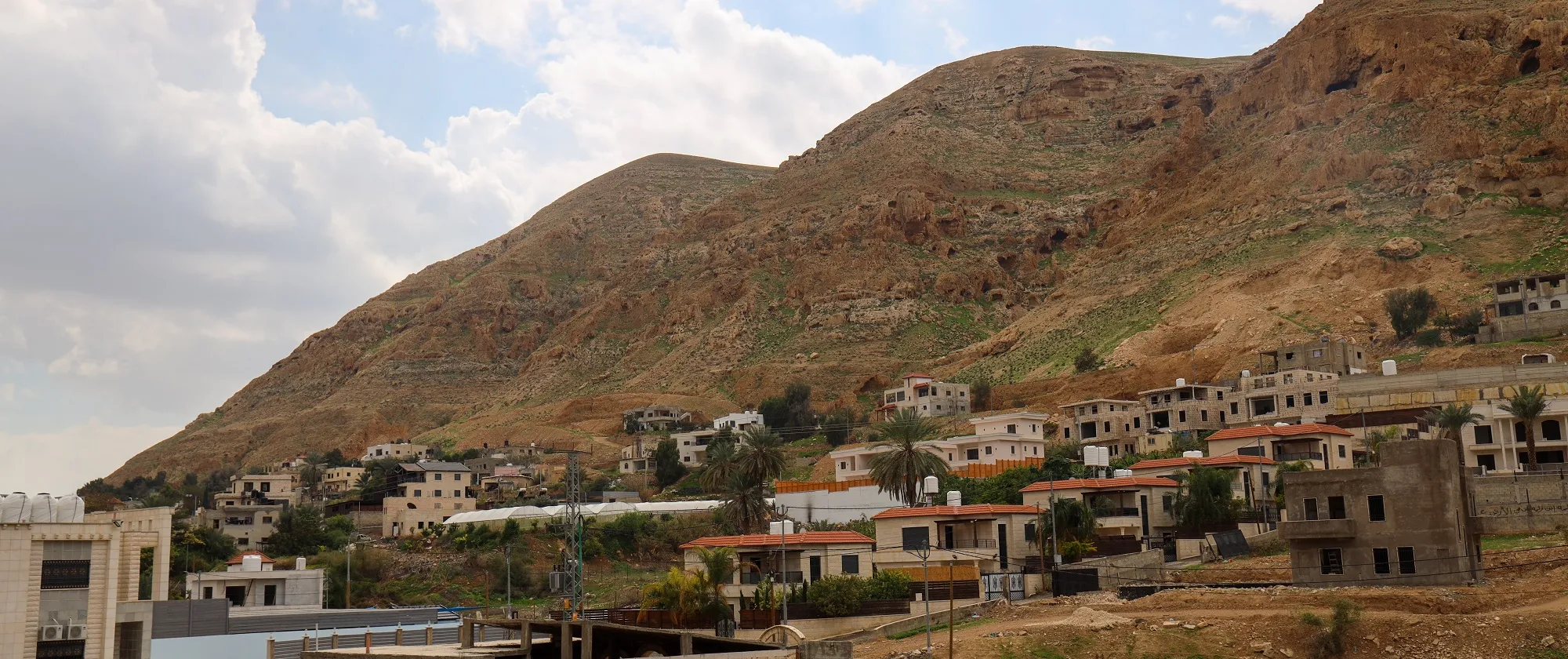
ILO assessment
ILO warns of deepening employment and livelihood crisis in the West Bank due to two-year war in Gaza
New brief highlights severe economic contraction, rising unemployment and worsening living standards for Palestinian workers, families and communities.
27 October 2025
BEIRUT (ILO News) – The International Labour Organization (ILO) has released a new brief analysing the impact of the two-year war in Gaza on the West Bank’s economy and labour market. The findings reveal a sharp deterioration in livelihoods, with rising unemployment, declining incomes and deepening poverty for Palestinians across the Occupied Palestinian Territory.
The brief - The two-year war in Gaza: Impacts on employment and livelihoods in the West Bank (Bulletin No. 6) - is the latest in a series published by the ILO and the Palestinian Central Bureau of Statistics. The series monitors the consequences of the recent crisis since its onset two years ago on the Palestinian labour market in Gaza and the West Bank, including East Jerusalem.
Following the ceasefire announcement, it is evident that two years of war have left deep economic scars and lasting labour market disruptions across the Occupied Palestinian Territory.
Although the two-year war has had devastating social, humanitarian and economic impacts on Gaza, its consequences have spilled over into the West Bank, where the intensification of Israeli movement restrictions – including more than 800 checkpoints and gates – has disrupted daily economic life, limiting access to jobs, markets and services. At the same time, a surge in Israeli settler violence, the destruction of parts of Palestinian refugee camps, and the approval of new Israeli settlement construction have further undermined political, economic and social stability and a path toward the two-state solution. Additional pressures on the West Bank stem from Israel’s revocation of Palestinian work permits for employment in Israel in the aftermath of 7 October, its withholding of Palestinian customs revenues (taxes and fees that Isarel collects on Palestinian imports and exports on behalf of the Palestinian Authority, per the Paris Protocol), and the ongoing Israeli Shekel liquidity crisis which has strained the financial system and weakened business activity.
The bulletin reports that the impact of the two-year war and accompanying restrictions have caused real gross domestic product (GDP) in the Occupied Palestinian Territory as a whole to fall by 29 per cent between the first quarters of 2023 and 2025, with the West Bank, including East Jerusalem, marking a 17.1 per cent contraction. While the West Bank registered modest growth of 9.9 per cent in the first quarter of 2025 compared to the same period in 2024, output remained significantly below pre-war levels. The situation worsened again from the second quarter of 2025, driven by the Israeli currency liquidity crisis, the escalation of regional conflict in June, and intensified Israeli restrictions across the West Bank.
Unemployment in the West Bank reached 31.7 per cent for men and 33.7 per cent for women in the first quarter of 2025. The bulletin also highlights a marked decline in living standards, with real per capita income in the West Bank dropping by more than 20 per cent compared to 2023. Projections for the full year of 2025 indicate an expected further deterioration of the labour market situation in the West Bank, with overall unemployment expected to reach 38.5 per cent, affecting approximately 363,500 individuals.
“These latest findings are a stark reminder of how the two-year war in Gaza has also severely impacted the West Bank, where it has undermined Palestinian livelihoods and businesses, the labour market and the overall economy,” said ILO Regional Director for Arab States Ruba Jaradat. “Immediate and coordinated measures are needed in the context of the ceasefire to sustain jobs and businesses, support incomes and strengthen social protection. At the same time, long-term structural reforms and international support to the Palestinian Authority’s recovery efforts are critical to building inclusive and sustainable resilience.”
The series of bulletins monitors the impact of the crisis and provides evidence-based analysis to support policy responses and inform recovery strategies. It tracks trends in employment and labour market conditions, providing analysis to inform responses to immediate challenges and longer-term recovery needs for the State of Palestine.
Related content
ILO Brief
The two-year war in Gaza: Impacts on employment and livelihoods in the West Bank - October 2025
Country Portal
State of Palestine