

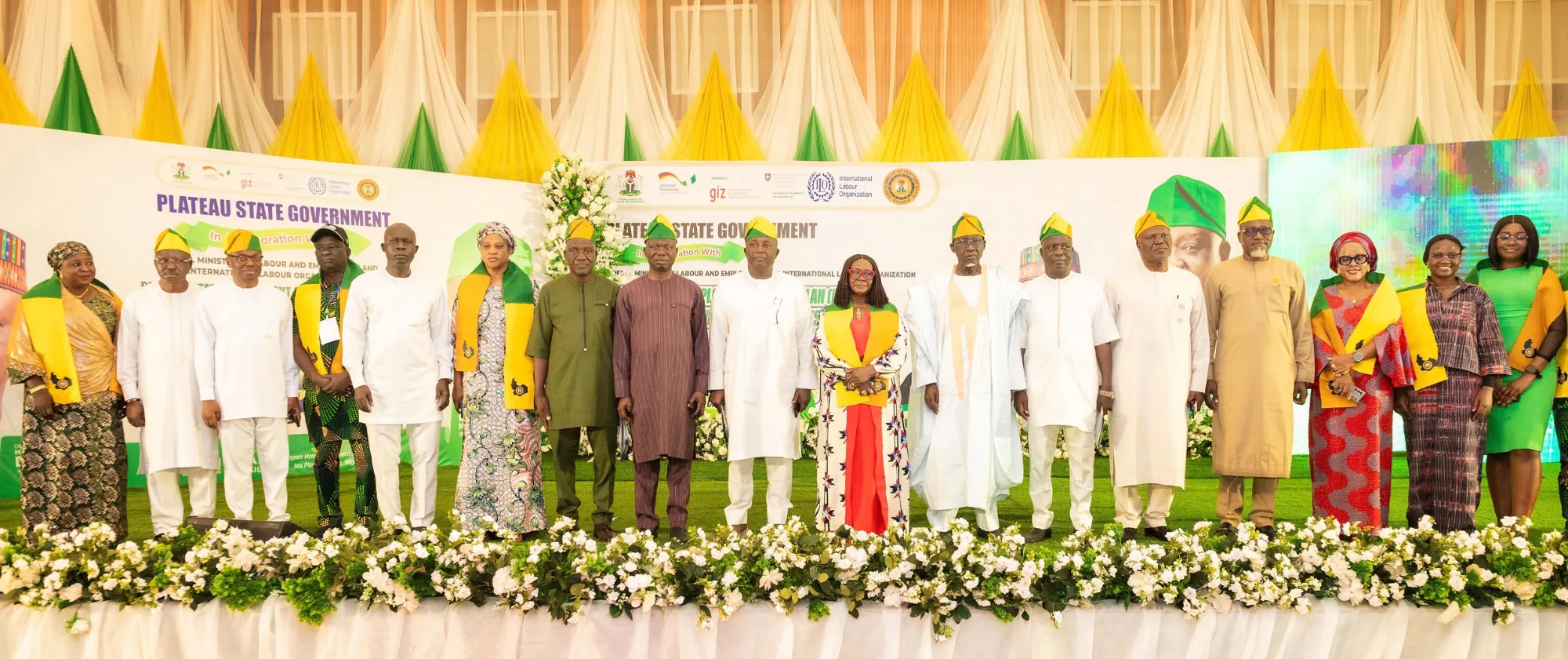
ILO Supports Employment Reforms in Enugu and Plateau States
New employment frameworks in Enugu and Plateau States connect young Nigerians to skills, enterprise support, and job opportunities, while strengthening coordinated pathways towards decent work nationwide.
2 September 2026
ABUJA – For young Nigerians seeking their first job, acquiring skills, or trying to grow a business, finding the right support can be as challenging as finding the opportunity itself. Enugu and Plateau States are taking steps to close these gaps by bringing skills development, enterprise support, employment services, and labour-market opportunities into a more coordinated system.
With support from the International Labour Organization (ILO), both states have validated State Employment Action Plans and inaugurated State Employment Councils (SECs), translating Nigeria’s National Employment Policy 2025 into practical state-level action. The two engagements took place in Enugu on 18 August and in Jos on 1st September 2026
The reforms connect people more effectively to skills development, enterprise support, employment services, and job opportunities - particularly young women and men. Through stronger coordination among government, employers, workers and other stakeholders, young people should have clearer pathways from education and skills training into jobs or entrepreneurship, while enterprises gain better access to relevant skills and coordinated support.
In Enugu, Prof. Chidiebere Onyia, representing Executive Governor Dr. Peter Ndubuisi Mbah, reaffirmed the State Government’s commitment to tackling unemployment, attracting investment, and expanding economic opportunities. “This is an opportunity to build a sustainable framework for tackling unemployment and expanding economic opportunities,” he said.
In Plateau, Deputy Governor Josephine Piyo and Head of Service Mr. Stephen Gadong similarly stressed the importance of coordinated government action to improve employment outcomes and create opportunities for citizens.
At federal level, the Honourable Minister of Labour and Employment, Dr. Muhammadu Maigari Dingyadi, emphasized that decent work goes beyond earning an income: it provides dignity and economic independence. His message stressed that success depends on creating sustainable jobs, enterprise growth and expanded opportunities for women and young people. In Enugu, Permanent Secretary Dr. Kamil Shoretire, representing the Minister, reinforced this message, highlighting successful school-to-work transitions and sustainable employment as important measures of progress.
Delivering a message on behalf of Ms. Vanessa Phala, Director of the ILO Country Office for Nigeria, Ghana, Liberia and Sierra Leone, and Liaison Office for ECOWAS, Aisha Dirisu, National Project Coordinator for SEESIN Project stressed that stronger institutions and coordination must ultimately translate into better lives. “The ultimate measure of success will be improved employment outcomes, particularly for young women and men.”
The Employment Councils bring government together with employers’ and workers’ representatives and other stakeholders, placing social dialogue at the centre of implementation. Their priorities include agro-value chains and rural economic transformation, digital and creative industries, informal and micro-enterprise development, and stronger alignment between youth skills and Technical and Vocational Education and Training (TVET). These sectors offer important entry points for young people to build skills, establish businesses and transition into productive employment.
To turn plans into measurable results, officials strengthened their capacities in Results-Based Management, developed initial results matrices and SMART indicators, and examined employment-data flows across government institutions. This should enable states to identify what is working, improve accountability and direct employment interventions towards areas of greatest impact.
The initiatives are being implemented through the Strengthening Employment and Employability Systems in Nigeria (SEESIN) project under the GIZ-SKYE II Programme. For young Nigerians in Enugu and Plateau, the promise is practical: better connections between the skills they acquire, the enterprises that create jobs and the opportunities that can provide sustainable livelihoods and decent work.