

Labour dispute
ILO supports development of digital platform to improve access to labour justice
New workflow-mapping exercises in Grenada and Barbados are helping shape LIFT+, an open-source ILO platform designed to make labour dispute services more accessible and case management more effective.
23 September 2026
PORT OF SPAIN, Trinidad and Tobago (ILO News) – For a worker seeking redress, filing a complaint should be the start of a clear process. What happens next can determine whether the case moves smoothly towards resolution or becomes delayed and difficult to track. Paper files, fragmented records and limited information can slow proceedings, make cases harder to track and leave institutions without the data needed to improve their services.
The International Labour Organization (ILO) is responding to that challenge by developing LIFT+, a generic, open-source electronic case-management platform that builds on the ILO’s existing system for labour inspectorates, LIFT – Labour inspectorates and the future of technology. LIFT+ aims to extend that digital foundation to institutions that prevent and resolve labour disputes, including those handling conciliation, mediation, voluntary arbitration and other non-judicial processes.
The initiative to develop LIFT+ is well informed by evidence from the Caribbean and elsewhere, that inadequate case-management systems can create barriers to labour justice. Recent applications of the ILO’s diagnostic tool for self-assessing the effectiveness of labour dispute-resolution institutions have repeatedly identified the absence of digital case management as a significant constraint. In the Caribbean, institutional assessments have been conducted with the Industrial Court of Trinidad and Tobago, the Employment Rights Tribunal of Barbados, Grenada’s Department of Labour and, more recently, Belize’s Labour Complaints Tribunal and the Industrial Tribunal of The Bahamas.
From identified gap to digital solution
At the ILO’s Caribbean subregional symposium on labour dispute prevention and resolution in October 2024, representatives from 13 countries adopted conclusions that called on Member States, with ILO support, to develop and implement electronic or digital case-management systems capable of tracking caseloads and producing statistics on disputes and their resolution.
At the Tripartite technical meeting on access to labour justice for all: prevention and resolution of labour disputes, held in Geneva from 17 to 21 February 2025, representatives of governments, employers and workers called for appropriate use of digital technologies to improve the accessibility, efficiency and fairness of labour dispute mechanisms, while ensuring that technology itself does not create new barriers.
LIFT+ turns those regional and global policy discussions towards a practical tool. Key functionalities being developed should include access to information on rights and dispute-resolution options, electronic filing of complaints, including from mobile phones; and digital tools to help institutions manage cases, allocate staff and resources and analyse aggregated dispute data. The platform is aimed particularly at countries where digital systems are unavailable, fragmented or prohibitively expensive.
Designing around how institutions work
As LIFT+ takes shape, it is envisaged that countries could use its labour-inspection and dispute-resolution components separately or together. That adaptability is why workflow mapping matters.
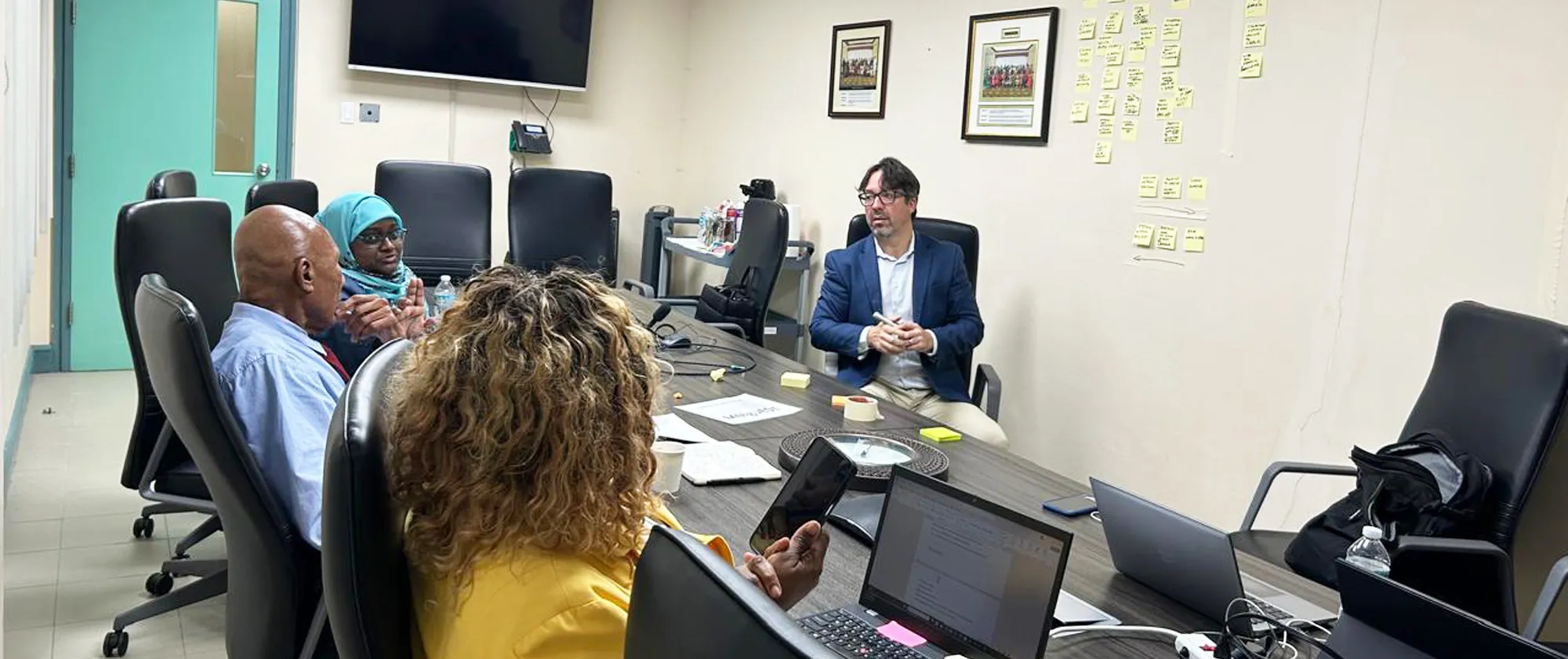
Recent ILO-supported exercises in Grenada in June and at the Employment Rights Tribunal of Barbados in September, examined what actually happens to a complaint as it moves through an institution, mapping processes from registration and referral to case activation, preparation, hearings and final outcomes. Participants detailed each step, the people responsible and identified possible bottlenecks, while following up on priorities identified through earlier institutional assessments. These workflow mapping exercises therefore go beyond documenting procedures. They provide a practical blueprint for ensuring that LIFT+ is designed around the particular realities of institutions and can be adapted to different laws, structures and resources.
For workers and employers, that work ultimately has a straightforward purpose: making the route from a workplace dispute to a fair resolution easier to navigate, track and manage.
The development of LIFT+ reflects the ILO’s commitment to turn regional priorities into practical support. Through workflow mapping and institutional assessments, Caribbean partners are contributing directly to the co-design of a system intended to reflect their realities and inform how LIFT+ is adapted and rolled out across different national contexts.