

ILO strengthens Nigeria’s social protection systems through nationwide TRANSFORM trainings
Through a joint effort by the ILO, UNICEF and the EU, Nigeria is strengthening social protection systems to better support vulnerable people and communities.
25 March 2026
Nigeria (ILO News) – The International Labour Organization (ILO), in collaboration with UNICEF and with funding from the European Union, has successfully delivered a series of TRANSFORM step-down trainings under the Supporting Sustainable Social Protection System in Nigeria (SUSI) project—boosting national capacity to design and deliver more effective social protection programmes.
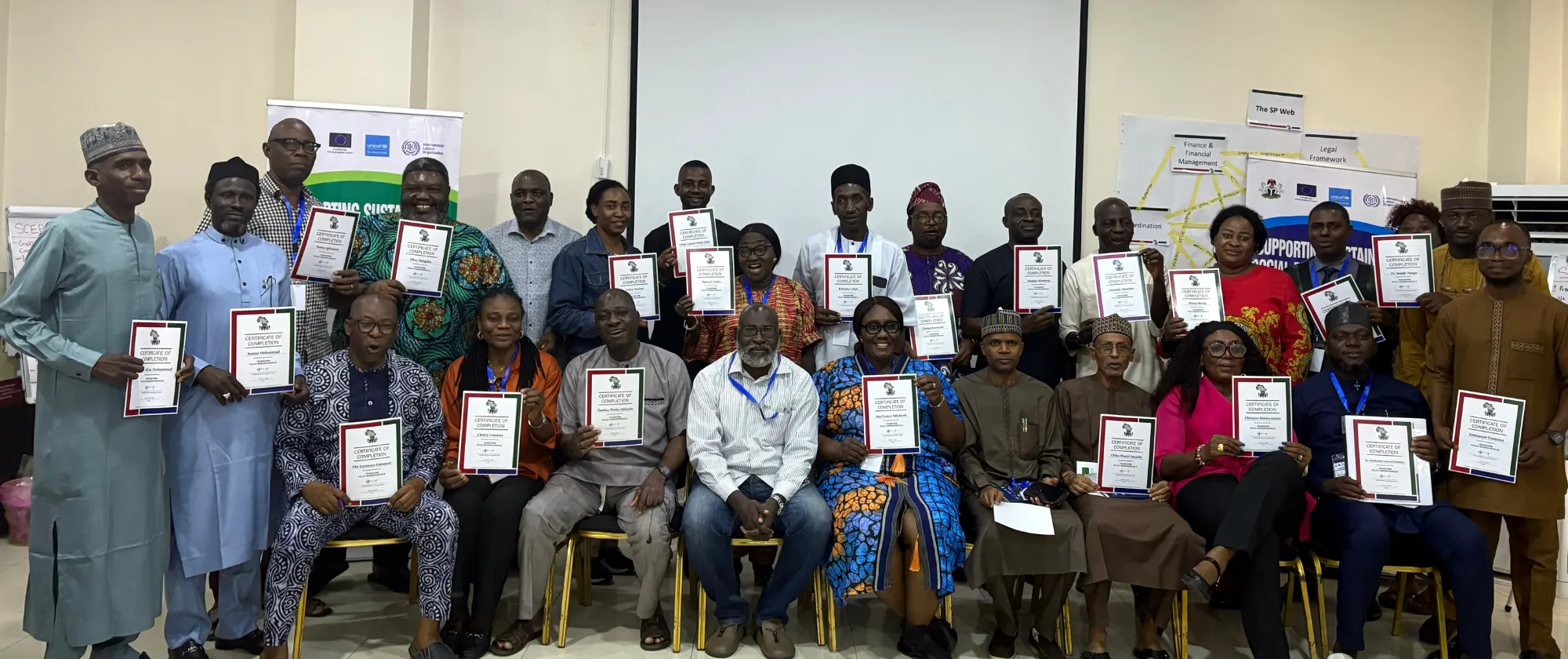
Held in Abia, Benue and Oyo States, from 23rd to 27th February 2026, Abuja (FCT) and Sokoto State, from 2nd to 6th March 2026, the trainings brought together government officials, programme implementers and social protection practitioners working across Nigeria’s social protection system. The sessions form a critical part of the TRANSFORM Master Trainer accreditation process, following a Training of Trainers conducted in October 2025.
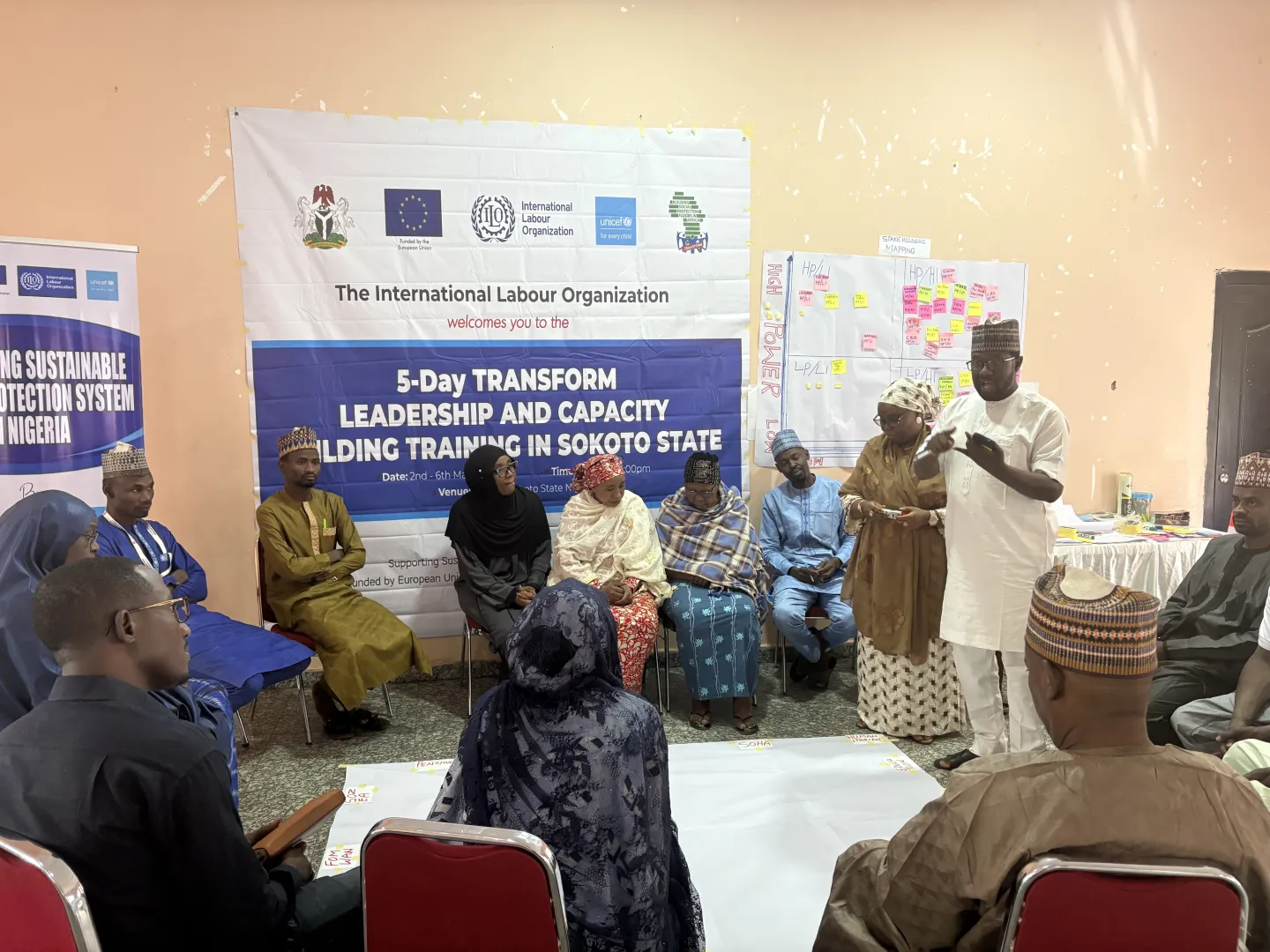
By strengthening the skills of national and state-level actors, the initiative is helping to ensure that social protection programmes are better designed, coordinated, and delivered—so that vulnerable populations, including low-income households and marginalized groups, can access the support they need more efficiently and reliably. During the trainings, candidate master trainers facilitated modules under observation as part of their certification process, contributing to the development of a nationally accredited pool of trainers. This growing network will continue to cascade knowledge across the country, supporting long-term institutional capacity and sustainability.
Participants gained practical insights into key components of effective social protection systems, including governance, financing, programme delivery, and the use of integrated Management Information Systems (MIS) to improve targeting and service delivery. Reflecting on the impact, participant Ge Matthew Terver said “Before this training, I saw the Management Information System as a reporting tool. Now I understand that an integrated MIS is the backbone of an effective social protection system. It connects programmes, improves decision-making, and ensures that the right support reaches the right people at the right time.”
This training has changed how I view administration. I now see it not just as routine support, but as a critical function that strengthens coordination, accountability, and the effective delivery of social protection interventions to those who need them most.
Tor-Wombo Jacyntha Ngodoo - Training Participant
Speaking on behalf of the ILO Country Office for Nigeria, Ghana, Liberia, Sierra Leone and Liaison Office for ECOWAS, Dr Vanessa Phala, Ms Inviolata Chinyangarara, the Workers Activities Specialist, ILO CO Abuja emphasized that investing in national training capacity is key to building resilient and inclusive social protection systems capable of reducing poverty, addressing vulnerability and tackling inequality. The ILO reaffirmed its commitment to supporting the Government of Nigeria and its partners in building sustainable social protection systems that deliver real impact for people and communities nationwide.
The TRANSFORM learning package—developed by a global coalition of partners—supports countries across Africa and the Arab States in strengthening the knowledge and skills needed to manage comprehensive social protection systems.
Through the SUSI project, the European Union, ILO, and UNICEF are working together to strengthen governance, coordination, and delivery of social protection programmes in Nigeria—ensuring that systems are more responsive, inclusive, and capable of leaving no one behind.
The completion of the step-down trainings in four states and the FCT marks an important milestone in expanding Nigeria’s pool of certified trainers and scaling up knowledge at the national and subnational level—translating into stronger systems and improved outcomes for millions of people who depend on social protection for their well-being and resilience.