

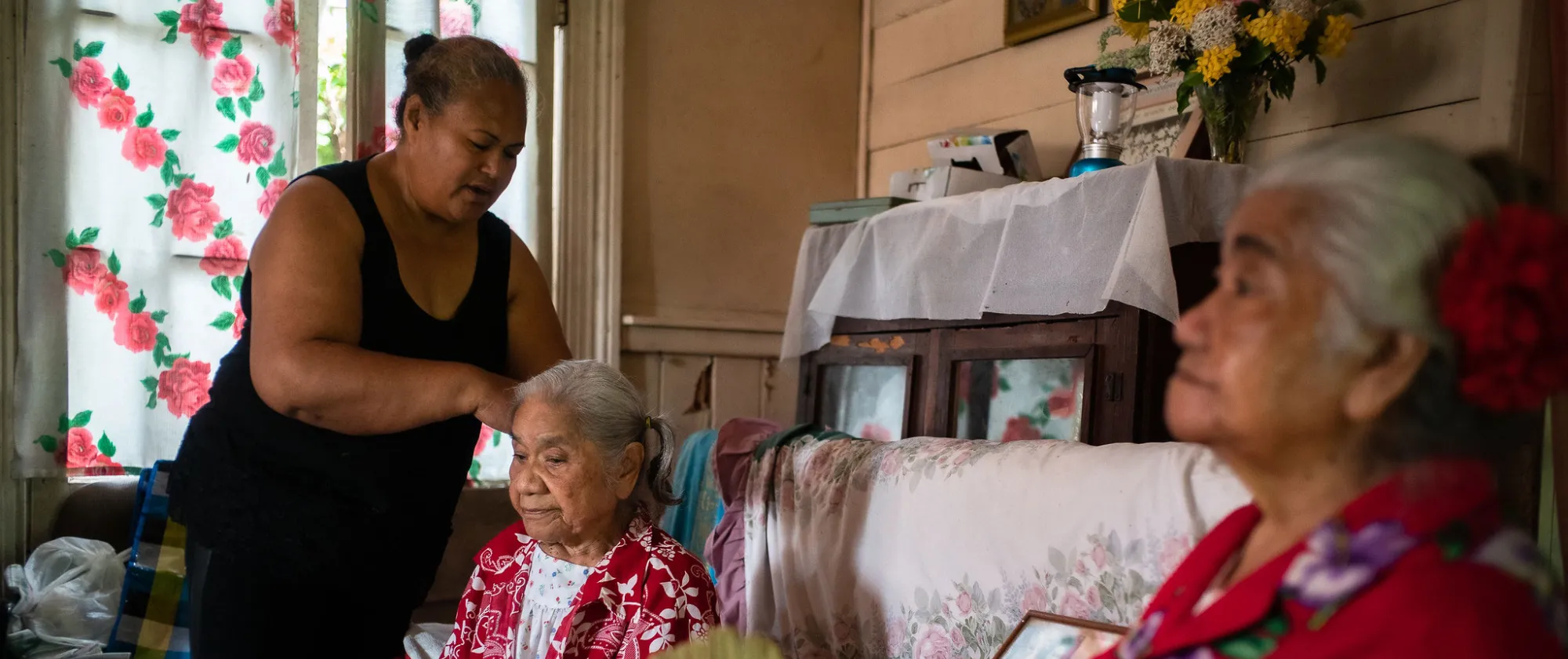
ILO Resolution on Decent Work and the Care Economy moves ahead
Strategies and recommendations contained in the key Resolution on promoting decent work in the care economy were discussed at a high-level webinar convened to mark the UN’s International Day of Care and Support and ahead of consideration by the ILO Governing Body.
23 October 2024
GENEVA (ILO News) – The International Labour Organization held a high-level discussion to explore ways to implement the Resolution concerning Decent Work and the Care Economy, ahead of the International Day of Care and Support on 29 October.
The landmark resolution, which was adopted at the International Labour Conference last June, provides a definition for the care economy, as well as guiding principles to advance decent work in the care economy. It addressed longstanding and continuing challenges in the care economy, that were worsened by the COVID-19 pandemic, by laying out the role that a well-functioning, robust care economy can play in building crisis resilience and fostering social and economic development. The Resolution’s conclusions offer policy recommendations and reaffirm the ILO’s leadership role in advancing decent work in the sector, at global, regional and national levels.
The Hon. Colin E. Jordan, Minister of Labour, Social Security and Third Sector, Barbados; Sonya Janahi, representing the International Organization of Employers (IOE); and Lily Chang, representing the International Trade Union Confederation (ITUC), all took part in the webinar, which was titled, Advancing decent work in the care economy: Making the new ILC resolution a reality for all. Assistant Director-General, Manuela Tomei also gave the keynote speech.
The discussions focused on the strategies and policies needed to implement the Resolution and promote decent work in the care economy globally.
The ILO estimates that by 2030 more than 2.3 billion adults will need care services, as well as 100 million children. More than three-quarters of unpaid care work is performed by women. Globally, 20 per cent of health and care workers work informally, a figure that rises to more than 30 per cent in low-and-middle income countries.
The ILC Resolution included a request to the ILO Director-General to prepare an action plan to give effect to the Resolution’s conclusions. This will be considered by the ILO’s Governing Body at its 352nd Session, which opens on 28 October.
The webinar took place on Wednesday 23 October and was screened on ILO Live.
Related content

Resolution V
Resolution concerning decent work and the care economy
Video interview
The importance of decent work for the care economy
ILO Live
Advancing decent work in the care economy: Making the new ILO resolution a reality for all