

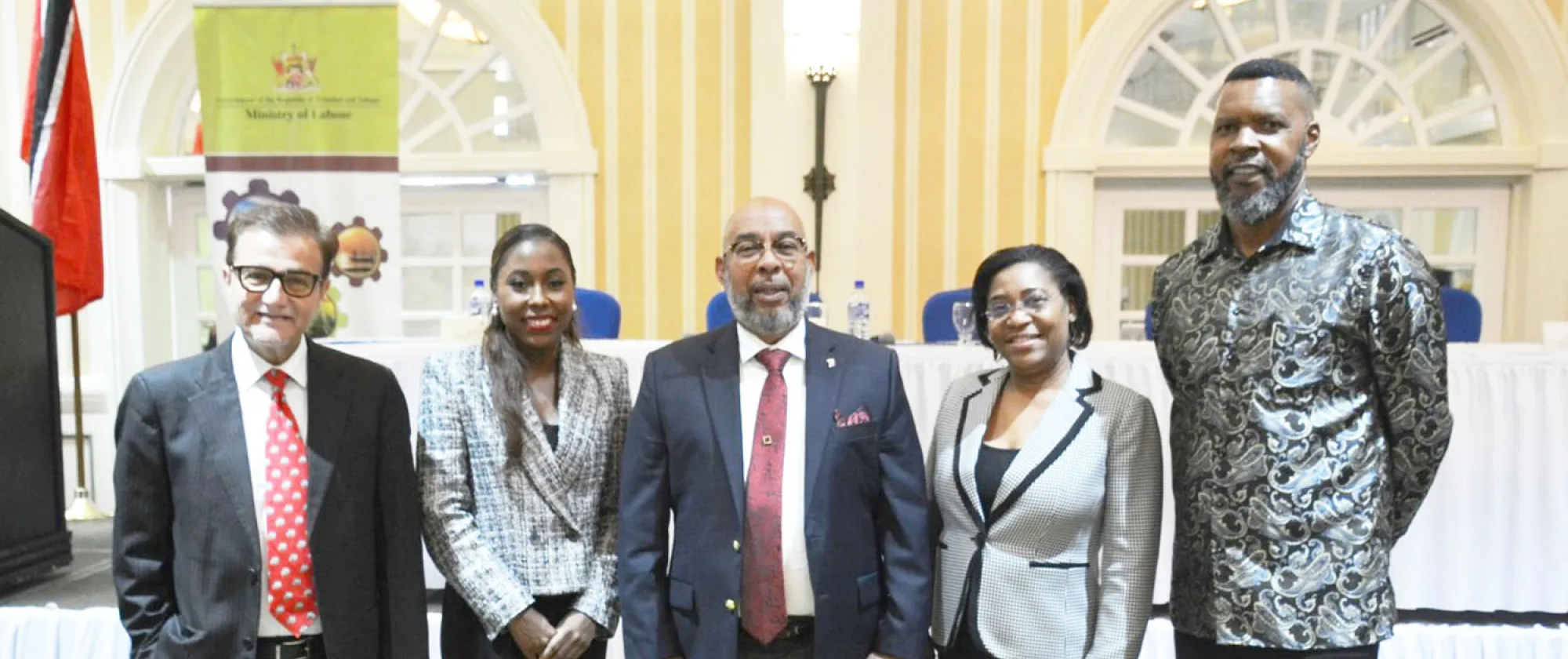
ILO provides inputs to Trinidad and Tobago’s process to update its HIV and AIDS workplace legislation and policy
Officials emphasize importance of protecting workers’ rights and ending HIV related stigma and discrimination.
17 May 2024
A series of consultations organized by the Trinidad and Tobago Ministry of Labour to develop HIV and AIDS workplace legislation and guidelines for managing HIV and AIDS in the public sector featured guidance from ILO officials, based on the relevant international labour standards and good practices from around the world.
During a National Stakeholder Consultation on Legislation to Govern HIV and AIDS in the Workplace on 15 May 2024 in Tobago, Minister of Labour the Honourable Stephen Mc Clashie expressed the Government’s commitment to ongoing legislative reform efforts and underscored the importance of the consultation’s human-centred approach.
“As we continue to work towards labour legislative reform, I ask that we work together in realizing this vision. The Ministry is cognizant of the dire need for modern workplace realities that protect vulnerable citizens beyond what the law now provides for. Persons living with HIV are among the most vulnerable in our society. The manner in which we treat our most vulnerable groups in our population reflects who we are as a people,” said Minister Mc Clashie.
ILO Caribbean Director Dr Joni Musabayana delivered opening remarks during the session and highlighted that the amendment of existing legislation will strengthen the protection of workers and protect their rights.
“We find ourselves faced with this shared commitment to bridge the gaps in current national procedures and practices that will legally enforce equal treatment and protection of the rights of affected persons, while promoting occupational safety and health,” said Dr Musabayana.
Syed Mohammad Afsar, ILO Senior Technical Specialist of the ILO Gender, Equality, Diversity, and Inclusion (GEDI) Branch based in ILO headquarters in Geneva, also attended the session and delivered a presentation. He pointed out that despite advances in treatment which allows people living with HIV to live a healthy and productive life, stigma and discrimination continue to persist. Afsar also presented salient features of the ILO Recommendation on HIV and AIDS and the World of Work, 2010 (No. 200) and its guidance on developing national HIV workplace policies and legislation.
“The scope of R200 is very broad. It covers all workers - and there is no exclusion - in all forms and all arrangements in workplaces and all sectors of economic activity, all job seekers, all job applicants. This is a very comprehensive legal instrument that we have,” he explained.
Afsar’s participation in the national stakeholder consultation in Trinidad and Tobago formed part of a wider mission to Trinidad and Tobago. The following day, on 16 May 2024, he participated in a virtual consultation with the HIV Workplace Advocacy Unit (HWAU) of the Ministry of Labour for their client and stakeholder organizations to discuss guidance and best practices for topics ranging from the development of a programme to address issues faced by remote workers with HIV and AIDS; alleviating concerns of workers who are targeted; confidentiality in grievance procedures; maintaining motivation to develop and implement workplace policies and programmes; the development of customized policies; addressing external stakeholders; and insurance for persons living with HIV and AIDS in the workplace.
On 17 May 2024, Afsar was a featured speaker during an event focused on guidelines for managing HIV and AIDS in the protective services. Participants included senior public service officials including Heads of Divisions within the Ministry of National Security, Ministry of Health and other key stakeholders including representatives from trade unions and UNAIDS. During the event, he delivered a presentation tailored to the needs of the public sector such as defence forces, using relevant case studies from around the world stressing that gaps in knowledge are fuelling HIV-related stigma.
“No one should be denied employment on the basis of HIV status alone. Thanks to treatment, people living with HIV are healthy and remain fit to work. Therefore, there should be no mandatory HIV testing at the time of recruitment, including in defence forces,” added Afsar.
During his visit he also had bi-lateral meetings with representatives from trade unions and employers as well as the NACC and HWAU to discuss specific concerns affecting their organizations and their key stakeholders / members.
As a result of these comprehensive and targeted interventions in Trinidad and Tobago, the ILO Caribbean Office in collaboration with Syed Mohammad Afsar will follow up on the consultations, the development of the new HIV and AIDS Workplace legislation and addressing policy issues for HIV testing for enlistment to the protective services in collaboration with the Ministry of Labour and National AIDS Coordinating Committee.
For more information about ILO Recommendation concerning HIV and AIDS and the World of Work, 2010 (No. 200) visit the ILO NORMLEX website and ILO HIV and AIDS page.