

ILO provides guidance at Trinidad and Tobago multipartite consultation on child labour
Discussions focus on strengthening policies and practices for prevention and elimination.
21 September 2023
© Ministry of Labour, Trinidad and Tobago
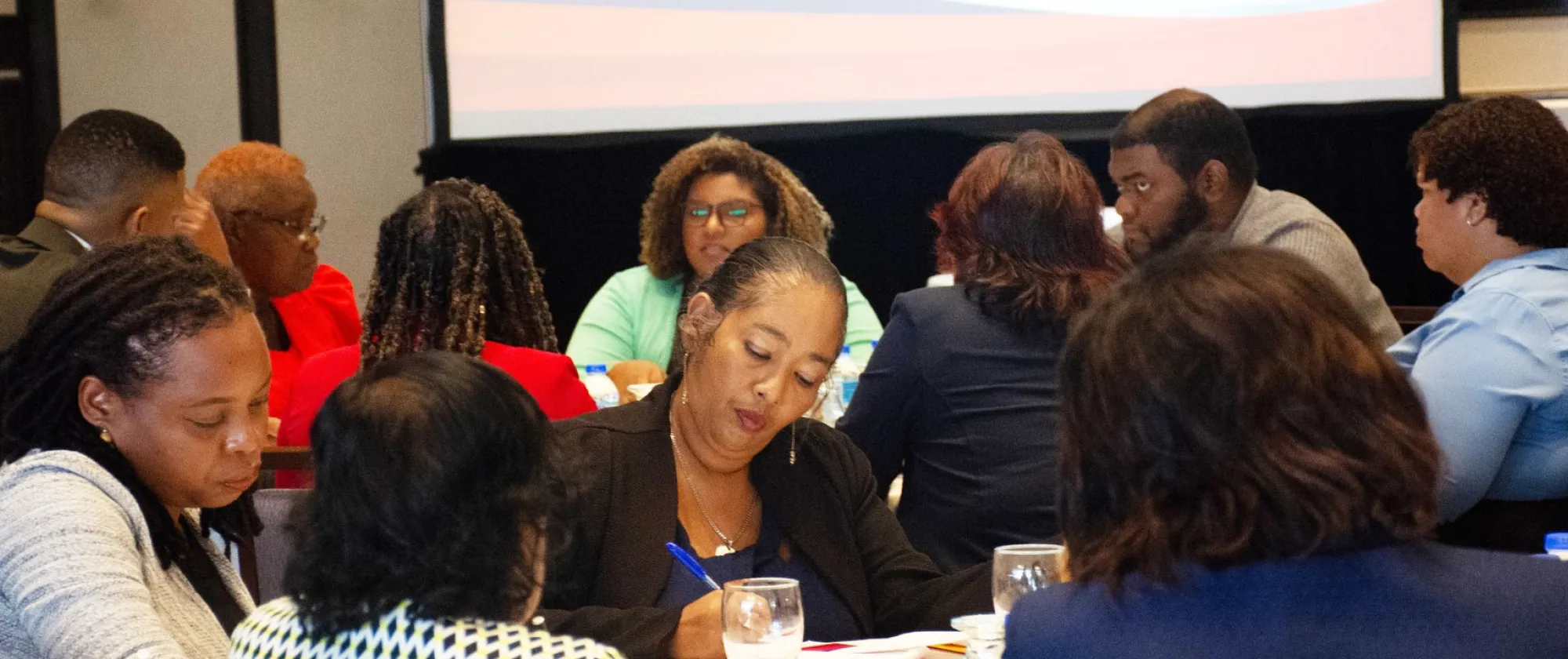
Trinidad and Tobago continues to advance the development of a national child labour policy, targeted workplans and initiatives, with the aim of ending child labour by 2025. With the understanding that the issue is multi-dimensional, the Ministry of Labour brought together over 100 participants from government, employers’ groups, trade unions, development agencies, civil society and other partners on 20 September 2023 for a multipartite consultation to gather feedback that will refine these key documents.
The consultation focused on sharing and obtaining stakeholders inputs to the workplans developed by the Ministry of Labour and four technical working groups of the National Steering Committee for the Prevention and Elimination of Child Labour. The working groups were assigned to address data, monitoring and evaluation; development of protocols and policy; development of hazardous and light work lists, and review of legislation and development of public awareness campaigns.
During the proceedings, Ms. Resel Melville, ILO Caribbean Programme Officer for the Regional Initiative Latin America and the Caribbean Free of Child Labour, addressed the global and regional contexts, sharing the concerning statistics published in the ILO/UNICEF 2021 Global Estimates on Child Labour and Forced Labour. She also gave participants an overview of the regional prevention and response strategies, prioritized by the 31 Member Countries in the Regional Initiative Latin America and the Caribbean Free of Child Labour and documented in the Regional Program to Accelerate the Eradication of Child Labour in Latin America and the Caribbean (PRAETI acronym in Spanish). The regional strategies are being used to guide Trinidad and Tobago’s development of its Country Accelerated Action Plan.
“Regulating the entry of minors into the world of work and protecting children from exploitation and the various threats to their wellbeing, has been from the earliest days of the ILO, one of the fundamental concerns of member countries in the pursuit of social justice,” said Ms. Melville.” The universal nature of this issue and its continuing relevance to human development is further seen in the 2030 Sustainable Development Goals (SDGs). SDG Target 8.7 is a critical indicator for SDG8 on Decent Work and Economic Growth. It expresses global commitment to take immediate and effective measures to eradicate forced labour, end modern slavery and human trafficking and secure the prohibition and elimination of the worst forms of child labour, including recruitment and use of child soldiers, and by 2025 end child labour in all its forms.”
Ms. Melville joined other high-level speakers including the Honourable Stephen Mc Clashie, Minister of Labour, Ms. Natalie Willis, Permanent Secretary of the Ministry of Labour and Ms. Kevar Williams, Chair of the National Steering Committee for the Prevention and Elimination of Child Labour and Deputy Permanent Secretary of the Ministry of Labour. The perspectives of social partners were represented through the participation of Mr. Ronald Ramlogan, Chief Executive Officer of the Employers’ Consultative Association of Trinidad and Tobago, and Mr. Michael Annisette, General Secretary of the National Trade Union Centre.
“Addressing this issue goes beyond the scope of the Labour Inspectorate Unit and the Ministry of Labour because child labour is a multi-dimensional issue that requires a multi-agency approach to address it from the point of a report coming in to the point of providing remedial services for the child and family to ensuring that the child is reintegrated into School and can pursue career goals. As strategic partners in this process, our goal is to ensure the protection of the rights of children through the establishment of a Child Labour Policy which will guide us on how we can, not only eliminate child labour wherever it exists, but also on how we can develop initiatives to prevent it,” said Ms. Natalie Willis, Permanent Secretary, Ministry of Labour, Trinidad and Tobago.
The event proved to be beneficial to the Ministry of Labour as it provided an open platform to initiate contact with and gather feedback from multipartite groups to strengthen the development of workplans and advance them towards finalization and operationalization. It also provided an opportunity for social partners – trade unions and employers – to articulate how they can contribute to the development and implementation of the workplans and policy.
With the target of 2025 in sight, the ILO Caribbean Office, within the framework of the Regional Initiative Latin America and the Caribbean Free of Child Labour, will continue to provide technical assistance to the government and social partners of Trinidad and Tobago, as national plans to combat and mitigate the risks of child labour are finalized and implementation commences.
The consultation focused on sharing and obtaining stakeholders inputs to the workplans developed by the Ministry of Labour and four technical working groups of the National Steering Committee for the Prevention and Elimination of Child Labour. The working groups were assigned to address data, monitoring and evaluation; development of protocols and policy; development of hazardous and light work lists, and review of legislation and development of public awareness campaigns.
During the proceedings, Ms. Resel Melville, ILO Caribbean Programme Officer for the Regional Initiative Latin America and the Caribbean Free of Child Labour, addressed the global and regional contexts, sharing the concerning statistics published in the ILO/UNICEF 2021 Global Estimates on Child Labour and Forced Labour. She also gave participants an overview of the regional prevention and response strategies, prioritized by the 31 Member Countries in the Regional Initiative Latin America and the Caribbean Free of Child Labour and documented in the Regional Program to Accelerate the Eradication of Child Labour in Latin America and the Caribbean (PRAETI acronym in Spanish). The regional strategies are being used to guide Trinidad and Tobago’s development of its Country Accelerated Action Plan.
“Regulating the entry of minors into the world of work and protecting children from exploitation and the various threats to their wellbeing, has been from the earliest days of the ILO, one of the fundamental concerns of member countries in the pursuit of social justice,” said Ms. Melville.” The universal nature of this issue and its continuing relevance to human development is further seen in the 2030 Sustainable Development Goals (SDGs). SDG Target 8.7 is a critical indicator for SDG8 on Decent Work and Economic Growth. It expresses global commitment to take immediate and effective measures to eradicate forced labour, end modern slavery and human trafficking and secure the prohibition and elimination of the worst forms of child labour, including recruitment and use of child soldiers, and by 2025 end child labour in all its forms.”
Ms. Melville joined other high-level speakers including the Honourable Stephen Mc Clashie, Minister of Labour, Ms. Natalie Willis, Permanent Secretary of the Ministry of Labour and Ms. Kevar Williams, Chair of the National Steering Committee for the Prevention and Elimination of Child Labour and Deputy Permanent Secretary of the Ministry of Labour. The perspectives of social partners were represented through the participation of Mr. Ronald Ramlogan, Chief Executive Officer of the Employers’ Consultative Association of Trinidad and Tobago, and Mr. Michael Annisette, General Secretary of the National Trade Union Centre.
“Addressing this issue goes beyond the scope of the Labour Inspectorate Unit and the Ministry of Labour because child labour is a multi-dimensional issue that requires a multi-agency approach to address it from the point of a report coming in to the point of providing remedial services for the child and family to ensuring that the child is reintegrated into School and can pursue career goals. As strategic partners in this process, our goal is to ensure the protection of the rights of children through the establishment of a Child Labour Policy which will guide us on how we can, not only eliminate child labour wherever it exists, but also on how we can develop initiatives to prevent it,” said Ms. Natalie Willis, Permanent Secretary, Ministry of Labour, Trinidad and Tobago.
The event proved to be beneficial to the Ministry of Labour as it provided an open platform to initiate contact with and gather feedback from multipartite groups to strengthen the development of workplans and advance them towards finalization and operationalization. It also provided an opportunity for social partners – trade unions and employers – to articulate how they can contribute to the development and implementation of the workplans and policy.
With the target of 2025 in sight, the ILO Caribbean Office, within the framework of the Regional Initiative Latin America and the Caribbean Free of Child Labour, will continue to provide technical assistance to the government and social partners of Trinidad and Tobago, as national plans to combat and mitigate the risks of child labour are finalized and implementation commences.