

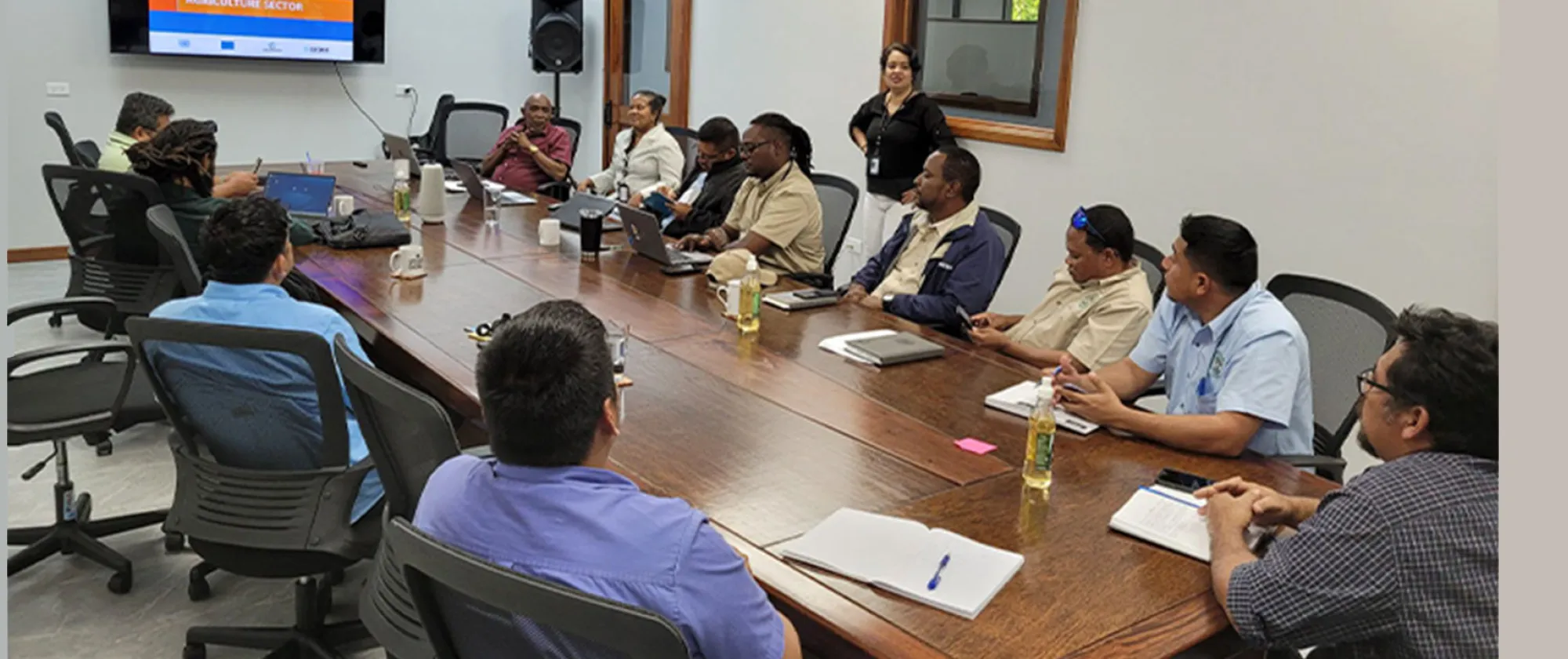
ILO participates in Belize’s Post Disaster Needs Assessment
This assessment commenced on 16 January 2023 and is expected to be completed by 24 February 2023. The main purpose of this PDNA is to jointly work with the national teams to ensure a transfer of knowledge in terms of estimating damages, loss, additional costs and recovery needs in the most affected sectors and geographic areas, and the formulation of resilient recovery plans to address those prioritized needs.
18 January 2023
The Post Disaster Needs Assessment (PDNA) mission is underway and is a part of the consolidated response of the United Nations (UN), the European Union (EU), the World Bank (WB), and the Interamerican Development Bank (IDB) to the request formulated by the Government of Belize to support a nationally led assessment that is guiding the formulation of a comprehensive recovery strategy focused on the most affected socio-economic sectors. This approach was triggered following the Hurricane Lisa which made landfall on Wednesday, 2 November 2022, passing over the country as an upper Category 1, and served as the basis for mobilising the donor community for the recovery phase. The Caribbean Development Bank is in the process of joining this effort. The result of the total effects of the disaster is scheduled to be released in the first quarter of 2023. The UN Agencies, Funds, and Programme are supporting this process using a joint UN approach with the United Nations Development Programme (UNDP) and the United Nations Resident Coordination Office (UNRCO) as coordinating leads. ILO’s participation is through a hybrid approach lead by the Director of the ILO Decent Work Team and Office for the Caribbean Office, Mr. Dennis Zulu, and ILO Specialist in Enterprise, Cooperatives and Rural Development, Mr. John Bliek, with the support in country by the ILO’s National Project Coordinator, Mrs. Pamela Ann Bradley.
This assessment commenced on 16 January 2023 and is expected to be completed by 24 February 2023. The main purpose of this PDNA is to jointly work with the national teams to ensure a transfer of knowledge in terms of estimating damages, loss, additional costs and recovery needs in the most affected sectors and geographic areas, and the formulation of resilient recovery plans to address those prioritized needs.
So far, most of the damages are recorded in the housing and education sectors, followed by the productive sector (such as agriculture, tourism and commerce), the social sector (such as housing, education, health and culture) and the infrastructure sector (such as water and sanitation, and transport). In order to address the effects of the damage and the revenue lost as a result of Hurricane Lisa, the assessment will determine the total estimate value needed across all sectors for recovery.
The donor community is expected to be given the opportunity to support the Government to manage the impact of this Hurricane, with the aim of building back better and more resilient to cope with future natural disasters.
Lisa made landfall on 2 November 2022 on the coast of Belize, near the mouth of the Sibun River about 10 miles southwest of Belize City around 3:20 pm local time and then tracked westward at an estimated 15 mph, with estimated maximum sustained winds of 92 mph, estimated minimum central pressure of 990 mb, and an estimated storm surge of 3-5 feet, producing an estimated 5-9 inches of rainfall which impacted an estimated 39 per cent of the country’s population, approximately 172,000 persons. The districts with the most impact was Belize and Cayo. Cayo District had significant impacts but, in less sectors, than the Belize District. The northern districts of Orange Walk and Corozal were also affected, but to a lesser extent. The southern districts of Stann Creek and Toledo were minimally impacted.
The Government immediately undertook measures for a comprehensive emergency response using the National Emergency Management Organization (NEMO) structure, including search and rescue operations, humanitarian relief assistance, provision of temporary shelter and a preliminary damage assessment of buildings in all affected areas. The Government has expressed its main interest in understanding the consequences of this disaster at the family and community levels and thus, the Human Impact Assessment is an important part of this exercise. This final report is expected to be completed prior to the ending February 2023.
This assessment commenced on 16 January 2023 and is expected to be completed by 24 February 2023. The main purpose of this PDNA is to jointly work with the national teams to ensure a transfer of knowledge in terms of estimating damages, loss, additional costs and recovery needs in the most affected sectors and geographic areas, and the formulation of resilient recovery plans to address those prioritized needs.
So far, most of the damages are recorded in the housing and education sectors, followed by the productive sector (such as agriculture, tourism and commerce), the social sector (such as housing, education, health and culture) and the infrastructure sector (such as water and sanitation, and transport). In order to address the effects of the damage and the revenue lost as a result of Hurricane Lisa, the assessment will determine the total estimate value needed across all sectors for recovery.
The donor community is expected to be given the opportunity to support the Government to manage the impact of this Hurricane, with the aim of building back better and more resilient to cope with future natural disasters.
Lisa made landfall on 2 November 2022 on the coast of Belize, near the mouth of the Sibun River about 10 miles southwest of Belize City around 3:20 pm local time and then tracked westward at an estimated 15 mph, with estimated maximum sustained winds of 92 mph, estimated minimum central pressure of 990 mb, and an estimated storm surge of 3-5 feet, producing an estimated 5-9 inches of rainfall which impacted an estimated 39 per cent of the country’s population, approximately 172,000 persons. The districts with the most impact was Belize and Cayo. Cayo District had significant impacts but, in less sectors, than the Belize District. The northern districts of Orange Walk and Corozal were also affected, but to a lesser extent. The southern districts of Stann Creek and Toledo were minimally impacted.
The Government immediately undertook measures for a comprehensive emergency response using the National Emergency Management Organization (NEMO) structure, including search and rescue operations, humanitarian relief assistance, provision of temporary shelter and a preliminary damage assessment of buildings in all affected areas. The Government has expressed its main interest in understanding the consequences of this disaster at the family and community levels and thus, the Human Impact Assessment is an important part of this exercise. This final report is expected to be completed prior to the ending February 2023.