

Workshop
ILO leads a knowledge network aimed at supporting a just transition in Latin America and the Caribbean
Participants from nine countries took part in the ILO initiative to strengthen technical tools to support policy processes and regional networks to help accelerate the just transition.
16 August 2024
LIMA (ILO News) – The International Labour Organization led a workshop in Latin America and the Caribbean region earlier this month, to help build the tools necessary to generate evidence, data and knowledge that can support pro-green transition policy building processes. It also brought regional actors together, thereby bolstering the basis for a regional network for the exchange of good practices and lessons learned from the just transition.
The tools will strengthen the updating process of Nationally Determined Contributions (NDCs) in the region. Under the Paris Agreement, countries are mandated to self-report on their efforts to reduce national emissions and adapt to the impacts of climate change in their NDCs.
The ILO also introduced the Green Jobs Assessment Tools (GJAM), tools to diagnose and design labour market policies, and frameworks to help analyze the contribution of public and private just transition investments aimed at strengthening decent job creation. ILO partners highlighted the importance of integrating different tools that strengthen technical processes for countries, based on their individual country-specific needs.
During the workshop's opening session, Ana Virginia Moreira Gomes, the ILO Regional Director for Latin America and the Caribbean, highlighted the importance of accounting for the impact of climate action on employment.
A just transition must guarantee the well-being of workers, maximizing the creation of green jobs and protecting those who could be affected by productive and labour changes.
Ana Virginia Moreira Gomes, ILO Regional Director for Latin America and the Caribbean
A just transition to sustainability in Latin America and the Caribbean promotes social justice by effectively managing both the risks and opportunities associated with employment. The ILO's guidelines for a just transition, which were adopted in 2015, provide policy guidance and a framework to help integrate the social and labour dimensions into low-carbon and climate-resilient transition models. A carbon neutral economy in Latin America and the Caribbean is expected to generate 22.5 million new jobs in areas such as sustainable agriculture, renewable energy and manufacturing, according to a 2020 report by the ILO and the Inter-American Development Bank. The same report found that the transition could eliminate 7.5 million jobs in certain sectors, which would result in a net overall increase of fifteen million jobs by 2030.
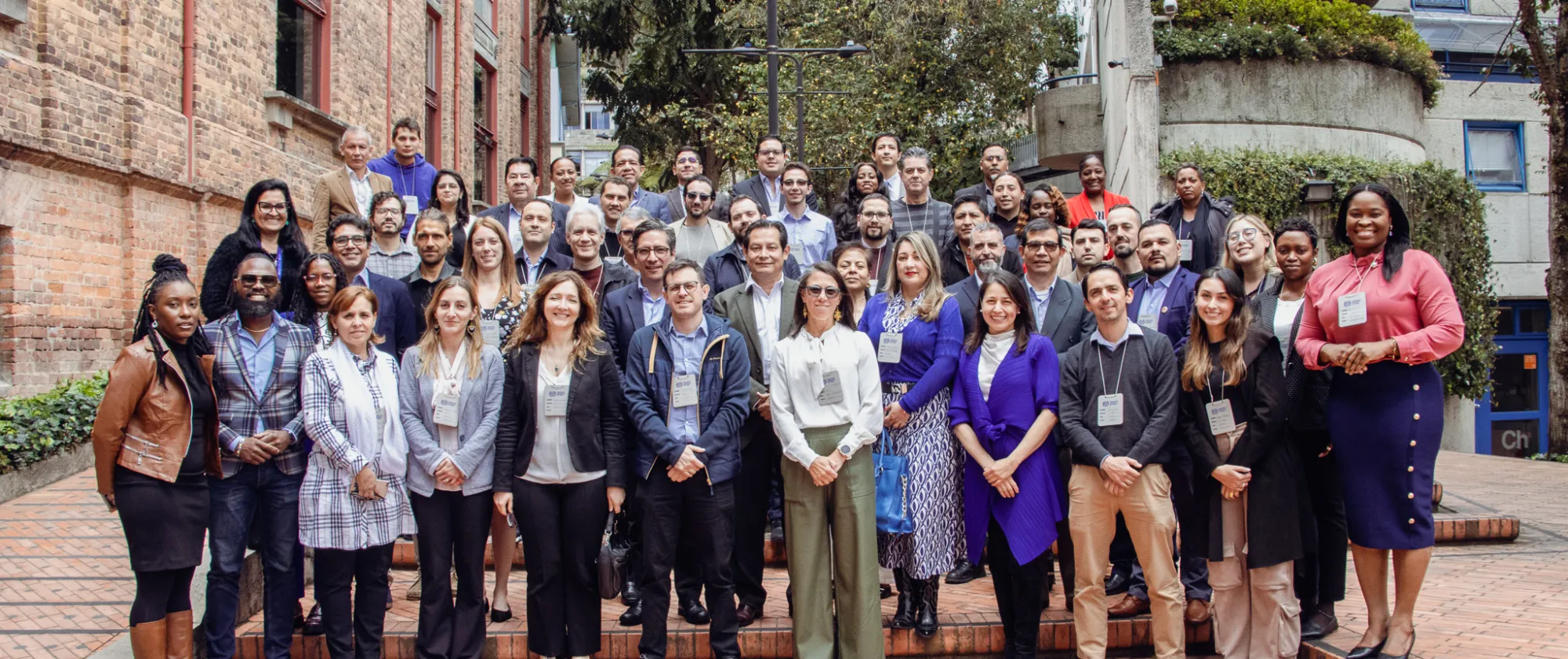
The ILO workshop, held in Bogotá, Colombia, from the 13th to the 16th of August, took place with the support and participation of the University of the Andes in Colombia, the Inter-American Development Bank (IDB), the NDC Partnership, the Partnership for Action on Green Economy (PAGE) and the United Nations Development Programme (UNDP), brought together representatives of governments, employers‘ and workers’ organizations from the region, as well as employment specialists and research institutions.