

Social dialogue
ILO leads critical dialogue at 22nd CCL Triennial Delegates Conference
The ILO played a key role at the CCL 22nd Triennial Delegates Conference, offering evidence-based insights and technical guidance to advance workers’ rights, strengthen regional solidarity, and shape Caribbean labour priorities beyond 2026.
4 December 2025
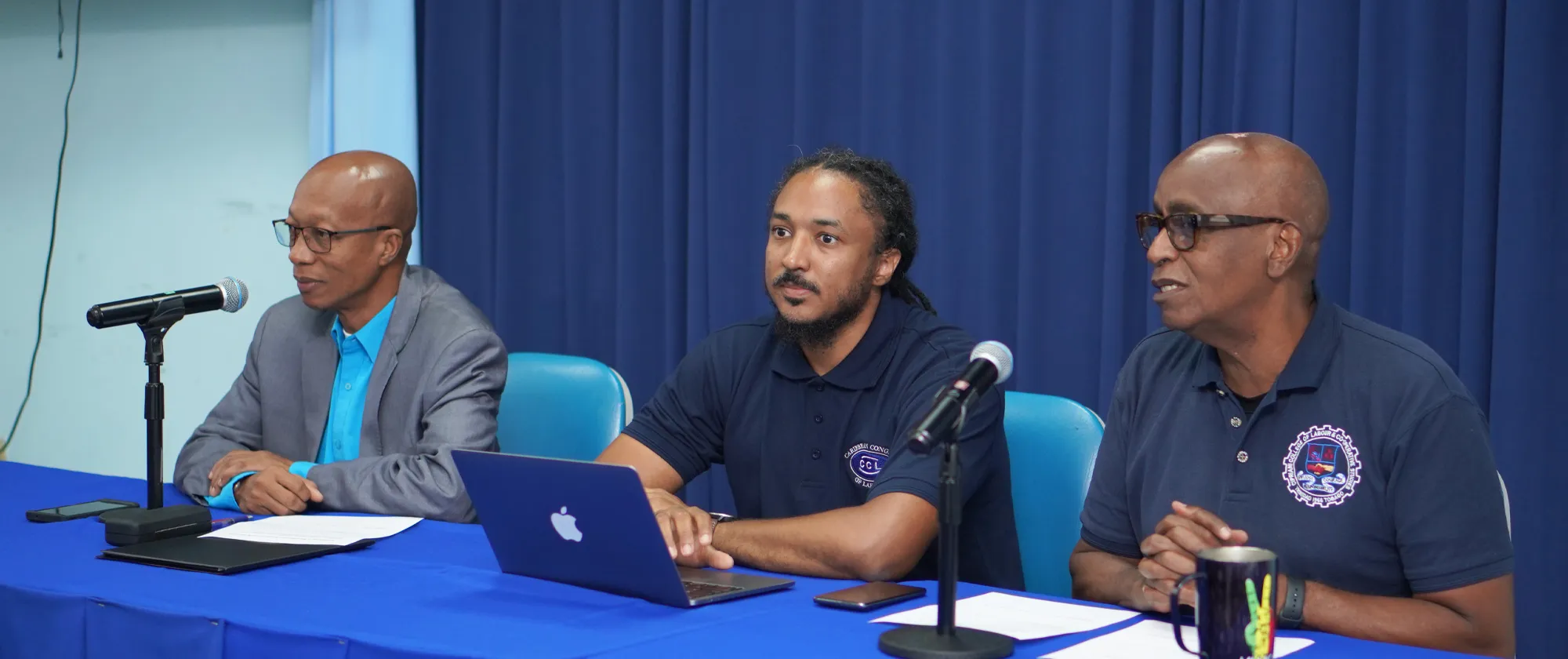
Valsayn, Trinidad and Tobago (ILO News) – The Caribbean Congress of Labour (CCL) convened its 22nd Triennial Delegates Conference from 2- 5 December 2025, under the theme “One Caribbean, One Voice: Advancing Workers’ Rights through Governance and Solidarity.” The International Labour Organization (ILO) played a central role on the first two days at Cipriani College of Labour and Co-operative Studies, providing technical expertise, evidence-based insights, and guidance in thematic discussions that aimed to help shape regional priorities of the labour movement for 2026 and beyond.
Dr. Joni Musabayana, Director of the ILO Decent Work Team and Office for the Caribbean, delivered solidarity greetings via video during the opening ceremony. He emphasized the power of unity, strong governance systems, and social dialogue in advancing workers’ rights across the region. He urged participants, “as our Caribbean countries pursue national development and regional integration goals, from labour mobility to climate resilience to digital transformation, the labour movement must not be absent. The CCL must be present, visible, and influential. Not on the sidelines but driving momentum.” Dr. Musabayana also reaffirmed the ILO’s commitment to supporting Caribbean workers, governments, and employers as they navigate a rapidly evolving labour landscape.
Following this opening, Abdelmalik Jamae Muhummed, Employment and Labour Market Specialist at the ILO Caribbean Office, provided a detailed presentation titled "The Caribbean Labour Market in Transition: Regional Trends and Priorities for 2026 and Beyond." His analysis highlighted challenges such as persistent informality, limited job creation, slow growth in green and digital sectors, and high youth unemployment. The data revealed that CARICOM countries (excluding Haiti) recorded an average annual labour productivity growth of only 0.6 percent from 2005 to 2023, well below the global average. This evidence laid a crucial foundation for delegates to advocate for policies that bridge generational divides and accelerate progress toward Sustainable Development Goals by 2030.
Building on labour market analyses, the dialogue shifted to labour migration and mobility, where experts including Dr. Saadiqa Khan and ILO Labour migration Focal Point Resel Melville explored the need for fair and equitable labour migration systems. The discussion spanned ongoing support for the development of CARICOM regional migration and labour migration policy frameworks, fair recruitment practices, strengthened governance, and regionally aligned protections ensuring that Caribbean workers pursue opportunities safely and with dignity. This panel included union leaders who explored frameworks that balance economic mobility with the need for robust worker protections.
The conversation then turned to the future of trade unions, with Rafael Peels from ILO ACTRAV sharing global insights on union renewal, innovation, and capacity building in response to changing work environments. Vera Guseva of the ILO Caribbean Office facilitated reflections on regional collaboration and the evolving roles of worker organizations, later emphasizing the critical role that workers play in climate-responsive policies as part of a fair, green, and inclusive transition.
Highlighting the intersection of climate action and labour, Marissa Sheppard, National Project Coordinator for Jamaica’s Just Transition initiative, presented outcomes from subregional workshops. She emphasized frameworks linking climate initiatives with decent job creation, pointing to the complementary roles of unions and employers in advancing a green economy and embedding climate justice within policy frameworks.
The conference’s second day featured an overall discussion and ILO presentation on global and regional frameworks where a panel on Regional Labour Governance and Social Dialogue reviewed recent high-level meetings, including the Caribbean Ministers of Labour Meeting and the 20th ILO Americas Regional Meeting. Participants were also informed of the various approaches in ILO support to countries, which also delved into the roles for trade unions in tripartite cooperation across the Caribbean. ILO’s technical support enhanced national labour administration systems and helped set regional industrial relations priorities for 2026 and beyond, pointing toward resilient and adaptive labour markets.
María Rodriguez Flores, an ILO Consultant, contributed evidence-based research on Non-Standard Forms of Employment (NSFE), highlighting employment patterns, social protection gaps, and future work challenges. Her insights stressed the necessity of data-driven policy to drive national reform and bolster regional cooperation.
Throughout the conference, the ILO anchored discussions in rigorous evidence and the principles of decent work, underscoring the urgency for coordinated regional action. By linking labour migration, union transformation, green transitions, and labour governance into a cohesive agenda, the ILO contributed to the partners development of a unified and resilient labour future. The event concluded with an integrative roundtable that synthesized key insights and recommendations, committing delegates to advancing workers’ rights, deepening regional solidarity, and building an inclusive, just Caribbean future of work.
A shared path forward
The International Labour Organization also extends its sincere congratulations to the newly elected leadership of the Caribbean Congress of Labour. We commend President Dwaine Paul, 1st Vice President Tami Ray, 2nd Vice President Kimberly Agard, 3rd Vice President Kem Riley, General Secretary Michael Annisette, Assistant General Secretary M. Andre Lewis, and Youth Representative Kim Dean on their election. This leadership team brings a wealth of experience, renewed energy, and a strong commitment to advancing workers’ rights, social dialogue, and decent work across the Caribbean. The ILO looks forward to continued collaboration with the CCL under this new leadership, as together we strengthen tripartism and promote inclusive, resilient labour markets throughout the region.