

ILO Joint social protection program in Zambia enhances lives amid drought: Success stories and challenges
Every year, the Government of Zambia through the Ministry of Community Development and Social Services and development partners hold Social Protection Joint Annual Performance Review (SP-JAR) to generate evidence to facilitate learning and decision-making in the implementation of social protection programmes.
17 June 2024
LUSAKA (ILO News) - This year’s SP-JAR field visits, conducted from 2 to 15 June 2024 under the theme: ‘Delivering Optimal Shock Responsive Social Protection: Safeguarding the livelihoods of the poor and vulnerable amid drought’, were supported by the International Labour Organization (ILO) through the United Nations Joint Programme on Social Protection Phase II (UNJP-SPII) and the IRISH-AID Social Protection Project.
The ILO with UN Agencies namely, UNDP, UNICEF and WFP is implementing the joint programme from August 2019 to December 2024 to assist the Government of the Republic of Zambia (GRZ) to meet its aspirations of an effective, efficient, and rights-based social protection programme.
The objective of this year’s SP-JAR was to assess how social protection programmes have been affected by the drought and floods, as well as share best practices for effective and efficient future programming.
On 29 February 2024, President Hakainde Hichilema declared the drought a national disaster and emergency, saying it had devastated food production and power generation. Like some of its neighbours, Zambia suffered from severe drought due to the El Nino phenomenon, which is worsening harsh weather conditions attributed in part to climate change.
During the visit, Northern Province Permanent Secretary Benard Mpundu explained that social protection programmes have changed people’s lives in the area.
“Poverty levels in Northern province are high. We have seen massive changes in our communities. Every time, there is a call to increase the number of beneficiaries and we respond. We have success stories among the people receiving Social Cash Transfer (SCT). They have been able to live a decent life,” said Mr Mpundu.
He however explained that the area experienced both drought and floods incidences, hence the need to ascertain the impact of social protection programmes among the people.
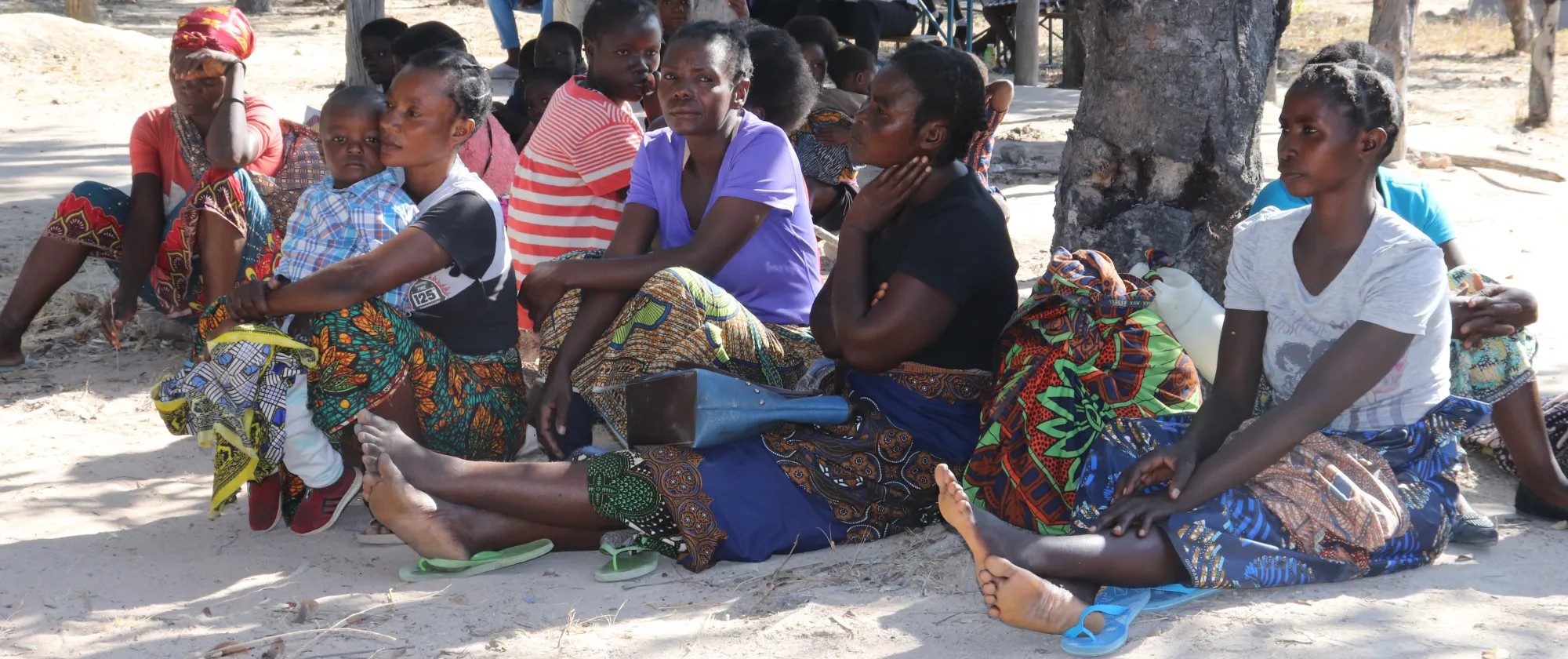
Meanwhile, Chisanga Village Headwoman in Chief Mwamba Chiefdom of Kasama district Chileshe Kombe bemoaned inadequate awareness raising programmes among her subjects on various social protection programmes being implemented in the country.
“We have a lot of challenges when accessing Social Cash Transfer because some of the people do not have cell phones, where the payments are being made. Let’s speak out on the problems we are facing in accessing the social protection programmes in our area,” said Headwoman Chisanga in an interview.
But 51-year-old Christine Mutambo of Chisanga Village of Kasama district narrated that she has benefited from the social protection programmes being implemented in the country, stating that she has managed to build a house from the Social Cash Transfer she has been receiving on the monthly basis.
“We are happy with this initiative of Social Cash Transfer because from the money I get every month, I have been able to build a house, buy food and school uniforms for my family,” said Ms Mutambo, who has a physical impairment.
Meanwhile, 74-year-old Chomba Chileshe of Museya Village in Chief Chipalo Chiefdom of Luwingu district said Social Cash Transfer has uplifted the living standards of elderly people in the area.
“We have been able to buy food and clothes, as well as school uniforms. Some are investing in business and farming, while others can build small houses for their families,” said Mr Chileshe.
And 41-year-old Ireen Gundu of the same area explained that her life changed after she was put among beneficiaries of the Social Cash Transfer, stating that she bought a sewing machine to setup a tailoring business.
“I have enough capital for my tailoring business from the money I receive every month. I do take care of my late brothers’ children; buying them taking them to school and buy them uniforms,” said Ms Gundu, who is a widow.