

ILO, JCI and partners discuss challenges and solutions to boost productivity, decent work, and export of Jordanian agri-food MSMEs
Discussions were based on the main findings and recommendations included in the position paper —drafted by the JCI, with the technical support of the ILO — called “Key Factors Affecting the Productivity of the Food, Catering, Agricultural and Livestock Sector”.
11 August 2023
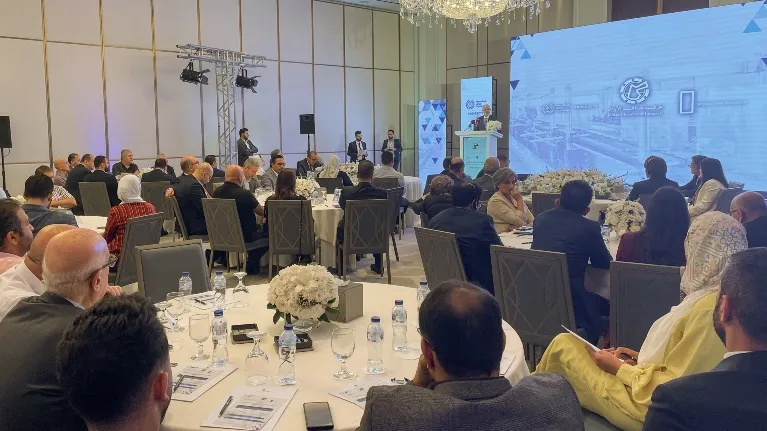
Amman, Jordan (ILO News) – The International Labour Organization, the Jordan Chamber of Industry (JCI) and their partners discussed challenges and opportunities to enhance productivity of Jordanian agri-food micro, small and medium sized enterprises (MSMEs) in Amman on Thursday. This is part of the ILO and its partners’ larger effort meant to help promote decent work for all the workers in the agriculture and agri-food sectors in the country.
Discussions were based on the main findings and recommendations included in the “Key Factors Affecting the Productivity of the Food, Catering, Agricultural and Livestock Sector” — a position paper drafted by the JCI, with technical support provided by the ILO.
Senior representatives of the Ministry of Industry, Trade and Supply, the Ministry of Labour, the Embassy of the Kingdom of the Netherlands, employers’ organizations, the General Federation of Jordanian Trade Unions (GFJTU), and the General Trade Union of Water, Agriculture and Food Industry attended the event, discussing the factors that directly influence productivity across the agri-food industry and their impact on the country’s economy.
The paper identified four main pillars affecting the sector’s productivity in Jordan, which, if addressed, could offer a path for its direct improvement. These include the high cost of raw materials, the legislative framework, the role of the government and the initiatives of the private sector to increase exports from Jordan.
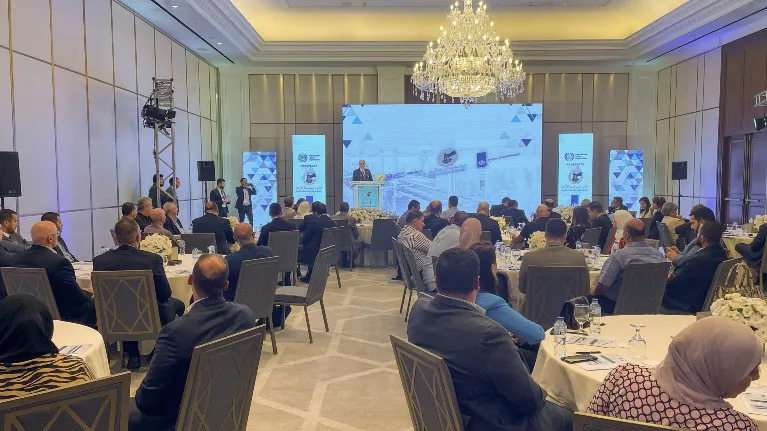
“Improving the work environment and enhancing industrial productivity are strategic goals, since these two elements are directly interconnected,” said Jordan Minister of Industry, Trade, and Supply, and the Minister of Labour Youssef Al-Shamali. “The agri-food sector deserves the utmost attention in light of its importance in supporting the national economy, providing job opportunities, and achieving the desired food security. The government has developed a set of tools for the advancement of the country’s economy with a vision of modernization of its industrial sector focusing on its workforce development and the encouragement of leadership and innovation.”
The study also provided solutions offered by Jordanian business owners to tackle the challenges preventing local MSMEs in the agri-food sector from fully reaching their production potential. Suggestions included measures that both the private sector and the government should implement to support and improve the investment environment in the country.
“The industrial sector is Jordan’s engine for employment, job creation, and investment. It vastly contributes to all the country’s economic and social aspects,” said Fathi Al-Jaghbir, Chairman of the Jordan Chamber of Industry. “The importance of this project comes from its goal of achieving sustainability for private businesses by investing in them and developing their work mechanisms and methodologies in a way that leads to their increased competitiveness.”
The paper is part of a larger initiative called “Nomo” (or “Growth” in English) supported by the Government of the Kingdom of the Netherlands under the PROSPECTS partnership.
“Nomo” started early last year through a direct collaboration between the ILO and the JCI and will run through 2023. Technical and financial assistance was given to some 14 enterprises in the agri-food sector, mostly in the Mafraq and Irbid governorates, whose activities have been impacted by the COVID-19 pandemic.
“Supporting decent job creation for vulnerable communities, including refugees, is a core pillar of the Dutch-funded PROSPECTS partnership,” said Pier de Vries, Chargé d'Affaires of the Embassy of the Kingdom of the Netherlands. “I am excited about the collaboration between the ILO and JCI, supported through PROSPECTS. It aims not only to identify obstacles for growth of MSMEs in the agri-food sector, but also ways for these companies to increase the employment of Jordanians and refugees.”
Participating enterprises in the Nomo project employ about 1,100 Jordanians as well as some 280 Syrian refugees. They have also invested in job retention and workforce skills-building programmes for business continuity and growth, and showed improvement in working conditions throughout the initiative.
“We are extremely satisfied by the content of today’s discussions and the results achieved so far,” said Shaza Al Jondi, ILO PROSPECTS Chief Technical Adviser Jordan, Lebanon and Iraq. “In this initiative, we have been working with the JCI at the policy and macro, meso, and downstream levels. Through a series of assessments and trainings we helped increase the capacity of the JCI to support MSMEs in boosting their output. Through direct technical and financial support, the selected MSMEs were able to carry out improvements leading to a productivity increase, cleaner production, the promotion of HR, management and labour protection practices, among others.”
As part of this project, the ILO is also running a series of its Sustaining Competitive and Responsible Enterprises (SCORE) Basics training programme in collaboration with the JCI to boost MSMEs’ productivity and working conditions in the agri-food sector in Jordan.
The training programme includes both classroom sessions and on-site coaching and covers five key topics including workplace collaboration, quality management, clean production, human resource management, and occupational safety and health.
The industrial sector in Jordan has been a driver of economic growth in recent years, and accounts for about 24% of the country's GDP, according to the JCI Database. The sector is also a large generator of jobs, employing 21% of the total Jordanian workforce, amounting to some 266,000 workers.
The agri-food sector made up 7.6% of the total industrial exports in 2022, ranking in fifth among the first ten Jordanian industrial subsectors in terms of export volume, according to the JCI.
Under the PROSPECTS Partnership, the ILO has supported productivity and decent job creation at a sector level, with particular interest in the agriculture and agri-food sectors in Jordan since its inception in 2019. The partnership aims to improve the access of host communities and refugees to education, social protection, and jobs. It brings together IFC, ILO, UNHCR, UNICEF and the World Bank.
Relevant projects

ILO-Netherlands Partnership
Partnership for improving prospects for forcibly displaced persons and host communities (PROSPECTS) in Jordan
Programme
Partnership for improving prospects for forcibly displaced persons and host communities (PROSPECTS)