

Social protection
ILO identifies priority areas to achieve universal social health protection
At the EU-African Union high-level meeting for equitable access to health, the ILO explained how access to affordable healthcare services can be extended to the global population, including vulnerable groups.
20 March 2024
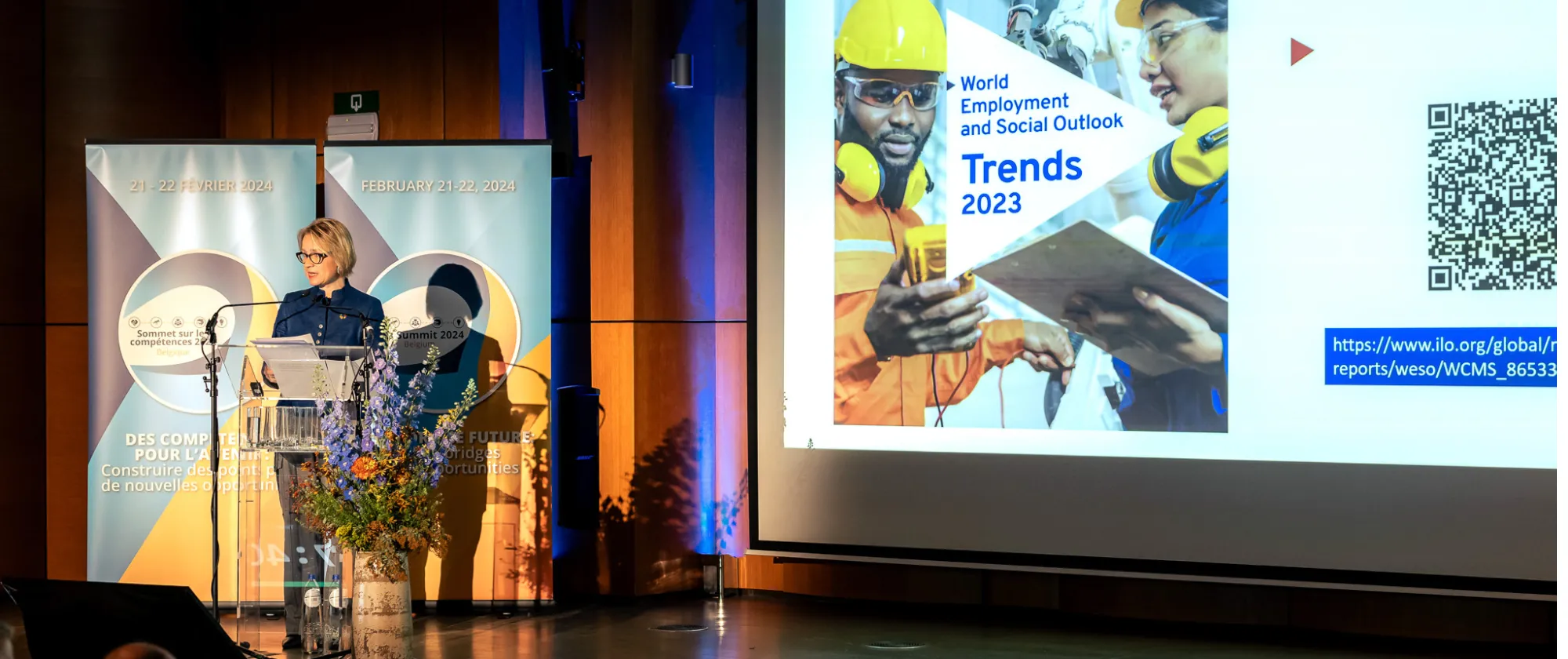
Mia Seppo, ILO Assistant Director-General for Jobs and Social Protection, took part in a high-level event on the EU-African Union (AU) partnership in Global Health for Equitable Access, organized by the Belgian EU Presidency. She discussed the state of play of social protection for health, or government-led measures to secure affordable healthcare services and adequate cash benefits for all in case of sickness or maternity.
Many countries, such as Rwanda or Lao PDR, have shown that extending social health protection is achievable even in low-income settings and with sizeable informal economies. “Their experience demonstrates that a sustained political and financial commitment embedded in a rights-based approach is indispensable to leave no one behind. Making use of the opportunities offered by new technologies is also crucial in this respect,” said Ms Seppo.
Yet, social health protection is not yet a universal reality. Only about two thirds of the population in low-income countries and in sub-Saharan Africa has a right to access healthcare services for free or with limited co-payments, leaving one in three persons behind. There is also an important gap between the legal entitlements and their implementation in practice.
Financial barriers remain one of the main reasons for forgoing care globally, directly contributing to poor health. Effective access to healthcare is further constrained by shortages of healthcare services and their inequitable distribution, with the biggest deficits in Africa and Asia.
Ms Seppo identified four priority areas for joint action to achieve universal social health protection. First, she advised to extend coverage universally through mandatory mechanisms, and an effective implementation of such provisions. “We need to take advantage of the opportunities digital tools offer, support shared registries across social policies, monitor progress, and support and reinforce a culture of mandatory coverage in the health workforce and across public services and populations at large,” she said.
Second, the situation of women, people living with chronic conditions, long-term diseases or disabilities, older persons, workers in vulnerable employment and migrants, needs to be taken into account in the design, implementation, financing and participation modalities for the extension of social health protection. These vulnerable groups tend to face several barriers to access healthcare services.
Third, healthcare services need to be accessible, available, acceptable and of good quality. Finally, the Assistant Director-General underlined that sustainable financing is of utmost importance. Innovative solutions need to be considered to not only prioritize social protection and health within government budgets, but to also expand fiscal space through a diversified mix, including the taxation of products that are harmful for health and the environment, and ensure that a greater share of the labour force contributes to social security.
“Health and wellbeing should not be the privilege of a few. Collective financing, broad risk pooling and rights-based entitlements are key elements of strong social health protection systems geared towards social justice,” she concluded.
Many countries, such as Rwanda or Lao PDR, have shown that extending social health protection is achievable even in low-income settings and with sizeable informal economies. “Their experience demonstrates that a sustained political and financial commitment embedded in a rights-based approach is indispensable to leave no one behind. Making use of the opportunities offered by new technologies is also crucial in this respect,” said Ms Seppo.
Yet, social health protection is not yet a universal reality. Only about two thirds of the population in low-income countries and in sub-Saharan Africa has a right to access healthcare services for free or with limited co-payments, leaving one in three persons behind. There is also an important gap between the legal entitlements and their implementation in practice.
Financial barriers remain one of the main reasons for forgoing care globally, directly contributing to poor health. Effective access to healthcare is further constrained by shortages of healthcare services and their inequitable distribution, with the biggest deficits in Africa and Asia.
Ms Seppo identified four priority areas for joint action to achieve universal social health protection. First, she advised to extend coverage universally through mandatory mechanisms, and an effective implementation of such provisions. “We need to take advantage of the opportunities digital tools offer, support shared registries across social policies, monitor progress, and support and reinforce a culture of mandatory coverage in the health workforce and across public services and populations at large,” she said.
Second, the situation of women, people living with chronic conditions, long-term diseases or disabilities, older persons, workers in vulnerable employment and migrants, needs to be taken into account in the design, implementation, financing and participation modalities for the extension of social health protection. These vulnerable groups tend to face several barriers to access healthcare services.
Third, healthcare services need to be accessible, available, acceptable and of good quality. Finally, the Assistant Director-General underlined that sustainable financing is of utmost importance. Innovative solutions need to be considered to not only prioritize social protection and health within government budgets, but to also expand fiscal space through a diversified mix, including the taxation of products that are harmful for health and the environment, and ensure that a greater share of the labour force contributes to social security.
“Health and wellbeing should not be the privilege of a few. Collective financing, broad risk pooling and rights-based entitlements are key elements of strong social health protection systems geared towards social justice,” she concluded.