

ILO hosts the 11th Mont Blanc Meeting on the Social and Solidarity Economy in Geneva
The 11th edition of the Mont Blanc Meetings took place on 16 January 2025, at the ILO headquarters in Geneva, welcoming over 70 global SSE leaders, practitioners and advocates.
28 January 2025
GENEVA (News ILO) - The 11th Mont Blanc Meeting on the Social and Solidarity Economy (SSE) was successfully held at the ILO headquarters in Geneva on January 16, 2025, marking a significant milestone at the start of the 2025 United Nations International Year of Cooperatives.
Organized by the SSE International Forum (SSEIF), the Mont Blanc Meetings provide a platform for leaders of SSE organizations from around the world to engage pressing matters pertaining to sustainable development. The theme of this year’s meeting focused on the SSE and the role of finance and economic pluralism in support of the SDGs and social development. Two roundtables were held with insightful presentations and dynamic discussion on financing channels for SSE development, and ways private sector companies can align their practices with SSE values and principles.
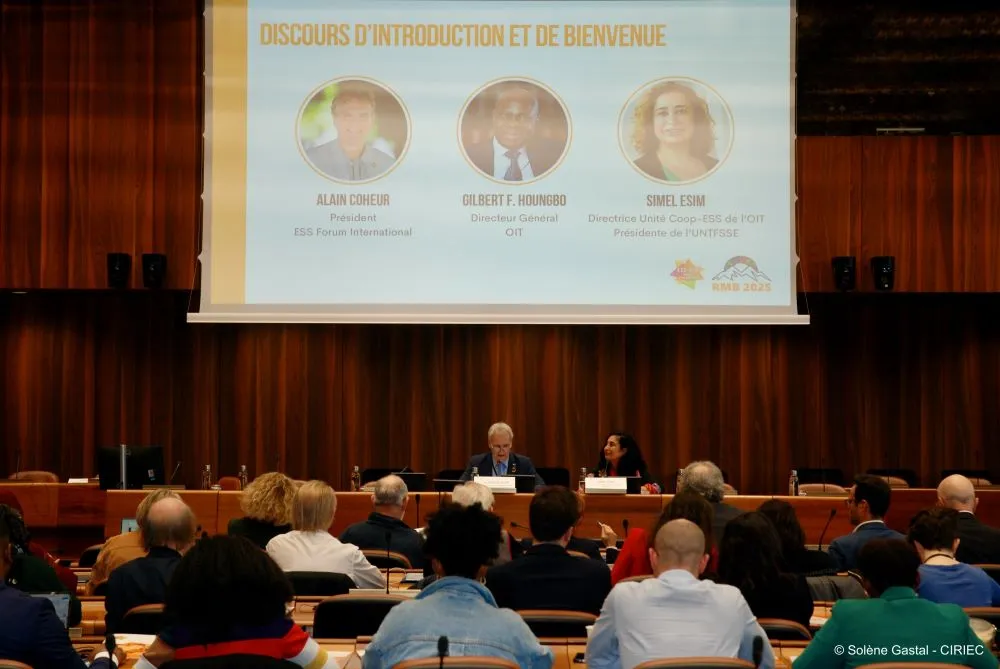
In his introductory speech, Alain Coheur, Chairman of SSEIF, highlighted that SSE enterprises are human-centered rather than profit-driven. He emphasized that SSE enterprises are not marginal but must exit marginality to demonstrate their contributions to the common good.
Following his introduction, the participants listened to a video message from Gilbert F. Houngbo, ILO Director-General underscoring the growing global recognition of the transformative potential of the SSE. He reaffirmed the ILO’s commitment to promoting the SSE as Chair of the UN Inter-Agency Task Force on the Social and Solidarity Economy (UNTFSSE), noting that this year’s International Labour Conference can explore how SSE can contribute to productive employment and decent work in the platform economy, as well as support the transition to formality.
Following ILO Director-General’s video message, Simel Esim, Head of ILO Cooperative, Social and Solidarity Economy, pointed out that while progress has been made, there remain significant gaps, particularly in aligning international frameworks with local contexts. She called for increased collaboration among governments, UN agencies, and development partners, urging the prioritization of SSE strategies, the creation of legal frameworks, and the promotion of innovative financing solutions to ensure that SSE entities thrive and contribute to sustainable development goals.
H.E. Nicolas Schmit, Former European Commissioner for Employment and Social Rights, delivered a keynote on “The SSE: an opportunity for ecological and social transition.” He emphasized that SSE innovations can help restore and expand basic social rights. He also highlighted the role of the SSE in providing innovative, participatory solutions, especially in sectors like energy and agriculture.
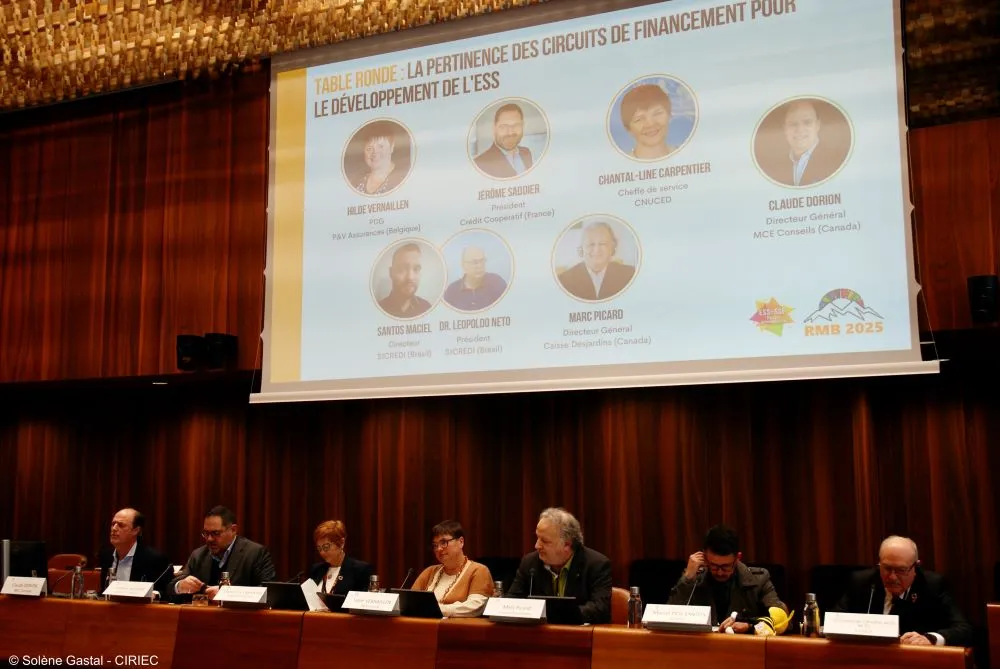
The first roundtable, moderated by Claude Dorion, General Manager of MCE Conseils (Canada), focused on "The Relevance of Financing Channels for the Development of the SSE." It brought SSE experts and speakers from finance-related SSE entities to explore better ways to make SSE financing sustainable.
In his introduction to the roundtable, Claude Dorion emphasized that financial circuits are vital for SSE growth — improving access to funding from partnerships with governments and private sectors is essential to address challenges. Chantal-Line Carpentier, Head of Trade, Environment, Climate Change, and Sustainable Development Branch, UN Trade and Development, underscored the importance of talking about financing for the SSE and get the recognition of the SSE at key forums like the World Social Summit and the 4th Financing for Development Conference. She highlighted the need for clear public mandates, capacity building, and adaptation to the unique characteristics of the SSE.
Hilde Vernaillen, CEO, P&V Assurances (Belgium), discussed how P&V Assurances supports SSE enterprises through innovative financial solutions and the importance of collaboration between SSE actors and governments to ensure financial sustainability and impact. Marc Picard, General Manager of Caisse Desjardins (Canada), shared how Caisse Desjardins uses its financial network to support indigenous communities and vulnerable groups in Quebec, and stressed the need to train traditional financiers in SSE principles to bridge the gap between conventional financial models and SSE enterprises.
Jérôme Saddier, Chairman, Crédit Coopératif (France), explained that SSE financing should prioritize societal benefits, with wealth being used to generate social good. Leopoldo Neto, President of SICREDI (Brazil), and Santos Maciel, Director of SICREDI (Brazil), highlighted the importance of local community benefits, environmental preservation, women empowerment and the green economy. They stressed that government partnerships are essential to providing infrastructure, regulation and representation for the SSE.
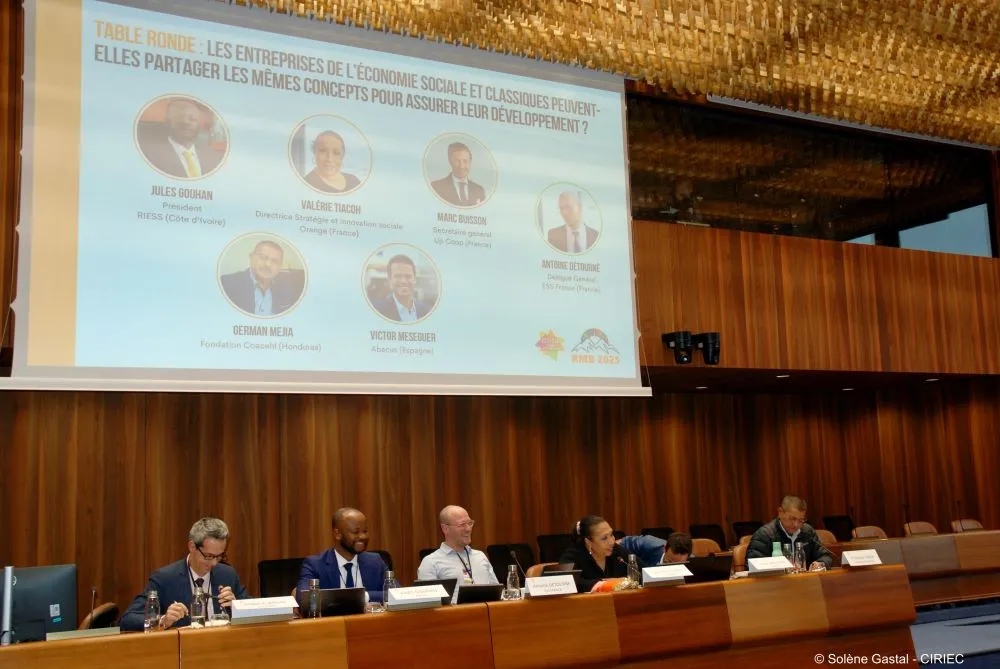
The second roundtable explored how traditional private sector companies align their practices with the values and principles of SSE entities. Speakers from the private sector and SSE entities shared their insights starting with Antoine Détourné of ESS France who emphasized that the SSE is at a crossroads and much remains to be done. He called for deeper collaboration between the private sector and SSE enterprises to address global challenges. Arnaud Breuil, Director of Partnerships and Cooperation at Up Coop (France), discussed how Up Coop’s democratic management and shared values resonate with both SSE and conventional enterprises. He emphasized the need for economic viability to ensure benefits for all stakeholders.
Victor Mesenguer from Abacus (Spain) emphasized that integrating Corporate Social Responsibility (CSR) into core practices is key to successful collaboration with private companies. Valérie Tiacoh, Director of Strategy and Social Innovation at Orange (France), shared how Orange partners with SSE entities to promote responsible digital innovation and inclusion, highlighting projects like training programs in Mali that empower local communities and promote human rights.
German Mejia of Fondation COACEHL (Honduras) discussed how legislative challenges can limit growth but noted that partnerships and awareness-raising efforts can overcome these obstacles and that training is critical to advancing SSE initiatives. Jules Gouhan, President of RIESS (Côte d'Ivoire), emphasized the importance of mapping the contributions of SSE activities to GDP to improve visibility and visibility. He also noted the potential for collaboration between SSE entities and the private sector, as both face common challenges in today’s world.
The recommendations from the 11th edition of the Mont-Blanc Meeting were shared with the participants for their inputs. The event concluded with confirmation of commitment from the key stakeholders to coming together during its next edition to discuss and move forward on pressing matters pertaining to advancing the SSE for sustainable development as outlined in the International Labour Conference (2022) and UN General Assembly (2023, 2024) resolutions.