

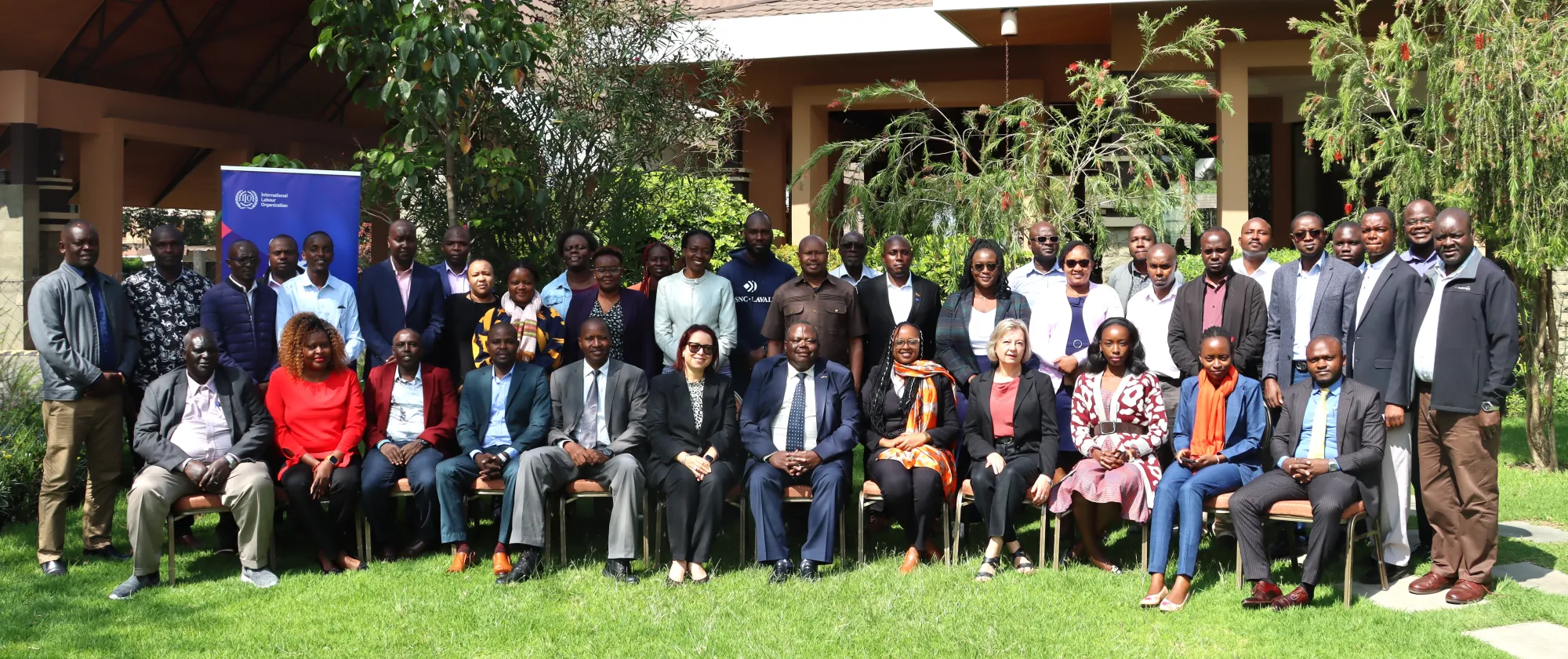
ILO collaborates with Kenyan Tripartite Partners to improve labour standards reporting
17 December 2024
Kenya (ILO News) - The International Labour Organization (ILO) conducted a three-day capacity-building workshop in Naivasha, Kenya, from December 3rd to 5th, 2024. The event focused on reporting on the measures taken to give effect to ratified International Labour Standards (ILS) and targeted Kenya’s tripartite constituents - government, employers, and workers organizations’ representatives. This initiative, held under the theme "Learning by Reporting," marks a pivotal step towards strengthening Kenya's understanding of and compliance with ILS-related obligations and advancing the agenda for decent work for all.
The workshop was facilitated under the Trade for Decent Work Project (T4DW), which is funded by the European Union. The T4DW project aims to enhance national capacities for better adherence to and reporting on ILS, fostering collaboration among stakeholders to promote sustainable and inclusive labour practices. By equipping participants with the necessary skills and knowledge to meet ILS-related obligations, this initiative underscores Kenya's commitment to improving working conditions, ensuring social protection, and promoting equitable employment opportunities.
This workshop also reflects the broader goals of the ILO and the EU in supporting member states to align with ILS, thereby contributing to the global push for decent work and economic growth in line with the United Nations Sustainable Development Goals (SDGs).
The training sessions were led by ILO’s Amanda Mejía Cañadas, ILS and Labour Law Specialist, and Jasmina Papa, Social Protection Specialist. Key participants included representatives from the Ministry of Labour and Social Protection, the Ministry of Mining, Blue Economy and Maritime Affairs, as well as other relevant government agencies, the Federation of Kenya Employers (FKE), and the Central Organization of Trade Unions (COTU-K).
Throughout the workshop, participants engaged in a detailed analysis of 14 ILO conventions, covering essential normative subjects such as Freedom of Association and Collective Bargaining, Labour Administration and Inspection, Wages and Working Time, Social Security, and fishers. These discussions reflected Kenya’s diverse workforce needs and highlighted the importance of aligning national practices with international benchmarks.
By the workshop's conclusion, stakeholders had identified critical issues impacting the application of these conventions, examined barriers to effective reporting, and proposed actionable strategies to enhance compliance. This collaborative effort laid the groundwork for improving Kenya’s alignment with global labour standards and reinforced its commitment to the ILO’s supervisory system.
Kenya, which has ratified 52 ILO conventions - 37 of which remain in force - used the workshop as a platform to better understand the obligations outlined in Articles 19 and 22 of the ILO Constitution. These obligations emphasize the importance of regular reporting to ensure transparency and accountability in implementing labour standards.
The ILO’s supervisory system plays a vital role in the global application of labour standards by requiring member states to submit regular reports on the implementation of ratified conventions. Kenya’s active participation in this process underscores its dedication to fostering compliance and advancing labour governance.
This capacity-building workshop not only bolstered Kenya’s reporting mechanisms but also strengthened collaboration among its tripartite constituents. It set a strong foundation for sustainable compliance, improved labour practices, and the promotion of workers’ rights, reaffirming Kenya’s commitment to the Decent Work Agenda.