


ILO brings the world of work to young Scouts at Indonesia’s National Jamboree
Through games and real-life scenarios, the ILO introduced young Scouts from across Indonesia to fundamental principles and rights at work, helping them connect decent work principles with situations they may encounter in their daily lives and future careers.
24 August 2026
CIBUBUR, East Jakarta, Indonesia (ILO News) – Participating Scouts called out, “Red!” in response to the story of Raka, a fellow Scout who had to work during school hours, causing him to miss classes and other school activities.
“Green!” came the response to another story, this time about a Scout leader who gave members an opportunity to share their views and encouraged the group to consider everyone’s opinions before making a decision.
These were some of the scenarios presented through Cards for Change, an interactive game led by the International Labour Organization (ILO) during Jambore Nasional XII 2026, held at Buperta Cibubur from 13–20 August. Organized by Kwartir Nasional Gerakan Pramuka, the national gathering brought together 20,857 Scouts aged 11-15 from Indonesia’s 38 provinces, as well as Indonesian Scout groups from abroad and representatives of National Scout Organizations from across the Asia-Pacific region.
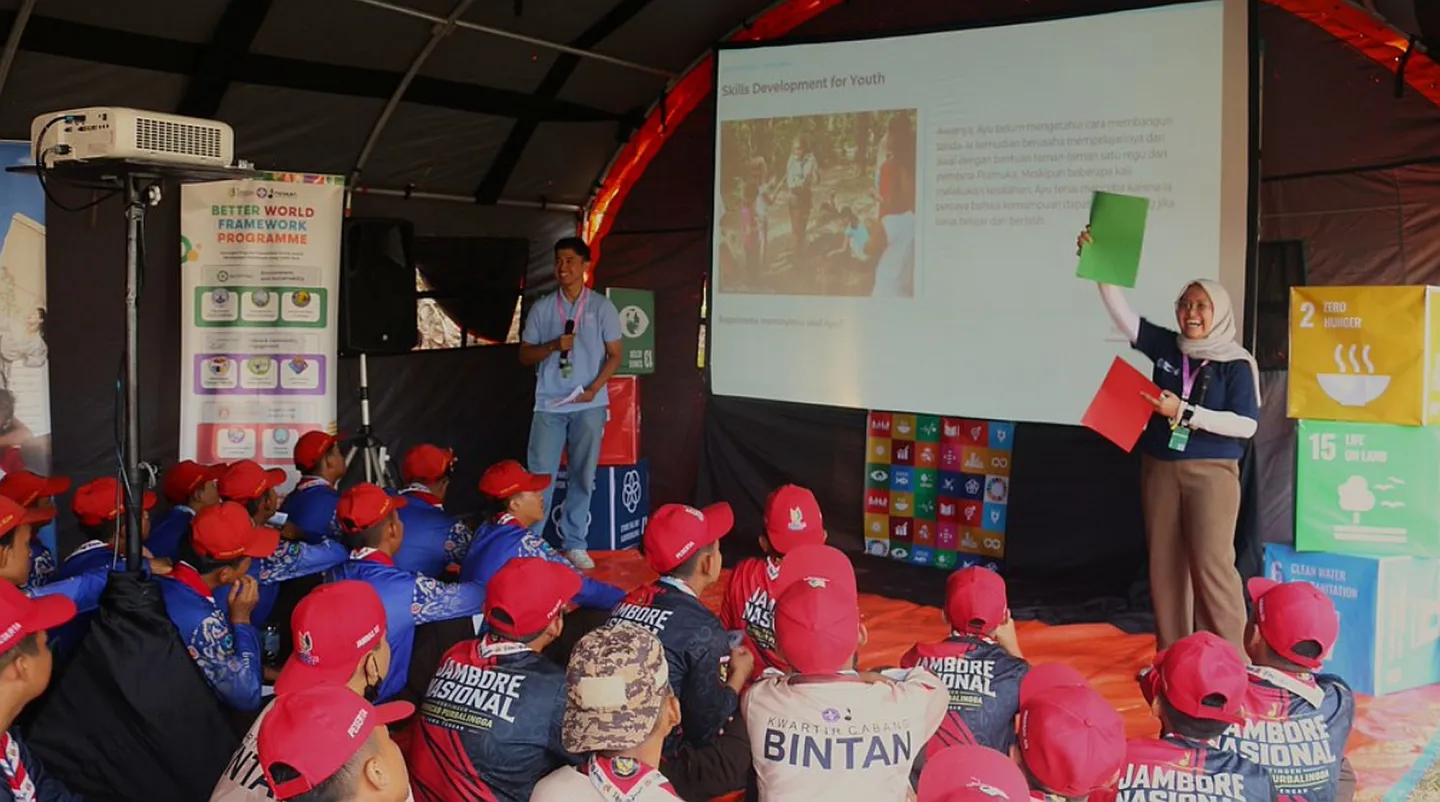
Through a series of case stories, the ILO invited participating Scouts to decide whether the situations presented represented good or unacceptable practices by raising either a green or red card. The scenarios covered child labour, occupational safety and health (OSH), skills development, gender equality and social dialogue.
Behind the simple game were important questions about the world of work, presented through situations familiar to the Scouts: When does work performed by a child become child labour? Why is it important to understand first aid and know what to do when an accident happens? Should girls and boys share household chores equally during Scout activities? Why is it important to continue developing our skills? And why should everyone have an opportunity to express their views before a decision is made?
Through simple and interactive activities, we want them to understand the importance of rights at work, safety, equality, skills and dialogue, and to carry these values with them as they become the workers, employers and leaders of the future.
Simrin Singh, ILO Country Director for Indonesia and Timor-Leste
After each choice, participants were given an opportunity to share their views while learning about fundamental principles and rights at work. By connecting these issues with situations they might encounter during Scout activities, the game made concepts that can sometimes seem technical easier for young people to understand.
“Young people may still be several years away from entering the labour market, but the values that shape a fair and safe world of work can be introduced from an early age,” said Simrin Singh, ILO Country Director for Indonesia and Timor-Leste. “Through simple and interactive activities, we want them to understand the importance of rights at work, safety, equality, skills and dialogue, and to carry these values with them as they become the workers, employers and leaders of the future.”
Connecting decent work with the SDGs
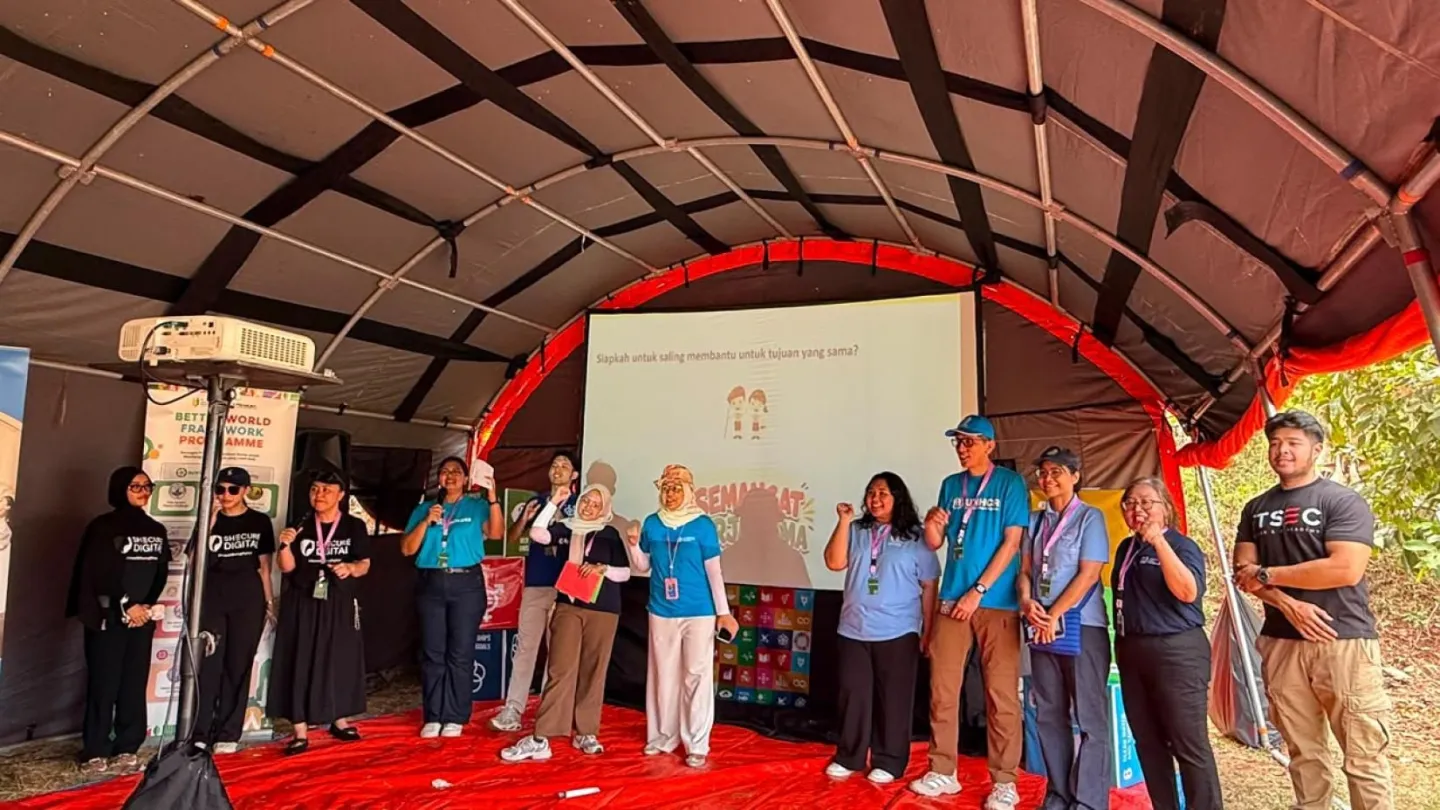
The ILO activity formed part of the wider United Nations programme at the Global Development Village – Scouts for SDGs, where participating UN agencies worked together to introduce sustainable development through interactive activities.
The programme was structured around five interconnected themes – People, Planet, Peace, Prosperity and Partnership – allowing Scouts to explore how issues ranging from children’s rights and climate change to safety, equal opportunities and cooperation are connected to the Sustainable Development Goals (SDGs).
For the ILO, introducing decent work principles through activities familiar to young Scouts is also part of its broader Youth Network programme, helping young people better understand the principles and values that underpin decent work long before they enter the workplace.
Under the Prosperity pillar, the ILO and UNHCR led interactive activities focusing on skills, fairness, equal opportunities and teamwork. The ILO also contributed to the Partnership pillar alongside UNFPA, United Nations Volunteers and the wider UN family, emphasizing that young people, communities, governments, the United Nations and other partners all have a role to play in achieving the SDGs.
For the ILO, introducing decent work principles through activities familiar to young Scouts is also part of its broader Youth Network programme. The programme aims to raise awareness among young Indonesians about various employment and labour issues, helping them develop a better understanding of the principles and values that underpin decent work long before they enter the workplace.
To date, the Network has established partnerships with several universities and university networks, including Universitas Airlangga (UNAIR), the Nationwide University Network in Indonesia (NUNI), Universitas Esa Unggul, Universitas Gadjah Mada (UGM), Atma Jaya Catholic University of Indonesia and Universitas Diponegoro (Undip).
