

ILO and UN Women call for greater investment in the care economy to advance gender equality and decent work in Armenia
Strengthening care policies and investing in the care economy are vital to achieving gender equality, improving working conditions and fostering inclusive growth in Armenia.
29 October 2025
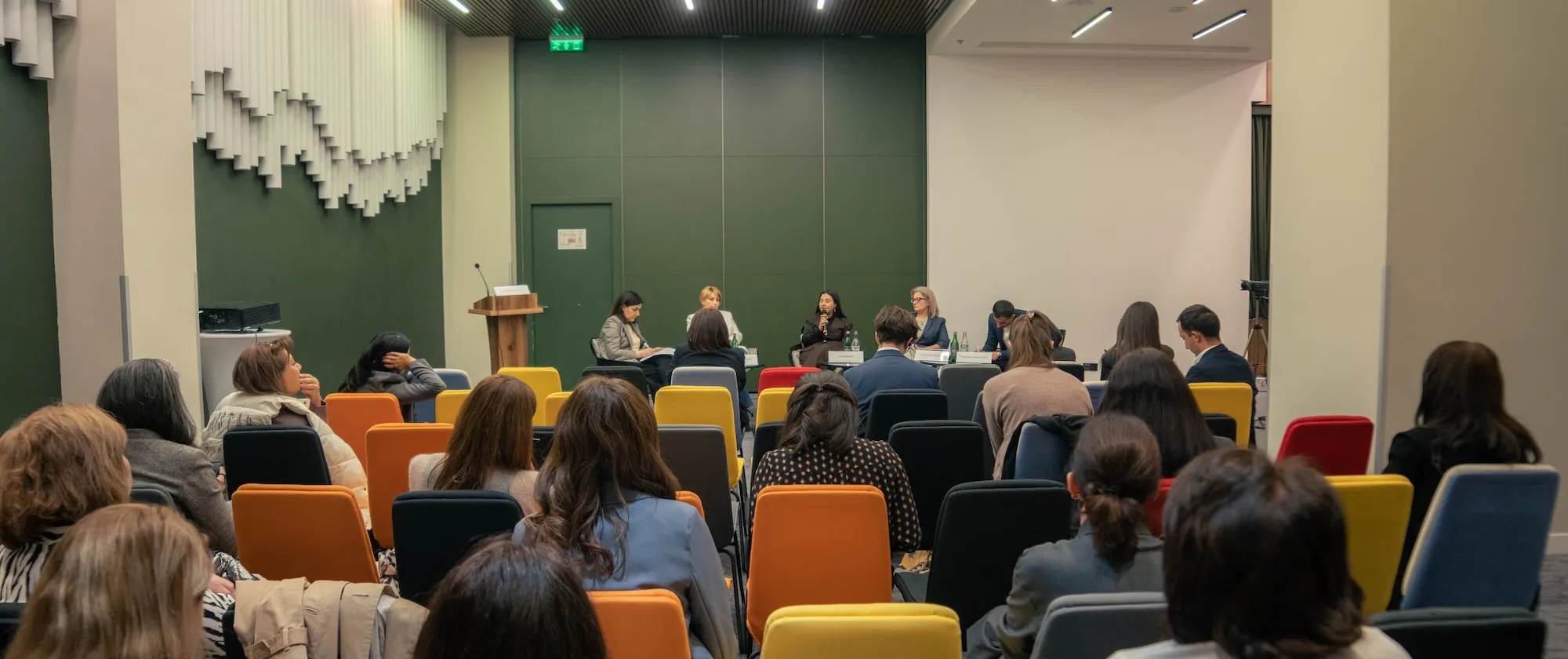
YEREVAN (ILO News) - On the International Day of Care and Support established by the United Nations (UN), the International Labour Organization (ILO) and UN Women convened a public discussion in Yerevan on 29 October on “Promoting gender equality and investing in the care sector”. The event brought together government officials, social partners, civil society organizations, care workers, private sector representatives and development partners to discuss policy and practical measures for building a more inclusive and gender-responsive care system in Armenia.
Armenia’s care context and policy priorities
Our policies aim to create a labour market that supports both women and men in balancing work and family responsibilities, ensuring that care work is recognized and valued.
Arsen Torosyan, Minister of Labour and Social Affairs of Armenia
In Armenia, women spend nearly six times more time than men on childcare and devote over one-fifth of their time to unpaid domestic work, resulting in significantly lower labour force participation rates (33 per cent compared to 60 per cent among men). The dialogue underscored that transforming care systems through inclusive public policies and investment in care services is critical to promoting women’s economic empowerment and ensuring decent work for all.
The event was opened by Françoise Jacob, UN Resident Coordinator in Armenia, who emphasized the global significance of investing in the care economy as a pathway to achieving the Sustainable Development Goals and ensuring that no one is left behind. She highlighted the importance of adopting the ILO’s “5Rs” framework, recognizing, reducing, redistributing, rewarding and representing care work as a comprehensive approach to advancing gender equality and creating inclusive, sustainable economies.
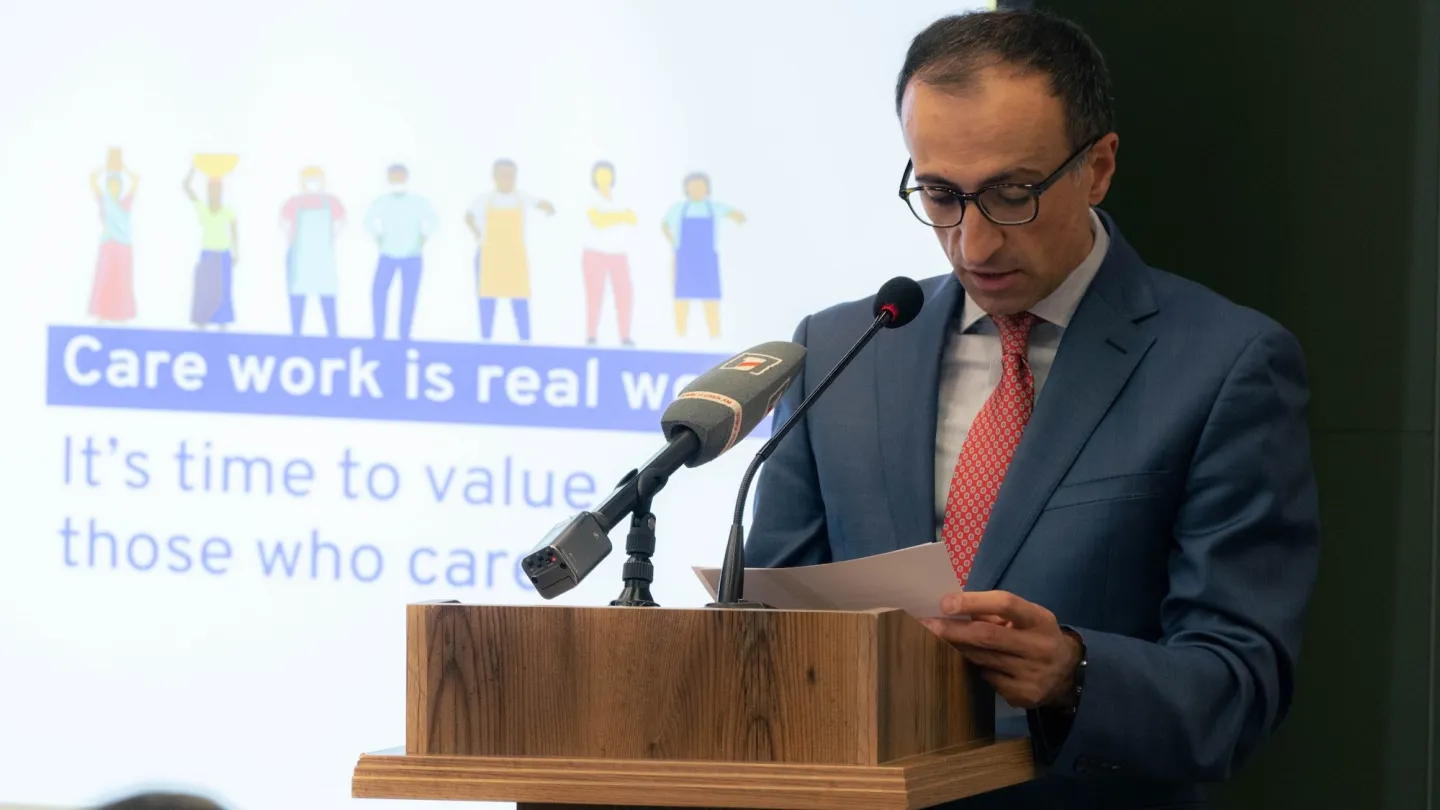
In his keynote address, Arsen Torosyan, Minister of Labour and Social Affairs of Armenia, reaffirmed the Government’s commitment to advancing gender equality and women’s empowerment. He highlighted the priorities outlined in the Employment Strategy 2025–2031 and the Gender Policy 2025–2028, emphasizing that programmes for women’s economic empowerment are integral to Armenia’s broader development agenda. “Our policies aim to create a labour market that supports both women and men in balancing work and family responsibilities, ensuring that care work is recognized and valued,” the Minister noted.
In the keynote statement, Olga Azatyan, the representative of UN Women Armenia, highlighted the importance of addressing care responsibilities as a structural barrier to women’s full participation in the economy.
Özge Berber-Agtas, Gender Equality and Non-Discrimination Specialist at the ILO Decent Work Technical Team and Country Office for Eastern Europe and Central Asia, delivered a presentation on international labour standards on care work and why investing in the care economy matters. She elaborated on the economic and social value of both paid and unpaid care work, noting that it is a cornerstone of economies and societies yet remains undervalued and disproportionately shouldered by women. Berber-Agtas highlighted policy gaps in care leave and care services.
The public dialogue was enriched by a personal testimony from Lusine Hakobyan, a care worker, who shared the key challenges faced by domestic workers in Armenia, including informal employment, undervaluation of their work and poor working conditions without the necessary social and labour protections. A panel discussion titled “Care Work Challenges and Opportunities in Armenia” gathered representatives from the Confederation of Trade Unions of Armenia (CTUA), the Republican Union of Employers of Armenia (RUEA), Armenian Caritas, the Ministry of Labour and Social Affairs and private sector partners. Participants discussed challenges related to unpaid care responsibilities, the lack of affordable care services and gender disparities in the labour market. The dialogue also highlighted the need to strengthen coordination between government institutions, employers and workers to ensure that care policies are inclusive and sustainable.
During the open discussion, participants put forward recommendations for expanding access to childcare and eldercare services, improving care leave provisions, promoting men’s engagement in unpaid care work and collecting gender-disaggregated data to inform policy decisions.
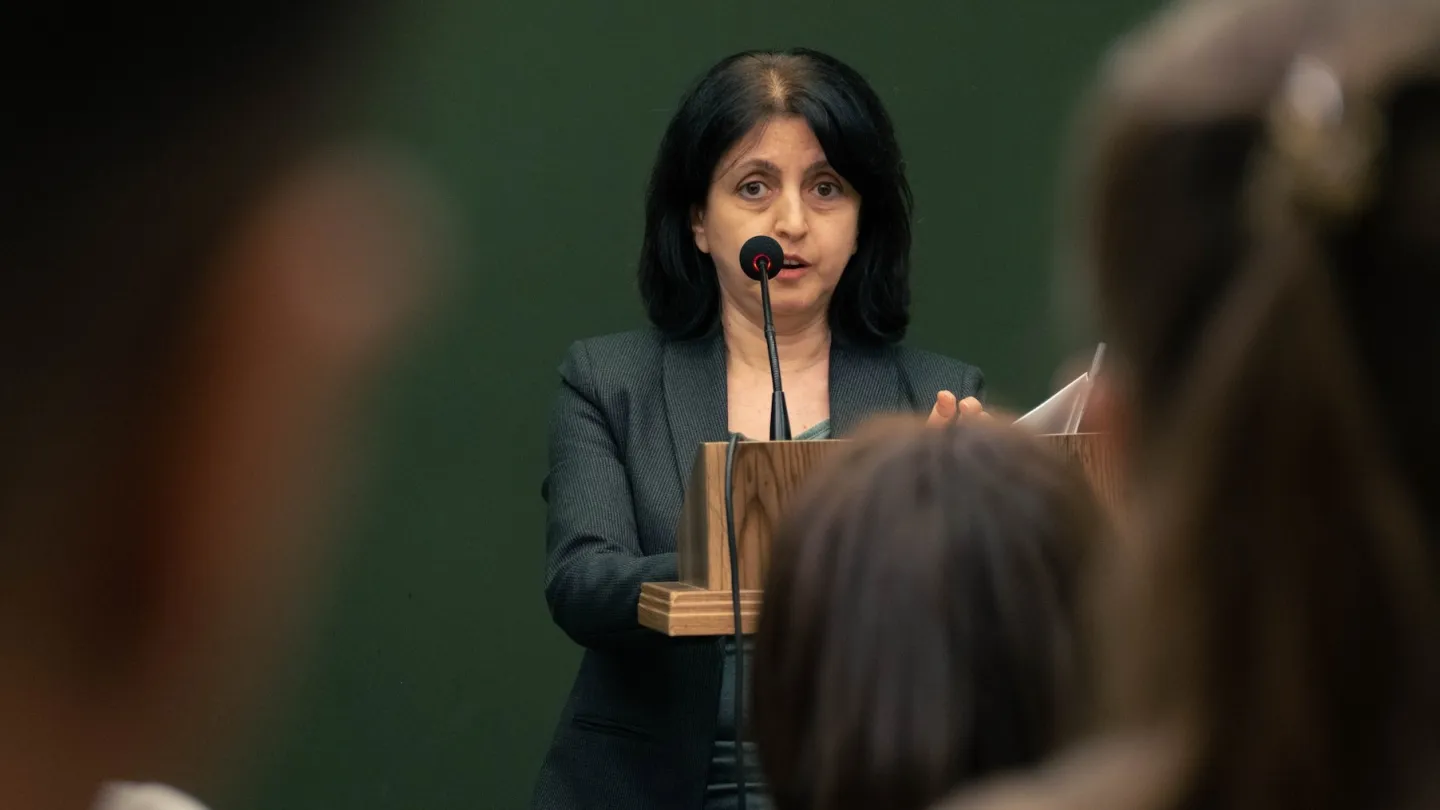
In her closing remarks, Nune Hovhannisyan, ILO National Coordinator of Armenia, underscored that care work must be recognized as a shared social responsibility and integrated into broader efforts toward the formalization of employment. She highlighted the importance of collaboration among tripartite constituents to advance decent work and gender equality. Hovhannisyan reaffirmed the ILO’s continued commitment to supporting Armenia in strengthening its care-related policies in line with international labour standards.
The event was jointly organized by UN Women and the ILO within the framework of the ILO RBSA-funded initiative “Building the capacity of constituents to pre-empt informalisation of work and promote transition to formality in the context of a refugee crisis” and UN Women’s “Women’s Economic Empowerment in the South Caucasus” (Phase III) project, funded by the Swiss Agency for Development and Cooperation (SDC) and the Austrian Development Agency (ADA).
Relevant projects
Building the capacity of constituents of pre-empting informalisation of work and promote transition to formality in the context of a...