


South Asia–GCC migration corridor
ILO and Sri Lanka expand cooperation on social protection for migrant workers
Sri Lankan tripartite partners identified pathways for cooperation with the ILO STREAM Programme to extend social protection for migrant workers employed in the Gulf.
28 November 2025
COLOMBO (ILO News)- The ILO STREAM Programme (Extending social protection to migrant workers and their families in the South Asia–Gulf corridor) team visited Sri Lanka from 13 to 17 October 2025 to discuss national priorities and identify entry points for technical engagement on advancing social protection for Sri Lankan migrant workers in Gulf Cooperation Council (GCC) countries, both at home and across the migration corridor.
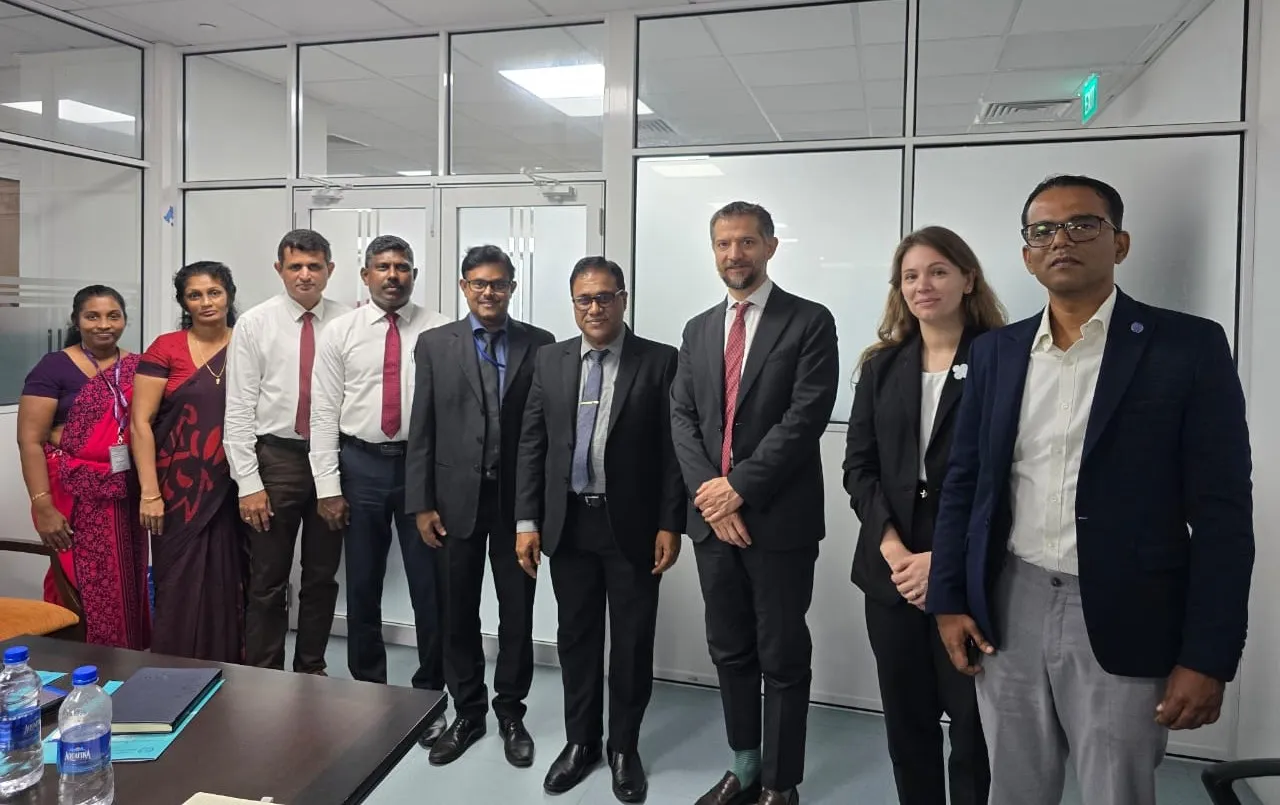
The team held high-level and technical discussions with representatives of the Sri Lankan Ministry of Foreign Affairs, Foreign Employment and Tourism, the Ministry of Labour, the Sri Lanka Bureau of Foreign Employment (SLBFE), trade unions, the Employers’ Federation of Ceylon (EFC), civil society and academia. Stakeholders reaffirmed Sri Lanka’s commitment to strengthening protection for its nationals abroad by including outgoing workers in the national social protection system, mandating pre-departure insurance, extending protection to those in need through the Overseas Workers Welfare Fund, and strengthening cooperation with destination country governments and employers. Pioneering ILO initiatives like the newly launched STREAM Programme are dedicated to supporting these efforts, putting particular focus on the corridor between countries of the Gulf Cooperation Council (GCC) and south Asia.
GCC countries continue to represent the main destination of outgoing labour migrant from Sri Lanka, with estimates indicating that 1.3 million Sri Lankan migrant workers are employed in the Gulf. With social protection reforms underway across GCC countries, ongoing work by the ILO highlights that there is strong momentum to overcome structural gaps and harness new opportunities to expand effective legal access to social protection, especially for women and vulnerable workers.
“Social protection for our workers abroad is not just policy, it is a moral responsibility to ensure that Sri Lankan migrant workers can access benefits at home and abroad,” said Dr Sugath Yalegama, Additional Secretary of the Ministry of Foreign Affairs, Foreign Employment and Tourism. “This collaboration with the ILO helps us move from good intentions to real, lasting systems.”
Discussions with the Sri Lanka Bureau of Foreign Employment highlighted strong commitments to establishing social security systems for migrant workers. Priorities identified for cooperation with the ILO STREAM Programme include revisiting existing insurance schemes for migrant workers to better align them with international standards and sustainable financing models. Exchanges between the SLBFE and the STREAM team also underscored the importance of extending coverage to irregular and undocumented migrant workers, as well as adopting a gender-responsive approach for migrant domestic workers, who are predominantly women. Cross-regional cooperation through stronger inclusion and the enforcement of social security provisions in bilateral labour agreements (BLAs) and memoranda of understanding emerged as another important area for collaboration.
Earlier in November, the Government of Sri Lanka participated in the official launch of the STREAM programme as part of the dialogue session, “From origin to destination: Advancing social protection for workers across the GCC, South Asia and Africa labour migration corridors”, at the Second World Summit for Social Development in Doha. Sharing perspectives from countries of origin at the event, Hon. Mahinda Jayasinghe, Deputy Minister of Labour of Sri Lanka, highlighted that “the Government of Sri Lanka has developed its National Policy on Migration for Employment and National Action Plan 2023–2027 that aim to establish social security systems for migrant workers in-country, in collaboration with host country governments and employers.” Among other goals, the policy seeks to develop a pension programme for migrant workers, and to include provisions for social security in bilateral labour agreements and memoranda of understanding.
During the mission, trade union and employers’ representatives confirmed their support for advancing social protection across the Sri Lanka-GCC migration corridor, including by enhancing workers’ voice, strengthening cooperation and increasing domestic compliance with fair and ethical recruitment practices. Social partners emphasized that many migrant workers lack adequate knowledge of labour and social security rights in the GCC. As such, tailored, country-specific pre-departure orientation is essential to strengthen workers’ agency and inform their decision-making on destination countries, particularly for domestic workers.
Representatives of research institutions and civil society organisations stressed the need to strengthen labour migration governance, while enhancing legal support and case management through consular services. They also highlighted gender- and sector-specific vulnerabilities, including the spillover effects of women’s migration for domestic and care work. Their inputs underscore the need for further in-depth research on how domestic work, care economies and social protection intersect across the South Asia–GCC migration corridor.
All stakeholders reaffirmed the importance of regular data collection and information exchange for evidence-based policymaking and stronger regional dialogue to amplify the voice of countries of origin in negotiations on migrant workers’ labour and social security rights across the corridor.
“Adapting social protection systems to the specific needs of migrant workers is a major challenge for both origin and destination countries, but it is also a strategic investment in sustainable development and decent work,” said Ms Joni Simpson, ILO Country Director for Sri Lanka and the Maldives. “The STREAM Programme will support ongoing efforts to extend migrant workers’ access to social protection in both law and practice in Sri Lanka, while linking these efforts to broader developments across the South Asia–GCC migration corridor.”
STREAM is a multi-country, multi-partner initiative designed to expand inclusive, gender-responsive and rights-based social protection coverage for migrant workers and their families across the South Asia–GCC migration corridor. Implemented by the ILO in partnership and with funding from the Swiss Agency for Development and Cooperation, the Foreign Policy Instrument of the European Union and the Ford Foundation, STREAM aims to create a world where every migrant worker – no matter their gender, status, or sector - can access the social protection they deserve to live and work in dignity.
Related content

Project
STREAM - Extending Social Protection to migrant workers and their families in the South Asia-Gulf Corridor
Relevant projects
Project
STREAM - Extending Social Protection to migrant workers and their families in the South Asia-Gulf Corridor