

Productivity Ecosystems for Decent Work in Egypt
ILO and partners join forces to transform Egypt’s leather and marble industries
Over two days, key stakeholders gathered to validate sector assessments and develop practical roadmaps aimed at improving productivity and working conditions within these industries.
3 June 2025
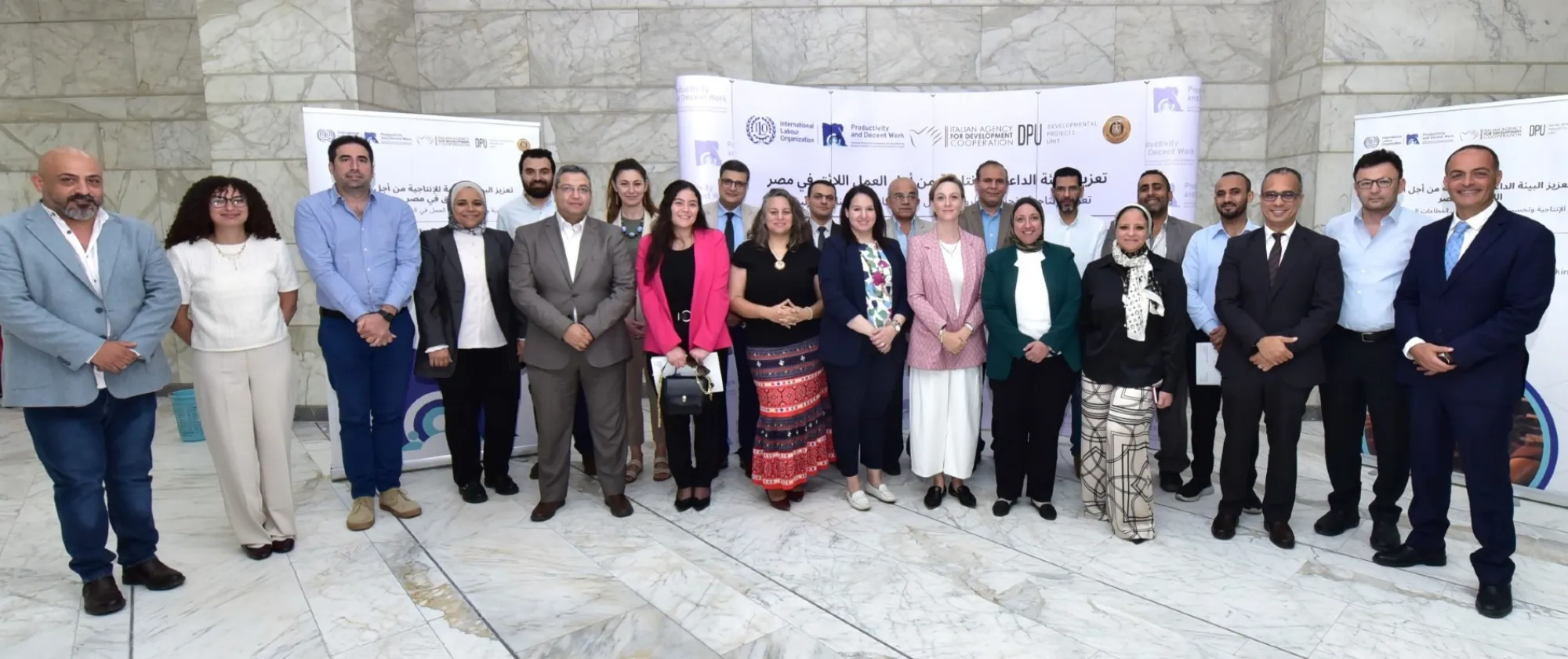
Cairo, Egypt (ILO News)- In a significant step towards revitalizing two of Egypt’s key industries, the International Labour Organization (ILO), in collaboration with the Ministry of Industry and with support from the Italian Agency for Development Cooperation (AICS), convened a two-day validation workshop.
Held within the framework of the ILO’s Productivity Ecosystems for Decent Work in Egypt project, the workshop focused on the leather tanning and marble sectors industries offering strong potential for sustainable growth and job creation.
The event brought together representatives from government, the Federation of Egyptian Industries (FEI), trade unions, industry associations, chambers of commerce, and development partners. Participants validated the findings of recent sector assessments, examined the root causes of deficits in productivity and decent work, and jointly developed actionable roadmaps for sector-wide improvements.
Day 1: Strengthening Egypt’s leather tanning sector
The first day of discussions focused on the Robbiki Leather City cluster, which produces more than 60% of Egypt’s tanned leather. Sector assessments highlighted key challenges, including informality among micro, small and medium- sized enterprises (MSMEs), occupational safety and health (OSH) risks, skills mismatches, and limited export capacity.
Emad Abdel Hameed, Assistant Minister of Industry for Development Projects and Financial Affairs at the Ministry of Industry, emphasized the government’s commitment:
“The leather tanning sector holds tremendous potential for economic growth, exports, and job creation. Developing Robbiki Leather City is a milestone initiative, and our collaboration with the Government of Italy is crucial to strengthening its infrastructure and market systems. However, infrastructure alone is not enough; we must prioritize productivity, skills development, and occupational safety and health.
This workshop has highlighted the sector’s challenges and opportunities, providing evidence-based recommendations from the assessments. Our goal is not just to enhance productivity, but to achieve inclusive economic growth, social justice, and progress towards the Sustainable Development Goals (SDGs). We are committed to continuing this constructive dialogue with all stakeholders to realize a shared vision for industrial development in Egypt.”
Simona Campidano, Economic Development Sector Coordinator at AICS Egypt, underscored the Italian government’s long-standing support:
“Italy has been supporting Egypt’s leather sector since 2001, with investments exceeding €40 million. The PE4DW project, supported by the Italian Ministry of Foreign Affairs and Development Cooperation with a €2.5 million grant, complements two additional initiatives valued at €9 million, focusing on technical assistance and new equipment for the Leather Technology Center.”
The ILO project complements our broader strategy to boost productivity and competitiveness in Robbiki, and we are proud of the inclusive platform it has created for dialogue and cooperation.”
Day 2: Unlocking the potential of the marble sector: Shaq El Thoban cluster
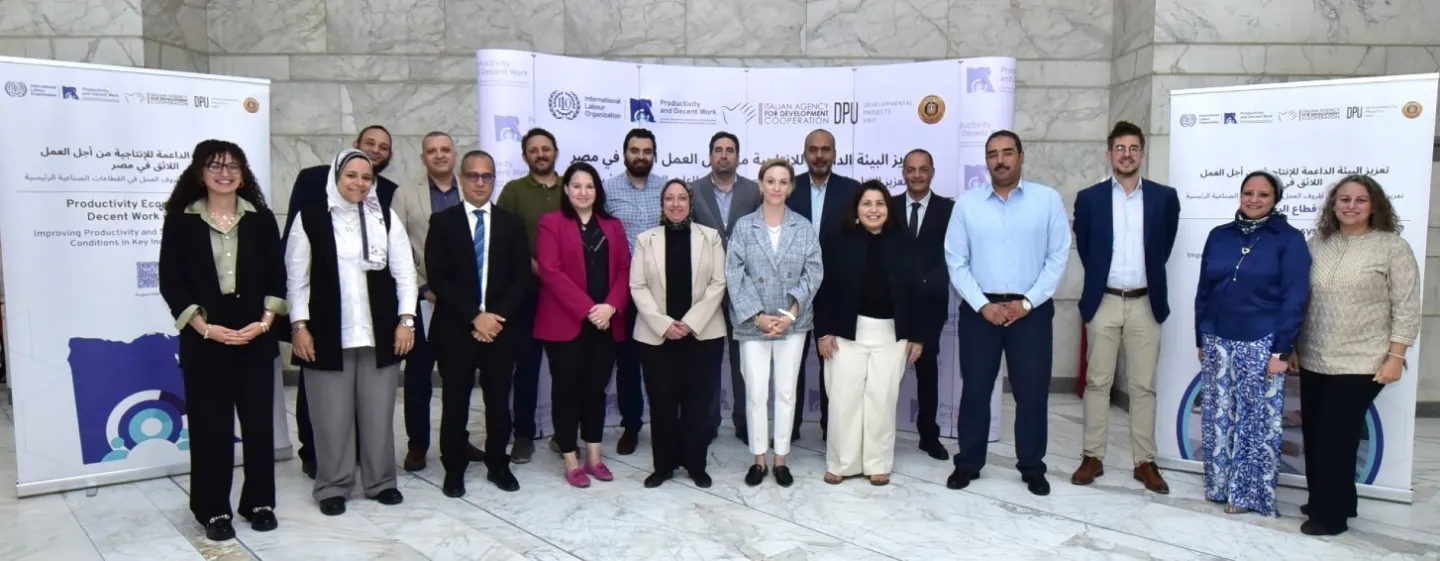
The second day focused on the marble sector, particularly the Shaq El Thoban cluster, one of the largest marble processing hubs in North Africa. Sector assessments identified challenges such as outdated machinery, occupational safety concerns, and a lack of coordination within the sector.
Emad Abdel Hameed, reaffirmed the strategic importance of the sector:
“The marble sector has enormous potential in Egypt, and with targeted support, it can be a major driver of exports and job creation. Technical assistance, such as that provided to the Shaq El Thoban cluster, helps us to understand the challenges and unlock opportunities. While improving infrastructure is important, what truly drives competitiveness is enhanced productivity, better working conditions, and a strong ecosystem in which all stakeholders—government, the private sector, workers, and partners—collaborate around a shared vision.”
Simona Campidano added her remarks on the marble sector:
“Supporting Egypt’s industrial sector is a strategic priority for the Italian government, and the marble industry is a key beneficiary. The Italian government is supporting the marble sector in Egypt within a new €3 million project aiming to provide the marble technology center with the necessary equipment. In addition, €45 million in soft loans will be made available to SMEs, the marble sector being among the selected ones.
This project complements Italy’s cooperation strategy, and the technical assistance provided to Shaq El Thoban helps identify challenges and propose realistic, resilient solutions. Since its inception, this initiative has demonstrated strong stakeholder commitment and provided a valuable platform for open dialogue and progress.”
ILO’s role and the path forward
Valentine Offenloch, Productivity Ecosystems for Decent Work in Egypt Project Manager at the ILO Cairo Office, highlighted the project’s approach and long-term vision:
“Through this project, the ILO is working to strengthen the link between productivity and decent work in key industrial sectors, specifically leather tanning and marble production. Our goal is to build a more inclusive and resilient ecosystem where enterprises can thrive, working conditions are improved, and decent work is prevalent”.
These validation workshops are a critical step in our shared effort to co-create practical, evidence-based solutions. By engaging all stakeholders—from government and business owners to workers and development partners—we are laying the foundation for more sustainable growth, better jobs, and stronger collaboration across the ecosystem.”
The project applies a systems-based approach to enhancing productivity and decent work at sectoral and enterprise levels. The outputs of the validation workshops, including revised activities and stakeholder roles, will inform the next implementation phase guided by the project’s Technical Working Groups and Steering Committee.
At the conclusion of the workshop, all participants reaffirmed their joint commitment to fostering competitive, sustainable, and inclusive industrial ecosystems across Egypt.
Related content

Productivity Ecosystems for Decent Work in Egypt: Improving productivity and strengthening working conditions in key industrial sectors
Relevant projects
Productivity Ecosystems for Decent Work in Egypt: Improving productivity and strengthening working conditions in key industrial sectors