

News
ILO and partners advance refugee inclusion in Ethiopia’s National Health Systems
Key stakeholders in Ethiopia convened a high-level dialogue to strengthen social health protection, discussing refugee inclusion in national health systems and expanding Community-Based Health Insurance to ensure equitable healthcare access for all.
17 December 2024
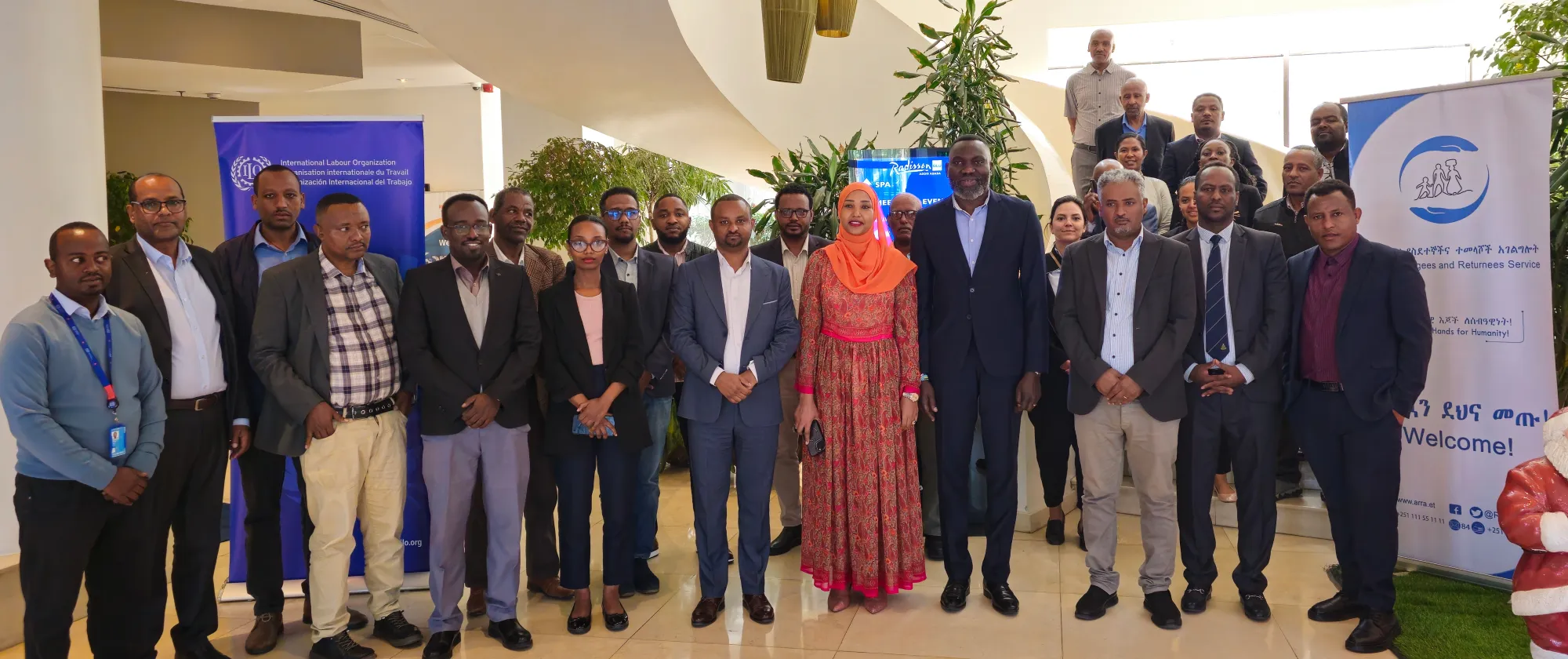
Addis Ababa, ETHIOPIA (ILO News): Refugees & Returnees Service (RRS), the International Labour Organization (ILO), UNHCR Ethiopia, the Ministry of Health (MoH) and the Ethiopian Health Insurance Service (EHIS) convened a high-level dialogue in Addis Ababa focused on improving and strengthening the extension of social health protection to forcibly displaced persons in Ethiopia.
This dialogue held on 17 December 2024 brought together key stakeholders to discuss opportunities for expanding health insurance coverage to all, including refugees, share global and regional best practices for integrating refugees into national health systems and endorse the Terms of Reference (ToR) for Technical Working on the Refugee Inclusion in the Community Based Health Insurance Scheme in Addis Ababa.

In his opening remark, Stephen OPIO, ILO PROSPECTS Chief Technical Advisor for Ethiopia and Sudan, highlighted the importance of universal coverage and access to social protection for all. “Together with our tripartite plus partners, the ILO is committed to the vision of universal social protection, which encompasses policies designed to ensure social health protection with a keen focus on vulnerable groups of the society including refugees, and their host communities”.
The high-level dialogue was graced with participation and keynote remarks from Ethiopia State Minister Health Service and Program Wing, Dr Dereje Duguma who highlighted that Ethiopia has strong and robust health extension program, where the involvement of health experts, the community and relevant actors is very crucial.
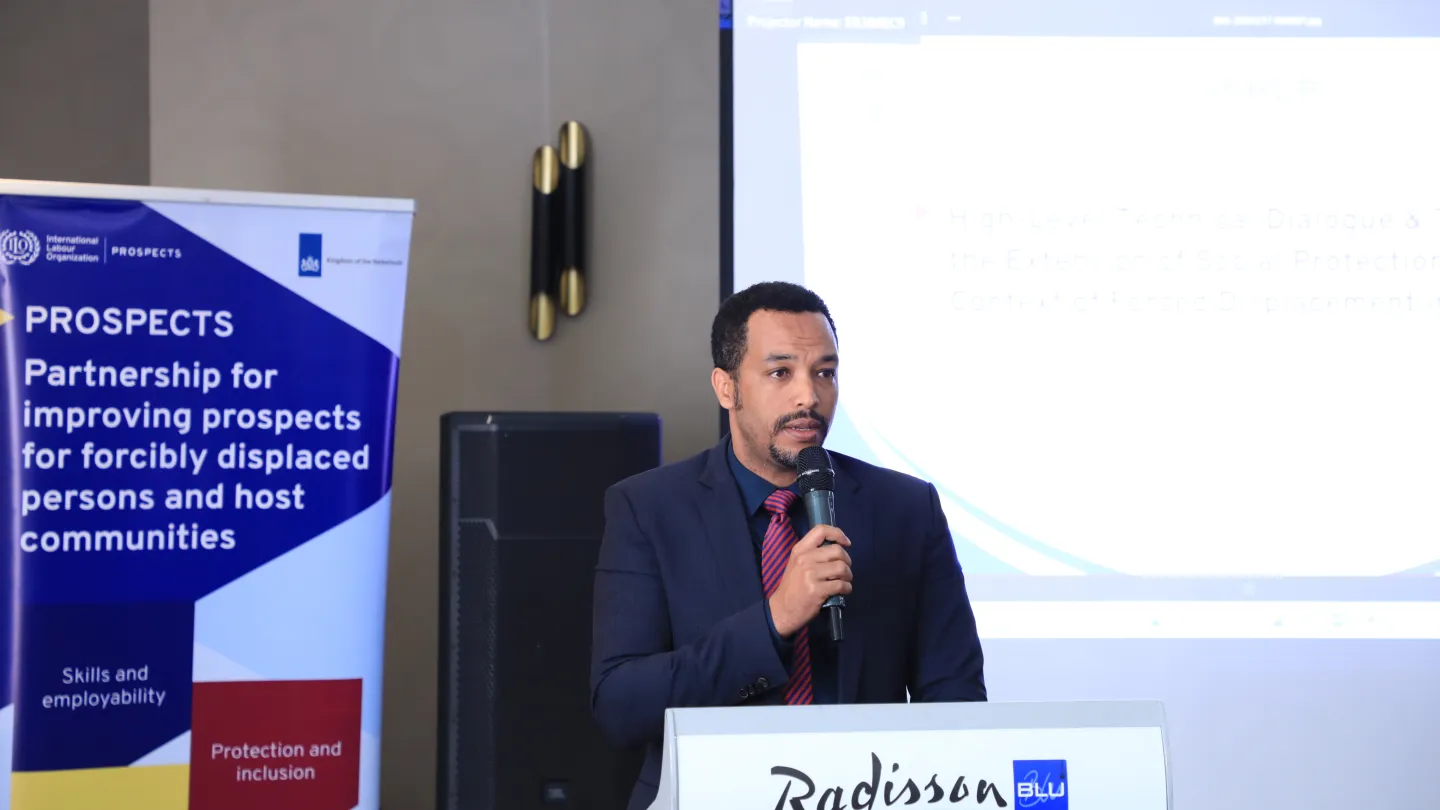
“As internally displaced persons (IDPs) and refugees are important segments of our society, we urge partners to collaborate on availing them the much-needed quality health service for all”, said Dr. Dereje. The state minister also expressed government’s willingness and commitment to the inclusion of refugees and other forcibly displaced persons in the national health system with the view of ensuring the universality of health services and calling upon partners' support and commitment in realizing the same.
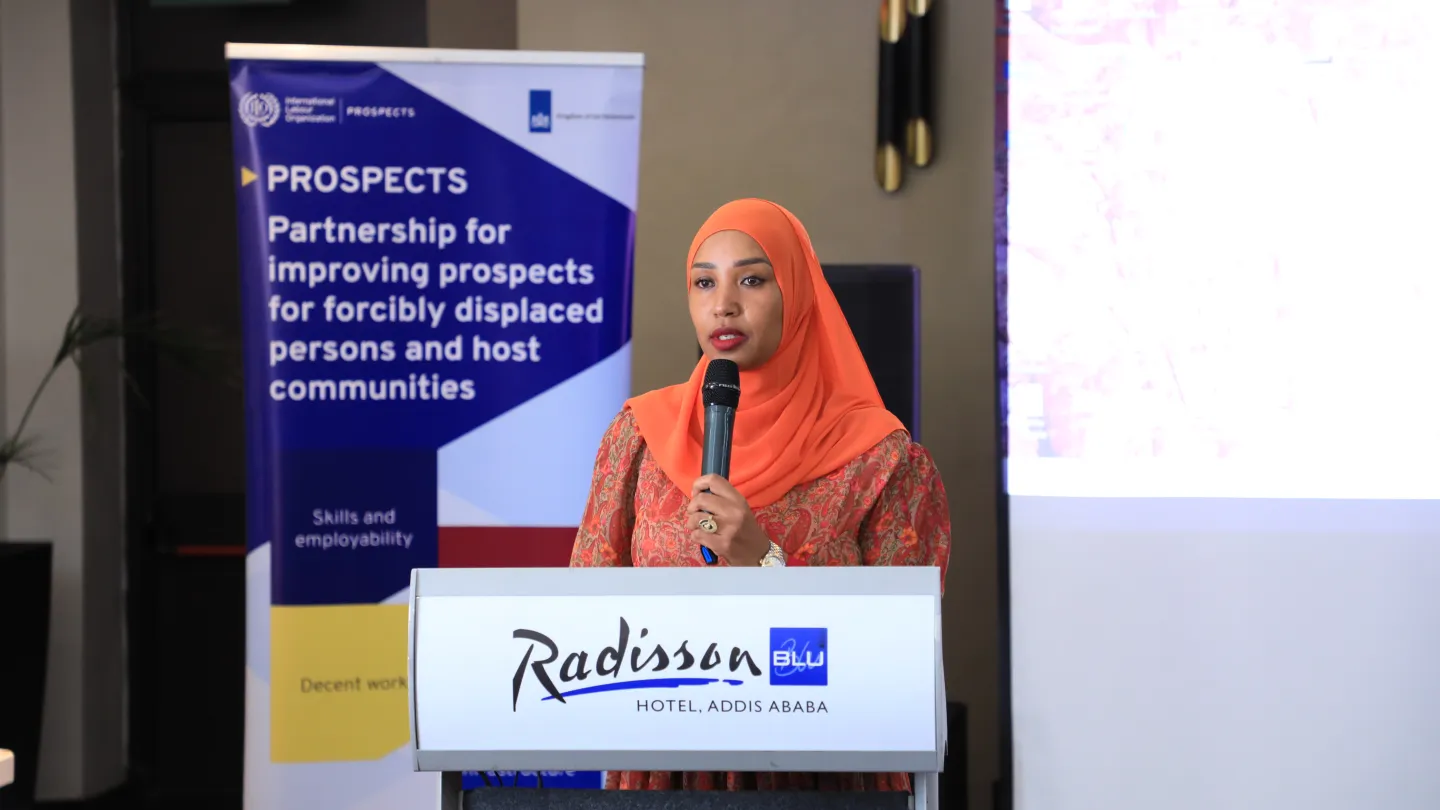
Speaking at the event, Teyiba Hassen, RRS Director General, noted that the inclusion of refugees into the national system signifies the commitment of the people and the Government of Ethiopia, granting them the right to vital events registration and documentation, the right to work, form associations, access to financial services and many more.
She underscored: "In order to translate the inclusion of refugees into existing national systems, we all should advocate for a more inclusive, equitable and human-centered approach by abiding by the international principles of easing the burdens and sharing the responsibilities of hosting communities and governments alike."
Complementing the government’s efforts, UNHCR Representative to Ethiopia Andrew Mbogori lauded country’s open-door asylum policy, where he called on the need to work hand-in-glove to implement such noble initiatives. He underlined that: “Speaking of access to health for refugees, we can’t simply ignore hosting communities. UNHCR is committed to supporting the Government of Ethiopia through RRS to avail Community-Based Health Insurance given that hosting over 1.1 million refugees isn’t an easy task.”
Ethiopia is currently implementing a Community Based Health Insurance Scheme that benefits over 12 million households with 2.6 million of these being the most vulnerable households. As Ethiopia continues to demonstrate leadership in integrating refugees into national systems, the collective efforts of stakeholders serve as a model for fostering resilience, solidarity, and shared responsibility in addressing the challenges of forced displacement.
Related content

Topic portal
Social protection
Social protection
ILO Strategy on extending social protection to migrant workers, refugees and their families

Extending social protection to migrant workers, refugees and their families
Programme
Partnership for improving prospects for forcibly displaced persons and host communities (PROSPECTS)
Relevant projects
ILO-Netherlands Partnership
Partnership for improving prospects for forcibly displaced persons and host communities (PROSPECTS) in Ethiopia
Programme
Partnership for improving prospects for forcibly displaced persons and host communities (PROSPECTS)