


Social Protection
ILO and European Union launch diploma in social protection for the Africa portuguese-speaking countries
The diploma aims to strengthen the technical and strategic capacities of social protection professionals, contributing to the modernization and sustainability of social security systems in the participating Portuguese-speaking countries.
23 June 2025
Luanda, Angola (ILO News) - The opening course of the Diploma in Social Protection Management, a joint initiative of the International Labour Organization (ILO) and the European Union (EU), in collaboration with the National Institute of Social Security (INSS) of Angola and the International Training Centre of the ILO (ITCILO), began today in Luanda.
The inaugural ceremony took place at the SAPIENS Institute and was attended by the Ambassador of the European Union, Rosário Bento Pais, the Chairman of the Governing Board of INSS Angola, Anselmo Monteiro, the ILO Programme Manager in Angola, Denise Monteiro, and the ITCILO Programme Officer, Elton Maciel.
The diploma aims to strengthen the technical and strategic capacities of social protection professionals, contributing to the modernization and sustainability of social security systems in the participating Portuguese-speaking countries. The first training, dedicated to the theme "Information and Communication Technologies in Social Protection", is held from 23 to 27 of June, and marks the start of a structured program with a total duration of 18 months.

The training brings together 35 participants, including 29 technical staff and directors of INSS Angola and representatives of social protection institutions from Cape Verde, Guinea-Bissau and São Tomé and Príncipe. The aim is to promote the exchange of good practices, foster shared solutions to common challenges and consolidate a technical community of social protection between countries.
The diploma program consists of five key learning areas: Information and Communication Technologies, Good Governance, Quality of Services, Digital Transformation and a Final Project (Capstone). The initiative is funded by the European Union under the project "Expansion of Social Security to Support the Formalization of the Angolan Economy (ESSAFE Angola)", implemented by the ILO, funded by the European Union.

During the opening session, the Ambassador of the European Union, Rosário Bento Pais, made it known that the Diploma in Social Protection Management marks a new chapter in the joint journey towards a more accessible and inclusive social protection system, highlighting Angola's ratification of Convention 102, held this month in Geneva, as a result of the ESSAFE Angola Project.
"The work of this project, the collaboration with the INSS and the contribution of this training are important so that this wealth created can reach the entire population, including the most vulnerable, through more robust, effective and inclusive social protection systems", said the Ambassador.
For the Chairman of the Board of the INSS Angola, Anselmo Monteiro, it is important that participants are involved in all phases of the program to obtain the Diploma in Social Protection Management, having appealed to the INSS staff, active participation and better use during the training modules.
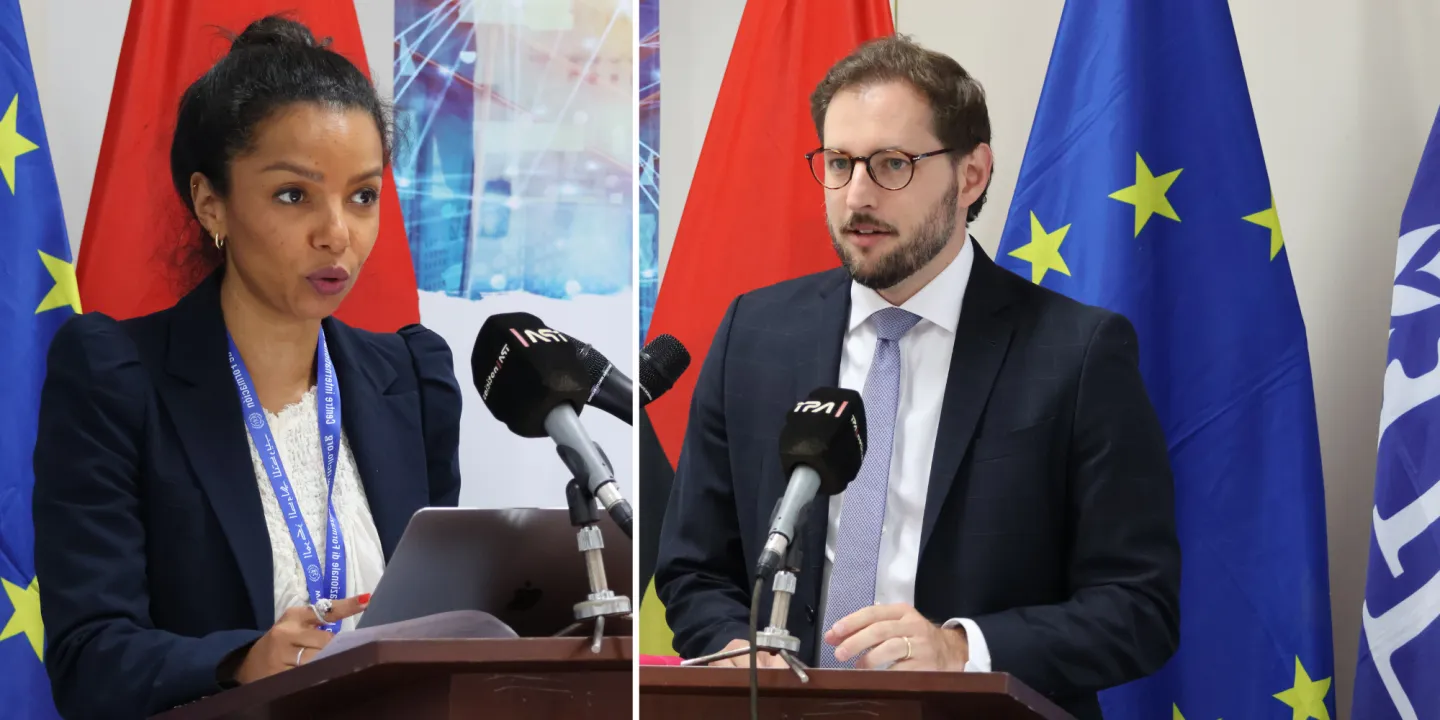
The ILO's programme manager in Angola, Denise Monteiro, described the objectives of this training programme and highlighted the importance of the initiative.
"This is more than a course, it is an opportunity for personal, institutional and systemic transformation; the participants present here are not just trainees, they are agents of change, and that is why we believe that investing in the people who make the systems work is one of the most effective ways to promote social justice, reduce inequalities and accelerate the formalization of work", said Denise Monteiro.
The ITCILO's programme officer, Elton Maciel, welcomed the initiative of the ESSAFE Angola project and mentioned the important contribution of the International Social Security Association (ISSA) to this training programme, which also aims to adapt social protection systems to the standards and guidelines of the ISSA.

This action represents a significant step towards strengthening social protection as a key pillar of decent work and inclusive development in the participating countries.