

ILO and Azerbaijan discuss child labour and international labour standards
The tripartite webinar explored practical approaches to child labour prevention, labour inspection and implementation of ILO standards in Azerbaijan.
30 April 2026
BAKU (ILO News) – The International Labour Organization (ILO), in cooperation with the Ministry of Labour and Social Protection of the Population of the Republic of Azerbaijan, organized an online tripartite webinar on 30 April 2026 on the elimination of child labour as a fundamental principle and right at work – international labour standards and practical implementation.
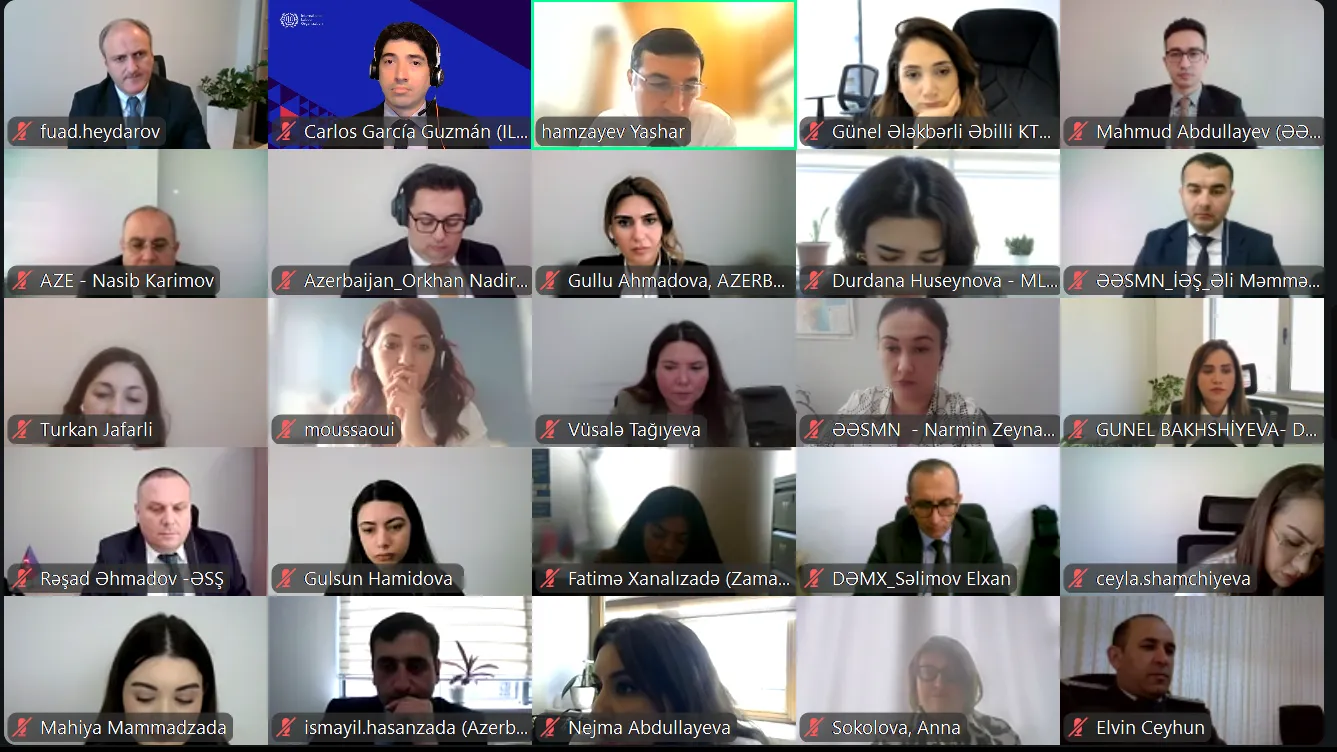
The webinar brought together more than 50 representatives of government institutions, labour inspectorates, employers’ and workers’ organizations, and other stakeholders involved in child labour prevention and response in Azerbaijan.
The event aimed to strengthen understanding of the elimination of child labour as a fundamental principle and right at work, with a particular focus on the international legal framework established by the Minimum Age Convention, 1973 (No. 138), and the Worst Forms of Child Labour Convention, 1999 (No. 182). Discussions also addressed global trends, implementation challenges, the role of the ILO supervisory system and practical approaches to prevention, coordination and enforcement.
Opening remarks were delivered by Fuad Heydarov, Head of the Labour Policy Department of the Ministry of Labour and Social Protection of the Population of the Republic of Azerbaijan, and Yashar Hamzayev, ILO National Coordinator for Azerbaijan. The speakers highlighted the importance of continued efforts to prevent and eliminate child labour, strengthen labour inspection and institutional coordination, and promote effective implementation of international labour standards. They also referred to the importance of social dialogue, digital monitoring tools and inter-agency cooperation mechanisms in supporting child labour prevention and labour governance efforts.
The first technical session was delivered by Rima Moussaoui, Legal Officer in the ILO International Labour Standards Department (NORMES), who presented the international legal framework on child labour, including the scope, obligations and implementation requirements of Conventions Nos. 138 and 182. The session also addressed recurring implementation challenges identified through the ILO supervisory system.

The second technical session, delivered by Carlos Garcia Guzman, International Labour Standards Specialist for Eastern Europe and Central Asia, focused on the transition from standards to implementation, including the role of the ILO supervisory system, institutional and enforcement challenges, and practical approaches to strengthening implementation systems. Particular emphasis was placed on labour inspection, social protection, education, institutional coordination and the role of social partners in addressing child labour effectively.
The webinar reaffirmed the importance of tripartite dialogue, institutional coordination and international cooperation in advancing efforts to eliminate child labour and promote decent work.