

ILO advocates for inclusive employment at EU conference on rights of persons with disabilities
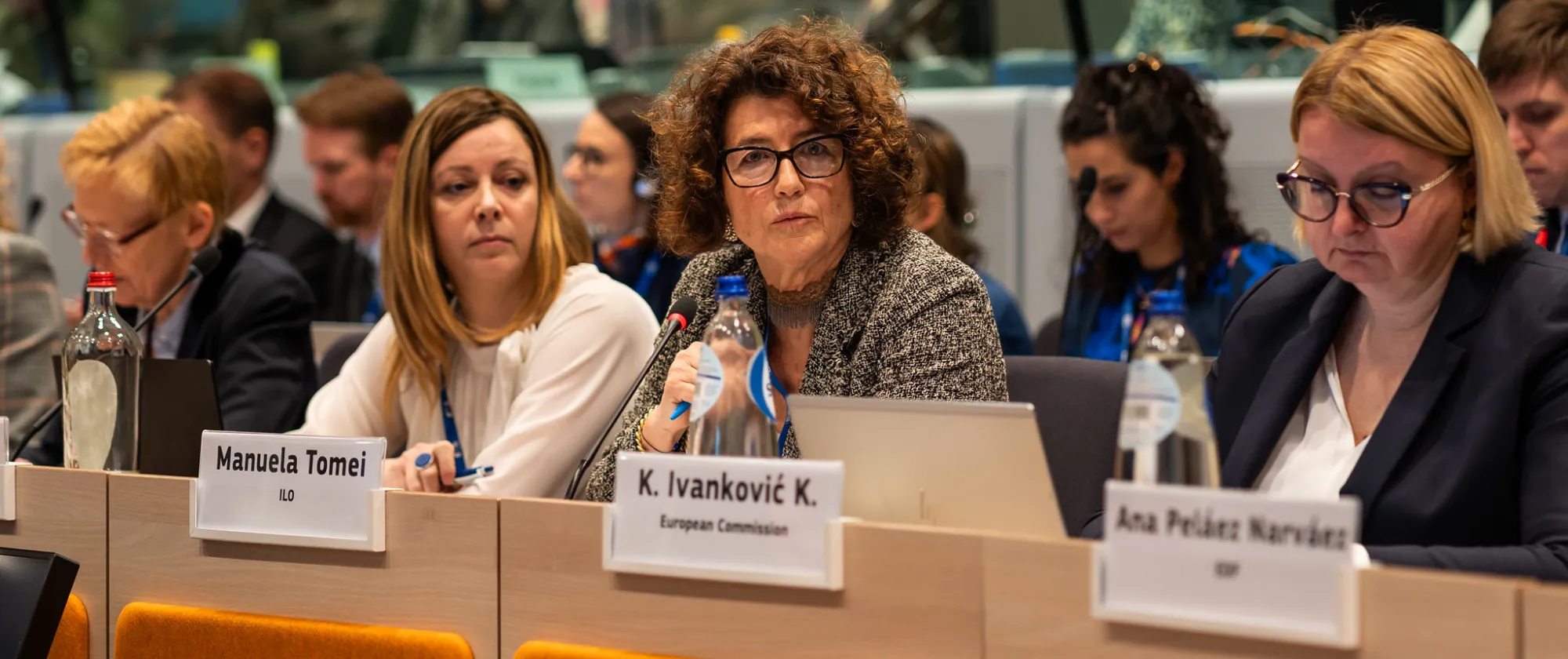
Manuela Tomei, ILO Assistant Director-General, stressed the need to stressed the need to take a human-centred approach that considers the specific needs of persons with disabilities and to embed gender and youth perspectives in policy making.
19 March 2024
© David Jacobs
Manuela Tomei, Assistant Director-General for Governance, Rights and Dialogue, highlighted the disproportionate disadvantages persons with disabilities experience to access and secure decent jobs. In a keynote address to the conference “Towards full inclusion of persons with disabilities – the European Pillar of Social Rights and beyond”, organized by the Belgian EU Presidency, she also underlined the need for adequate social protection.
In March 2021, the European Commission adopted the Strategy for the rights of persons with disabilities 2021-2030, which recognizes access to employment for persons with disabilities as a key priority. In this regard, the ILO welcomed the EU’s decision to include the ‘disability employment gap’ as a headline indicator to the social scoreboard of the European Pillar of Social Rights.
The ILO has a longstanding commitment to promote social justice and achieve decent work for persons with disabilities, through its international labour standards and programmes. Ms Tomei highlighted five areas in which the ILO considers it necessary to prioritise disability inclusion: vocational training and public employment services, employment inclusion practices in workplaces; the digital and green transitions; violence and harassment in the workplace, and social dialogue.
She stressed the need to embed gender and youth perspectives in policymaking at the national, EU and global levels, as well as to take a human-centred approach that considers the specific needs of persons with disabilities. The quality of employment, which is already much lower for these workers, further decreases for (female) youth, who are twice as likely as their peers without disabilities not to be in employment, education or training (NEETs). Hence, mainstreaming of disability inclusion in employment and social services must be jointly implemented with individualised targeting.
Positively, there are signals of a shift in the understanding and definition of “inclusive employment”, moving away from fitting the person to the job, in favour of adapting the work environment to the employee. This includes several interventions, from daily practising inclusion to enabling housing and transport arrangements.
She congratulated the European Commission, and the EU, for joining the ILO Global Coalition for Social Justice. The Coalition’s pillar on ending inequality and discrimination includes a specific commitment to persons with disabilities.
The Assistant Director-General concluded by underlining the importance of policy coherence in the design and implementation of disability inclusive interventions.
In March 2021, the European Commission adopted the Strategy for the rights of persons with disabilities 2021-2030, which recognizes access to employment for persons with disabilities as a key priority. In this regard, the ILO welcomed the EU’s decision to include the ‘disability employment gap’ as a headline indicator to the social scoreboard of the European Pillar of Social Rights.
The ILO has a longstanding commitment to promote social justice and achieve decent work for persons with disabilities, through its international labour standards and programmes. Ms Tomei highlighted five areas in which the ILO considers it necessary to prioritise disability inclusion: vocational training and public employment services, employment inclusion practices in workplaces; the digital and green transitions; violence and harassment in the workplace, and social dialogue.
She stressed the need to embed gender and youth perspectives in policymaking at the national, EU and global levels, as well as to take a human-centred approach that considers the specific needs of persons with disabilities. The quality of employment, which is already much lower for these workers, further decreases for (female) youth, who are twice as likely as their peers without disabilities not to be in employment, education or training (NEETs). Hence, mainstreaming of disability inclusion in employment and social services must be jointly implemented with individualised targeting.
Positively, there are signals of a shift in the understanding and definition of “inclusive employment”, moving away from fitting the person to the job, in favour of adapting the work environment to the employee. This includes several interventions, from daily practising inclusion to enabling housing and transport arrangements.
She congratulated the European Commission, and the EU, for joining the ILO Global Coalition for Social Justice. The Coalition’s pillar on ending inequality and discrimination includes a specific commitment to persons with disabilities.
The Assistant Director-General concluded by underlining the importance of policy coherence in the design and implementation of disability inclusive interventions.