

Inside story
ILERA holds 10th Africa Regional Congress
As the global employment landscape continue to evolve, there is need for all players to address the challenges that the world of work is grappling with. This is what prompted the International Law and Employment Relations (ILERA) to hold its 10th Africa Regional Congress in Livingstone to deliberate on innovative solutions.
8 April 2024
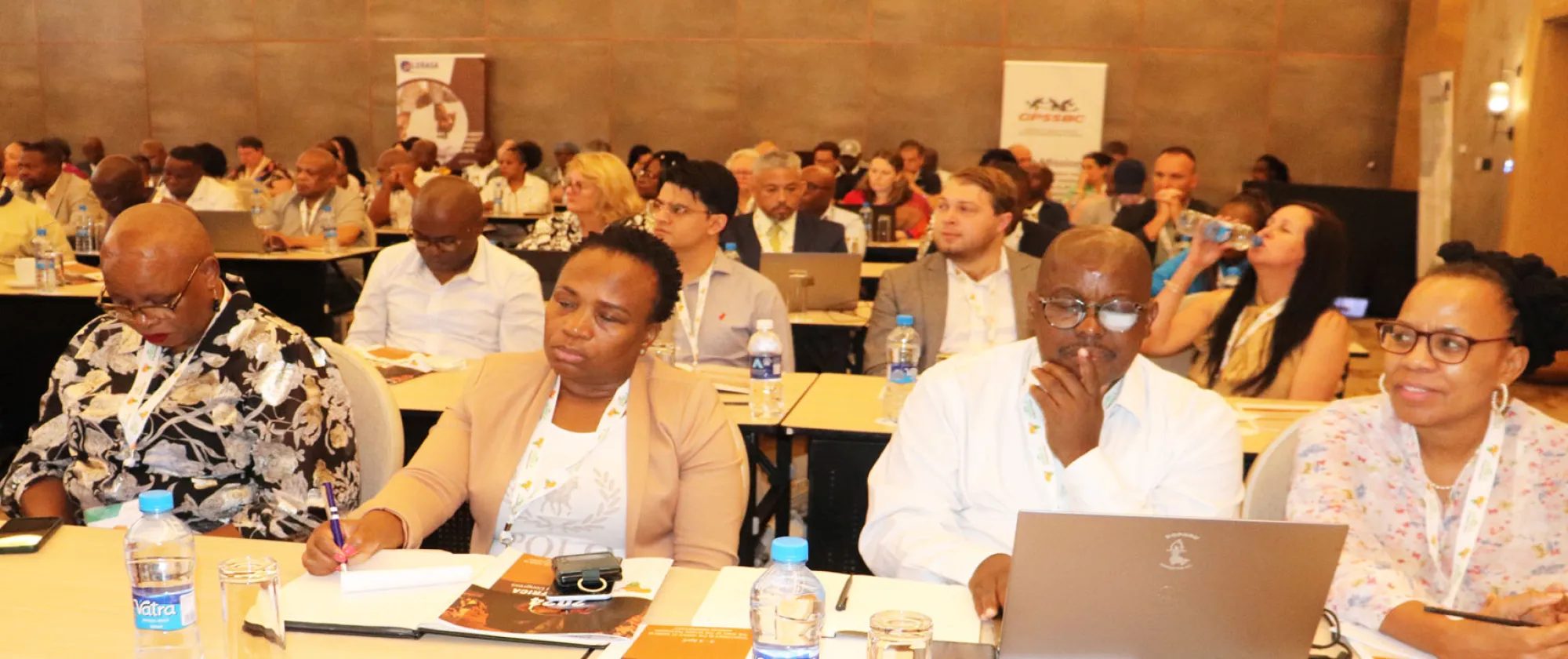
The Congress, which was held from 3 to 4 April 2024 under the theme: ‘Challenges in the world of work in the wake of the global polycrisis: African perspective’, brought together employment relations specialists, labour administrators, industrial relations practitioners, as well as social dialogue specialists, representatives of workers’ and employers’ organizations, government officials, labour lawyers, academia, and all others dealing with employee relations to discuss various issues affecting the world of work.
The Congress was graced by Southern Province Minister Honourable Mr. Credo Nanjuwa, who represented Minister of Labour and Social Security Honourable Mrs. Brenda Tambatamba during the official opening ceremony.
Officiating at the event, Mr. Nanjuwa said Zambia, like other Africa countries was faced with high youth unemployment levels, stating that the Zambian government had setup the Constituency Development Fund (CDF), focusing on skills development and youth empowerment loans and grants to resolve the challenge.
He added that the government was in the process of developing legislation on work-based learning with a view of enhancing employability of young people.
“Government has placed premium on the need to enhance the productive capacities of micro, small and medium enterprises to make them more resilient, innovative, and sustainable. In this regard, the national productivity policy and the recently developed micro, small and medium enterprises policy provided targeted measures to address the most pressing needs of this sector such as low access to capital and markets, poor workers’ attitudes, low productivity, and skills deficiencies,” said Mr. Nanjuwa.
Welcoming delegates, Regional Organising Committee Chairperson Mr. Frikkie De Bruin said the Congress has attracted employment law and relations scholars and practitioners to share their insights on the latest development in the field.
Mr. De Bruin hoped that the Congress would stimulate intellectual debate and help find solutions to the challenges faced in the world of work.
Meanwhile, International Labour Organization (ILO) Director- Governance and Tripartism, Ms. Vera Lucia Paquete-Perdigao said the Congress presented an opportunity for the ILO to learn about latest trends, approaches, and perspectives in the world of work for future policy developments.
Delivering her keynote address on ‘advancing social justice in a constantly evolving multi-crisis labour market,’ Ms. Paquete- Perdigao observed that actors of the labour markets faced many challenges, hence ILO’s call for social justice through decent work appeared as evident and more valid than ever.
“The current poly-crisis phenomenon cannot be seen as isolated from other equally relevant factors. We live in times of poly-crises, which makes it more complex to achieve a comprehensive response. The conjunction of multiple crises (health, environmental, political, social, immigration) has a profound impact on the daily lives of millions of people in the world. We are more exposed to measures that changed the way of working, either by sanitary regulation/ technology or climate change affecting workers and productivity, "she said.
At the same event, ILO Deputy Regional Director for Africa Dr. Coffi Agossou said despite the importance given to social protection policies at both regional and national levels, social protection coverage remained limited in Africa, where only 17 per cent of the total population received at least one social protection benefit compared with the global average of 47 percent.
Making a keynote address on social protection, migrancy and the informal economy in Africa on Day II session, Dr Coffi stated that 1.2 billion Africans were left without any social protection coverage.
“The ILO Regional Office for Africa, in close collaboration with the AU, launched the Africa Regional Social Protection Strategy 2021- 2025: Towards 40 percent – a social protection coverage acceleration framework to achieve the SDGs (ARSPS 2021-2025). The Strategy addresses the root causes of coverage deficits on the continent, establishes principles that should guide the extension of social protection, and identifies three action areas that are necessary to bring about tangible change,” he said.
During the Congress, ILO Country Office Director for Zambia, Malawi and Mozambique, Mr. Wellington Chibebe and Labour Law Specialist in the Governance and Tripartism, Mr. Pablo Arellano moderated sessions on social protection, migrancy and the informal economy in Africa, featuring employment law and relations experts on Day I and Day II respectively.