

Guyana, Saint Vincent and the Grenadines prepare to strengthen national OSH policy processes
Constituents participate in national ILO-facilitated sessions to articulate priorities and next steps
3 December 2021
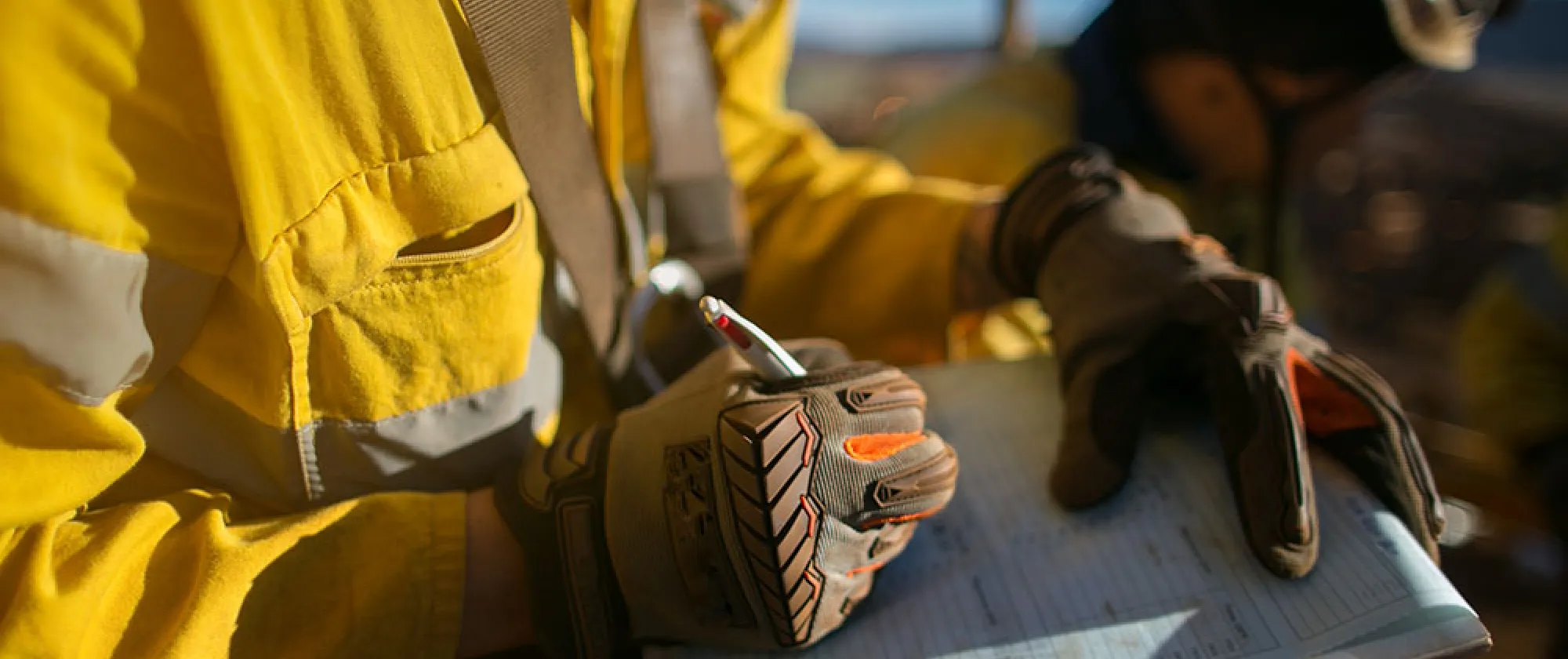
Worker with OSH checklist on construction project
© Adobe stock images - By Kings Access
Workers across the Caribbean have become more vulnerable to hazards caused by the ongoing COVID-19 pandemic and more frequent natural disasters, making occupational safety and health (OSH) a key priority for national-level response, recovery and resilience.
To minimize how these risks can disrupt workforces and economic productivity levels, Guyana and Saint Vincent and the Grenadines have mobilized their governments, employers’ organizations and trade unions to work together to improve how they anticipate, recognize, evaluate and control national-level occupational risk assessment and management.
With technical assistance from the ILO Caribbean Office, tripartite constituents from each country recently participated in virtual consultations tailored to their national context with an aim to:
While Guyana previously launched a National Policy on Occupational Safety and Health in April 2019, the country requires a national programme to be developed in order to implement the policy.
With support from the ILO Caribbean Office, Guyana held a consultation on 28 September 2021 to bring together decision makers from the government, private sector and trade unions to identify national OSH priorities to be addressed in the progamme. Participating organizations included the Ministry of Labour, Consultative Association of Guyanese Industry (CAGI), Guyana Trade Union Congress (GTUC), and the Federation of Independent Trade Unions of Guyana (FITUG).
“I have a vision for OSH in Guyana and in my vision a few things stand out. I would like to see us aim for zero accidents. I am aware that this is the ideal; with the collaboration with our partners and stakeholders we can work towards it,” said the Honourable Joseph Hamilton, Minister of Labour for Guyana when addressing the tripartite audience.
Among the top national OSH issues identified by constituents were research and data on harmful chemicals; accidents and fatalities; as well as the compliance of measures in the OSH policy.
They also recommended necessary actions for developing and implementing the national OSH programme, including:
Through technical and financial assistance from the ILO Caribbean Office, the country hosted a virtual consultation with tripartite constituents and other key partners on Friday, 26 November 2021 to tailor the process to its national context. Participating agencies included the Department of Labour, the St. Vincent Employers’ Federation, the Commercial Technical and Allied Workers Union and the Public Service Union.
“I welcome this next step in the process with enthusiasm and unapologetically will say that it has been a long time coming and hopefully a change is finally going to come,” said Helena Thomas, President of St. VIncent Employers’ Federation. “I am confident that this session will yield meaningful results and help to chart the way forward for the rollout and implementation of this Act.”
During the consultation, participants identified several OSH risks that should be addressed through the OSH Act including ergonomics, proper ventilation, safe equipment, hearing loss and hazardous chemicals.
They also concluded by recommended necessary actions and goals for developing and implementing the national OSH programme of action including:
To minimize how these risks can disrupt workforces and economic productivity levels, Guyana and Saint Vincent and the Grenadines have mobilized their governments, employers’ organizations and trade unions to work together to improve how they anticipate, recognize, evaluate and control national-level occupational risk assessment and management.
With technical assistance from the ILO Caribbean Office, tripartite constituents from each country recently participated in virtual consultations tailored to their national context with an aim to:
- Reinforce capacitates on occupational safety and health
- Introduce and review National OSH Programmes
- Gather inputs from key stakeholders to develop the National OSH Programme
While Guyana previously launched a National Policy on Occupational Safety and Health in April 2019, the country requires a national programme to be developed in order to implement the policy.
With support from the ILO Caribbean Office, Guyana held a consultation on 28 September 2021 to bring together decision makers from the government, private sector and trade unions to identify national OSH priorities to be addressed in the progamme. Participating organizations included the Ministry of Labour, Consultative Association of Guyanese Industry (CAGI), Guyana Trade Union Congress (GTUC), and the Federation of Independent Trade Unions of Guyana (FITUG).
“I have a vision for OSH in Guyana and in my vision a few things stand out. I would like to see us aim for zero accidents. I am aware that this is the ideal; with the collaboration with our partners and stakeholders we can work towards it,” said the Honourable Joseph Hamilton, Minister of Labour for Guyana when addressing the tripartite audience.
Among the top national OSH issues identified by constituents were research and data on harmful chemicals; accidents and fatalities; as well as the compliance of measures in the OSH policy.
They also recommended necessary actions for developing and implementing the national OSH programme, including:
- ongoing tripartite cooperation;
- increasing compliance inspections;
- hosting multistakeholder consultations;
- raising OSH awareness within industries;
- appointing safety champions;
- establishing a culture in leadership and management;
- creating standards manual and training;
- forming statutory bodies for enforcement and compliance;
- tailoring OSH policies for sectors such as agriculture, construction; mining and oil and gas; and
- ratifying C190 and R206 to address sexual harassment as an OSH issue.
Through technical and financial assistance from the ILO Caribbean Office, the country hosted a virtual consultation with tripartite constituents and other key partners on Friday, 26 November 2021 to tailor the process to its national context. Participating agencies included the Department of Labour, the St. Vincent Employers’ Federation, the Commercial Technical and Allied Workers Union and the Public Service Union.
“I welcome this next step in the process with enthusiasm and unapologetically will say that it has been a long time coming and hopefully a change is finally going to come,” said Helena Thomas, President of St. VIncent Employers’ Federation. “I am confident that this session will yield meaningful results and help to chart the way forward for the rollout and implementation of this Act.”
During the consultation, participants identified several OSH risks that should be addressed through the OSH Act including ergonomics, proper ventilation, safe equipment, hearing loss and hazardous chemicals.
They also concluded by recommended necessary actions and goals for developing and implementing the national OSH programme of action including:
- conducting regular risk assessments;
- performing compliance inspections;
- training persons to perform OSH tasks and identify issues;
- conducting physical assessment including hearing checks for workers who use heavy equipment;
- making emergency response services available;
- setting safety standards for chemical use; and
- developing a broad policy framework for employers and employees to understand and follow OSH policies and objectives.