

Governors’ Spouses Join Forces with ILO to End Child Labour in Nigeria
The International Labour Organization (ILO) has rallied Nigeria’s Governors’ spouses to lead the fight against child labour, urging stronger political will, investment in education, and social protection to secure a better future for Nigerian children.
7 November 2025
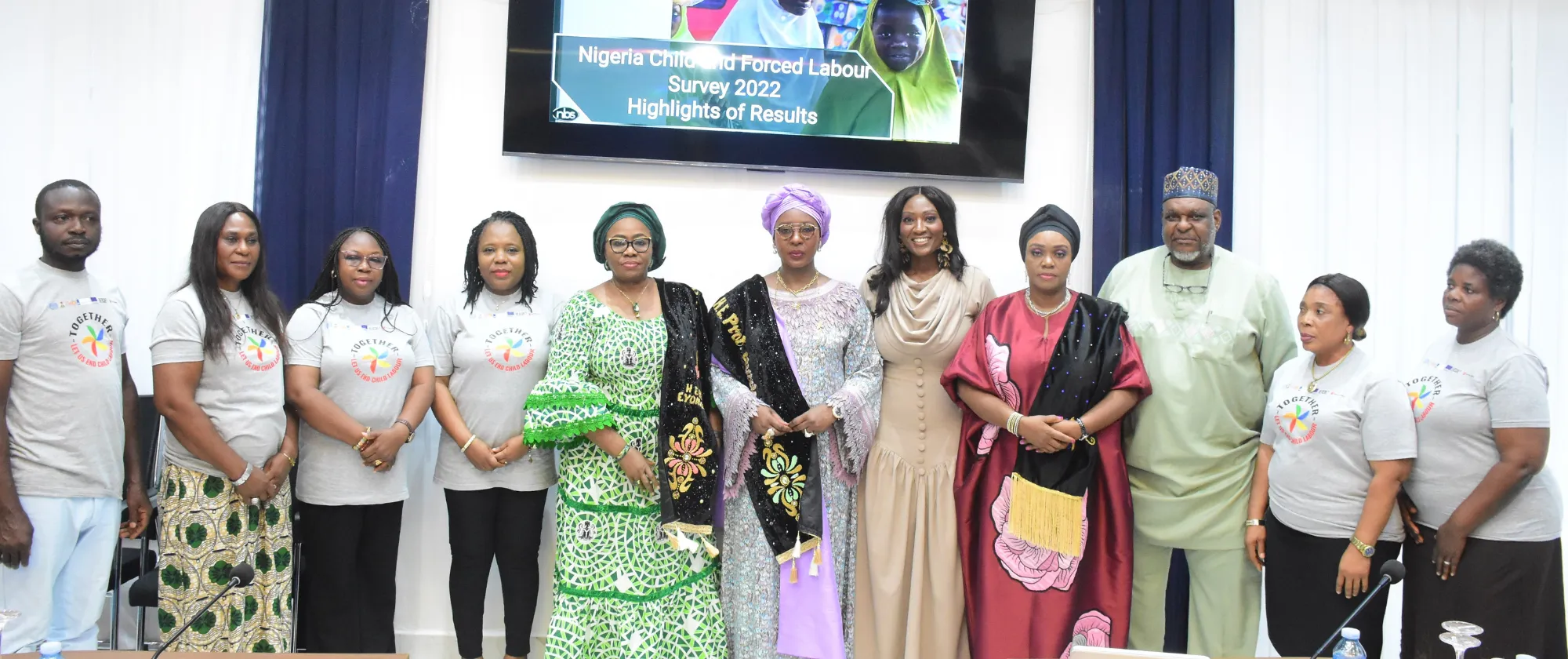
The advocacy visit, held during the Forum’s retreat in Calabar, Cross River State, brought together key stakeholders to discuss the widespread prevalence of child labour and the urgent need for coordinated, state-led action. The ILO Country Director for Nigeria, Ghana, Liberia, Sierra Leone, and ECOWAS, Dr. Vanessa Phala, called on First Ladies to become champions for child rights and education at the state level.
Child labour is not just a violation of right, it is a barrier to Nigeria’s development.
Dr. Vanessa Phala, ILO Country Director for Nigeria, Ghana, Liberia, Sierra Leone, and ECOWAS
Referencing the National Child Labour Survey by the National Bureau of Statistics (NBS), Dr. Phala highlighted the scale of the problem and the need for targeted interventions. Mr. Henry Monu of the NBS presented disaggregated data showing the extent of child labour across Nigeria’s 36 states, reinforcing the need for urgent, localized responses.
Representing the Honourable Minister of Labour and Employment, Mrs. Olaolu Olaitan, Director of Inspectorate, noted that Sub-Saharan Africa has the highest global prevalence of child labour. She called for the leadership of the First Lady of Nigeria to spearhead a national movement to end child labour and achieve Sustainable Development Goal (SDG) Target 8.7.
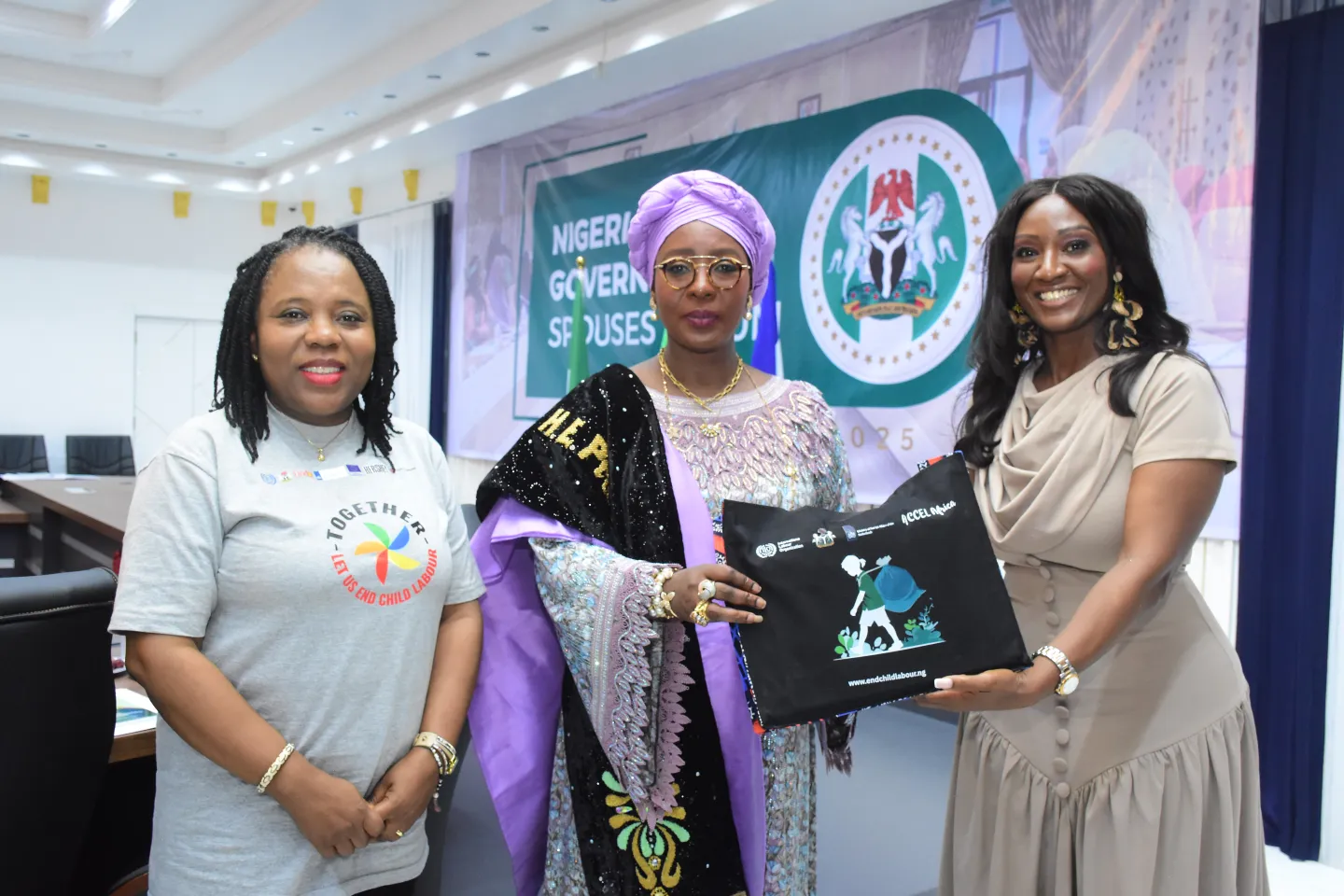
In response, Her Excellency Amb. Prof. Olufolake Abdulrazaq, Chairperson of the Nigeria Governors’ Spouses Forum and First Lady of Kwara State, welcomed the ILO delegation and announced the formation of a Task Force to sustain dialogue and follow-up action. “Nigeria cannot be the face of child labour in Africa,” she said. “We must protect our children and invest in their future.”
The meeting underscored the urgency of expanding access to free, quality education, strengthening school feeding and vocational training, and extending social protection to vulnerable families.
By enlisting the collective influence of First Ladies, the ILO and FMLE are catalysing a national movement for a child labour-free Nigeria, one where every child has the right to learn, grow, and thrive.