

Better Work Haiti programme
Government of Haiti and ILO reinforce strategic partnership to safeguard jobs and strengthen labour governance
The Government of Haiti and the International Labour Organization sign a new financing agreement to sustain the Better Work Haiti programme through 2026, safeguarding more than 30,000 garment sector jobs and supporting an industry that accounts for approximately 88 per cent of national exports.
26 February 2026
PORT-AU-PRINCE, Haiti (ILO News) - The Government of Haiti and the International Labour Organization (ILO) have signed a new financing agreement to sustain the Better Work Haiti programme through 2026, reaffirming their joint commitment to protecting employment and strengthening labour governance during a critical transition period.
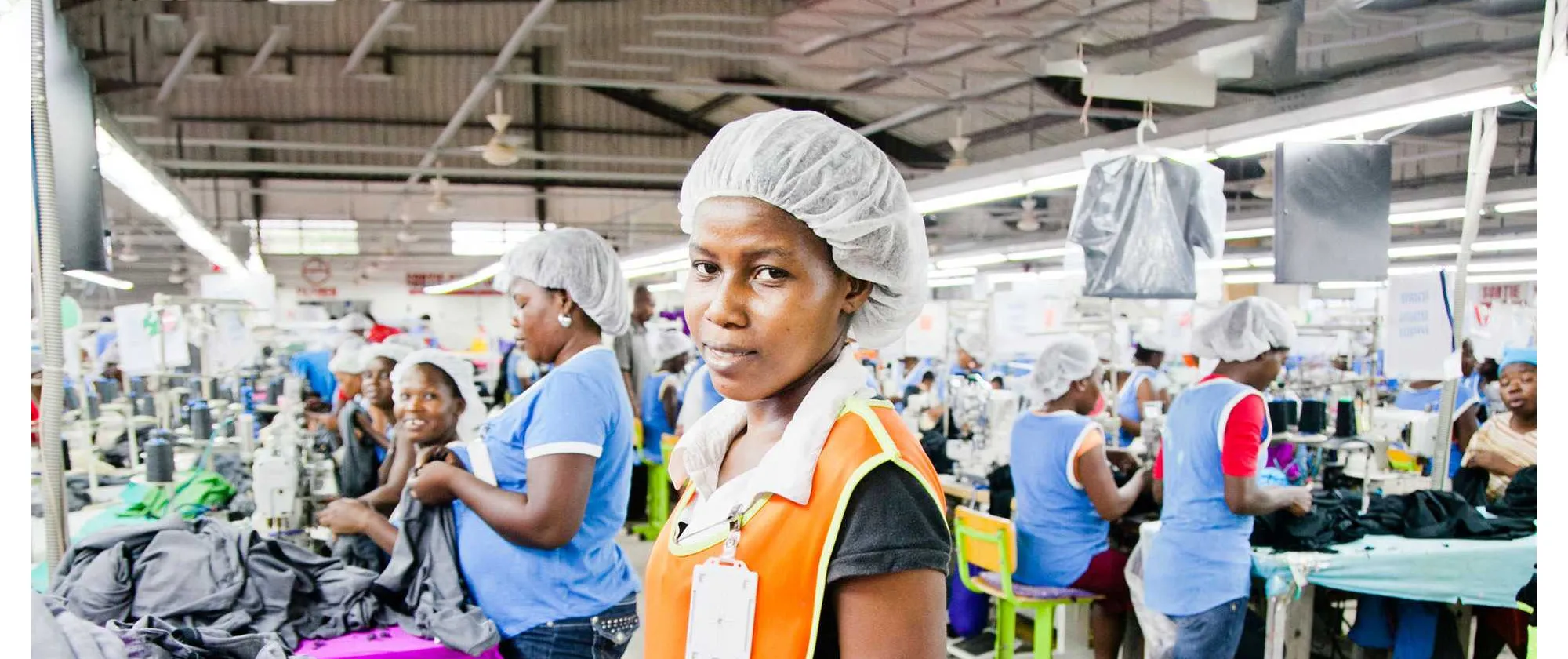
Through a contribution of USD 500,000, the Ministry of Economy and Finance (MEF) is allocating national resources to maintain independent compliance monitoring, advisory services, and institutional capacity-building in the garment sector, which represents approximately 88 percent of Haiti’s exports and provides more than 30,000 direct jobs, the majority held by women.
“This agreement reflects the Government’s commitment to preserving employment and strengthening labor governance in a key sector for Haiti’s economic stability and exports,” said Serge Gabriel Collin, Minister of Economy and Finance.
Established in 2009 under the HOPE II Act, Better Work Haiti remains central to Haiti’s export framework. Participation in the programme is mandatory for apparel factories exporting to the United States under HOPE/HELP trade preferences, making credible labour oversight essential to sustaining market access and investor confidence.
“The ILO welcomes the Government’s leadership in sustaining this partnership,” said Joni Musabayana, Director of the ILO Decent Work Team and Country Office for the Caribbean. “By combining national ownership with continued technical cooperation, we are reinforcing institutional resilience and supporting the long-term credibility of Haiti’s labour governance framework.”
The 2026 agreement also advances a structured transition, progressively integrating Better Work compliance tools, grievance mechanisms, and data systems into the operations of national institutions, including the Ministry of Social Affairs and Labour (MAST), the Bureau of the Special Labour Mediator (BMST), the National Old-Age Insurance Office (ONA), and the Office of Work Accident, Sickness and Maternity Insurance (OFATMA). Supported by continued ILO technical oversight, this approach is designed to strengthen institutional resilience and ensure long-term sustainability.
Through this renewed partnership, the Government of Haiti and the ILO reaffirm that protecting formal employment and strengthening labour institutions are essential to economic stability and responsible trade engagement.