

Global Gender Gap Index discussion deliberates improving women's economic outcomes
29 January 2025
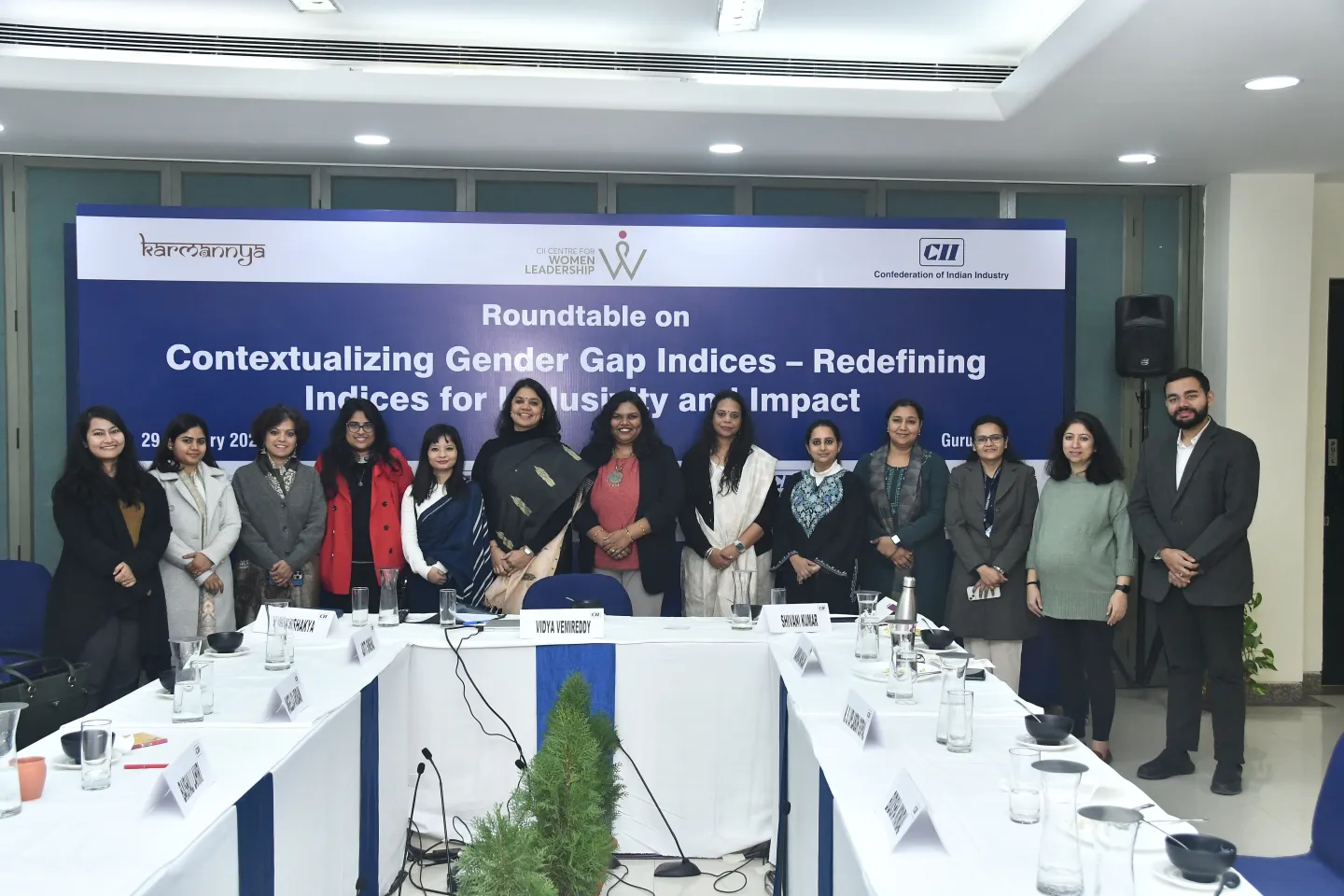
New Delhi (ILO News): The Confederation of Indian Industries (CII) organized a Round Table discussion on “Contextualizing Gender Gap Indices – Redefining Indices for Inclusivity and Impact’ to identify gaps in the current framework of the Global Gender Gap Index (GGGI) and to brainstorm on actionable strategies to improve data inclusion, refine measurement methodologies for proposing context-specific indicators in the intersect of gender.
With around 20 participants from the industry, research-based organizations, universities, international development agencies such as ILO, the discussion also focussed on expanding women’s health metrics to develop a comprehensive approach that includes the full spectrum of women’s health needs. The discussion also focussed on exploring the barriers that limit access to quality education and skill development for women and girls, particularly in rural and low-income communities and also on closing the gender based digital gap and access to technology. Further, the role of the limitations of current gender indices that prioritize national-level political participation over local representation and nominal/ symbolic participation vis-à-vis actual participation of women in grass-root level and ways to strengthen it were also discussed.
Ms Baishali Lahiri, National Project Coordinator, PRS Project participated as a speaker and provided inputs on strengthening economic metrics for recording women’s participation, retention, integration and mobility in the job market and also highted the need to promote safer, violence and harassment free workplaces for women. She also advised on strengthening data driven narratives with a caveat that too less sample in certain cases can also often be misleading and therefore there is a need to assess results with more scientific perspectives.
Related content

Informal economy
Promoting rights and social inclusion through organization and formalization (PRS) – Phase 2: Pakistan Component