

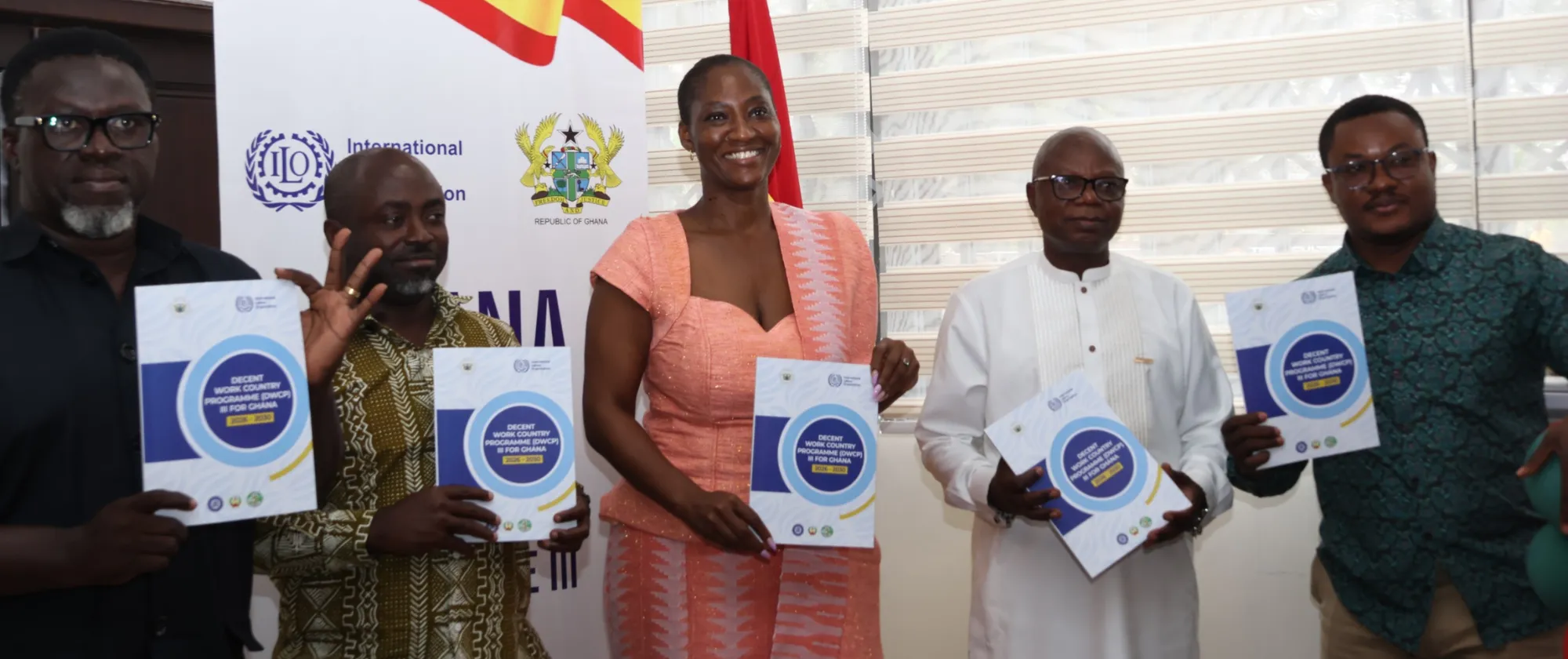
Ghana launches decent work programme to drive jobs, social protection, and inclusive growth
A new five-year Decent Work Country Programme (DWCP) positions Ghana to expand quality jobs, strengthen social protection, and promote fair labour practices through a united effort by government, employers, and workers.
4 May 2026
Accra, Ghana - The Government of Ghana, in partnership with the International Labour Organization (ILO) and national social partners, on 24th April 2026 officially launched the Ghana Decent Work Country Programme III (DWCP III) 2026–2030, marking a major step toward advancing inclusive growth, social justice, and sustainable employment outcomes for Ghanaians.
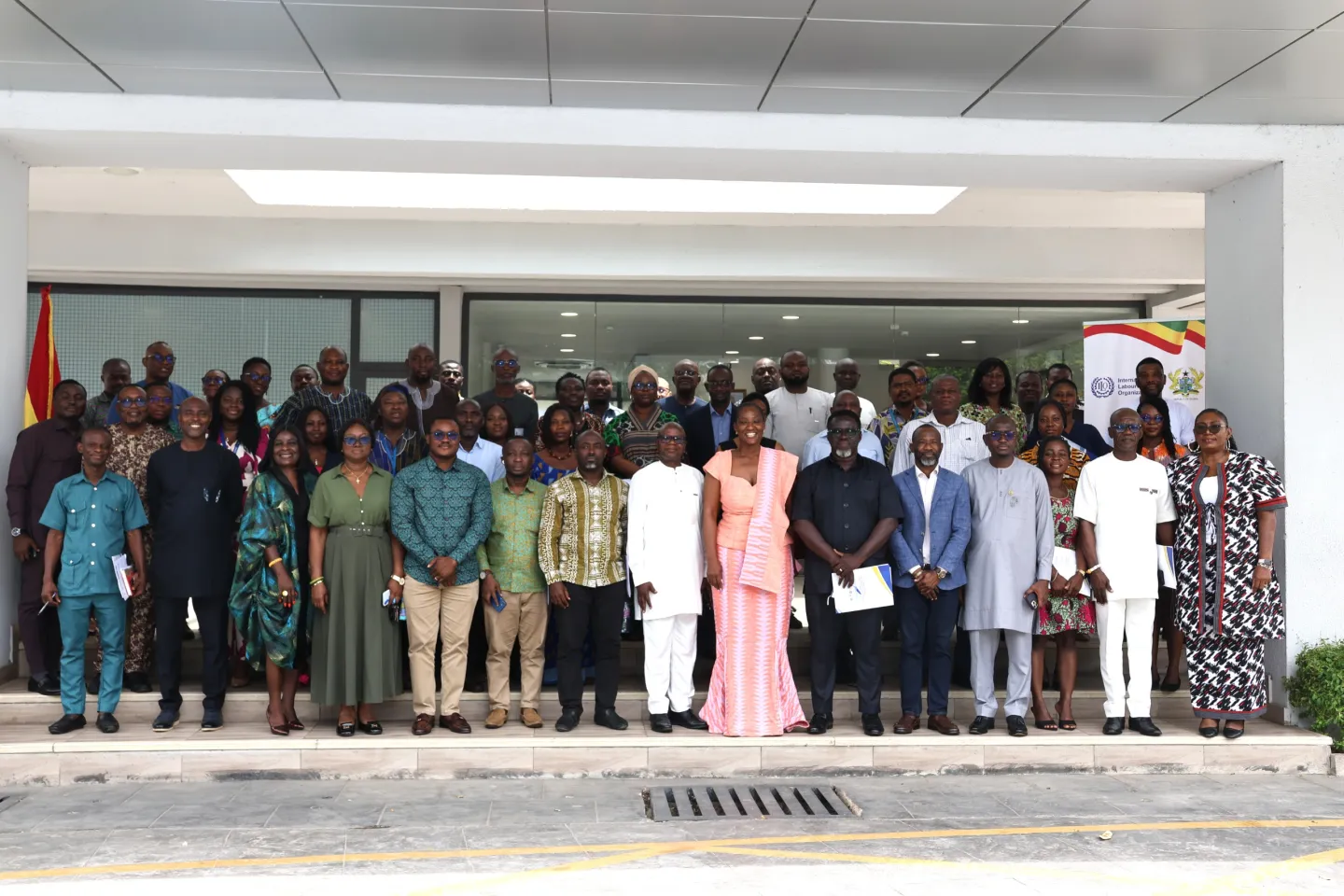
The Programme provides a comprehensive framework to address key labour market challenges, including youth unemployment, informality, inequality, and gaps in social protection. Developed through an extensive consultative process involving government, employers, and workers’ organizations, DWCP III reflects a shared national commitment to building a more resilient, inclusive, and future-ready world of work.
The Decent Work Country Programme is the main framework through which the ILO delivers its support to member States—bringing together knowledge, policy tools, and partnerships to promote jobs, protect rights, expand social protection, and strengthen social dialogue.
Dr. Vanessa Phala - Director of the ILO Country Office for Nigeria, Ghana, Liberia, Sierra Leone, and ECOWAS
DWCP III reflects our renewed determination to address persistent labour market challenges, particularly unemployment and underemployment among the youth and vulnerable. Achieving decent work for all requires collective responsibility from government, employers, workers, and development partners.
Hamidu Adakurugu - Chief Director to the Minister for Labour, Jobs and Employment.
Government further highlighted that the Programme would accelerate job creation, modernise labour systems, and expand social protection, while addressing emerging issues such as digital transformation, climate change, and the future of work. By aligning skills development with industry needs and promoting entrepreneurship, DWCP III would enhance Ghana’s competitiveness within regional and global markets.
Kingsley Laar of Ghana Employers’ Association (GEA) described the Programme as a “strategic compact” to reposition Ghana’s labour market for inclusive and sustainable growth. “Decent work cannot be achieved in the absence of productive, competitive, and resilient enterprises,” the Association stated, highlighting the importance of MSME development, skills alignment, and business-friendly conditions to drive job creation.
Organised labour welcomed the Programme as a critical step toward improving the quality of work and life for Ghanaians. Kenneth Koomson of the Ghana Federation of Labour (GFL) stressed that decent work is fundamental to social stability and national progress, noting that better jobs directly translate into improved livelihoods, dignity, and stronger communities.
Similarly, Richard Acheampong of the Trades Union Congress (TUC) described the Programme as a bold and timely response to labour market inequalities. “Decent work is not a privilege—it is a right,” the TUC emphasized, pledging continued collaboration to ensure meaningful improvements in working conditions, wages, and job security.
DWCP III focuses on three key national priorities: creating more decent and sustainable jobs, expanding access to inclusive and resilient social protection systems, and promoting rights at work in line with international labour standards. These priorities will directly benefit Ghanaians by increasing employment opportunities, reducing vulnerability, and ensuring safer, fairer workplaces across sectors.
Beyond labour market outcomes, the Programme would drive broader socio-economic transformation. By promoting inclusive growth, strengthening institutions, and deepening social dialogue, DWCP III will contribute to poverty reduction, economic resilience, and national cohesion. The success of the Programme will depend on sustained collaboration among all stakeholders. The ILO reaffirmed its commitment to working closely with the Government of Ghana and its social partners to ensure effective implementation and measurable results over the five-year period.
As Ghana embarks on this new phase of its decent work journey, DWCP III signals renewed hope for workers, enterprises, and communities - laying a solid foundation for a more productive, inclusive, and prosperous future for all.