

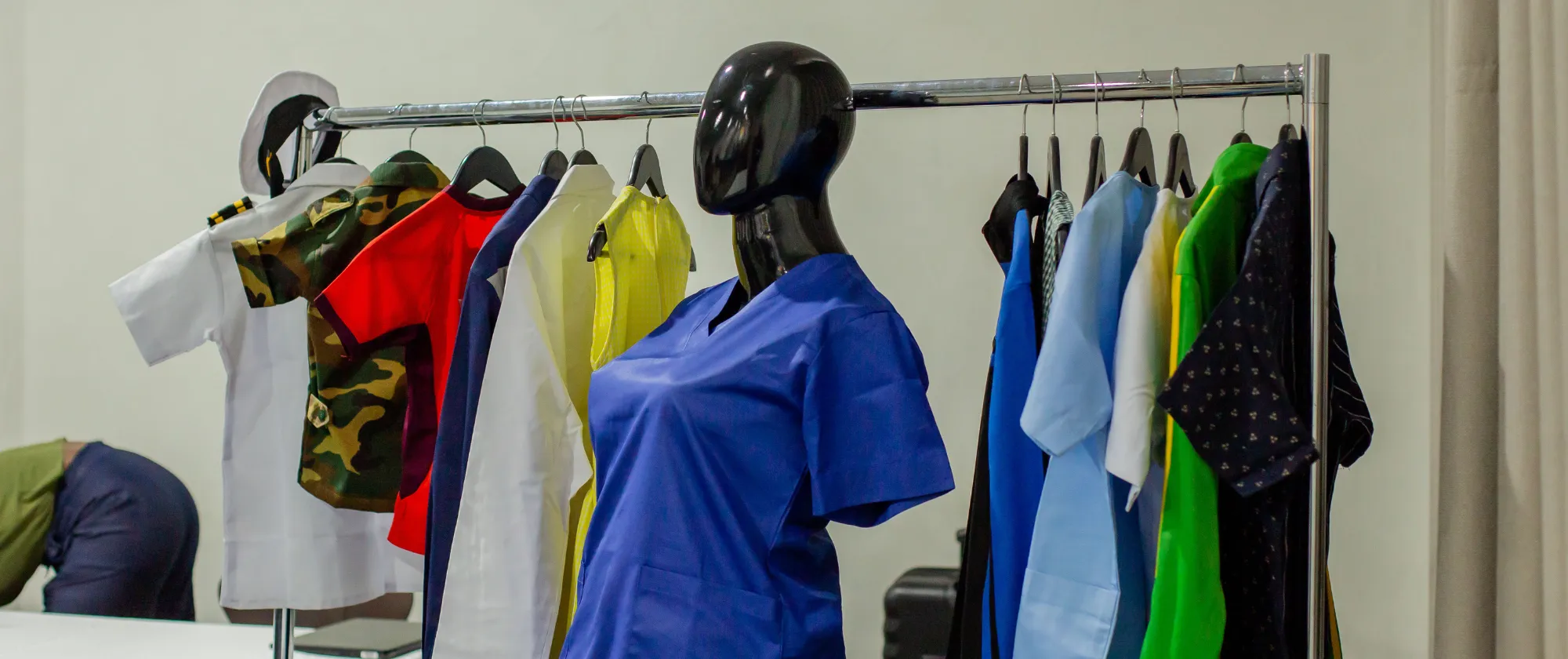
Ghana launches “Dress Ghana and Build Ghana” campaign to boost local garment production and decent work
The Government of Ghana, industry leaders and the ILO have reaffirmed their commitment to strengthening the country’s textile and garment sector through strategic public procurement, policy reform and support for local manufacturers.
9 March 2026
ACCRA, GHANA – The Government of Ghana (GoG) has reaffirmed its commitment to revitalizing the country’s textile and garment industry through increased local procurement, as the Association of Ghana Apparel Manufacturers (AGAM) officially launched the “Dress Ghana and Build Ghana” advocacy campaign in Accra.
The campaign aims to promote policies that prioritize the sourcing of locally produced garments, particularly for public sector uniforms and apparel. The initiative aligns with Ghana’s 2026 Budget Statement and Economic Policy, which outlines plans by the Ministry of Trade, Agribusiness and Industry (MOTAI) to collaborate with key public institutions to procure uniforms and garments from domestic manufacturers.
To support this agenda, the Government has extended the zero-rating of Value Added Tax (VAT) on textiles and garments until December 2028, a measure designed to reduce production costs and enhance competitiveness within the sector.
Launching the campaign at a national policy dialogue in Accra, the Minister of Trade, Agribusiness and Industry, Hon. Sampson Ahi, highlighted international examples demonstrating how strategic public procurement can drive industrial development.
“Global experience shows that when governments spend with purpose, they do not merely purchase goods – they build industries, create jobs, and secure economic sovereignty,” he said, citing South Korea’s textile sector transformation in the 1970s and 1980s, the United States’ Buy American Act of 1933, and Malaysia’s strategic procurement policies as evidence of the long-term impact of deliberate state action.
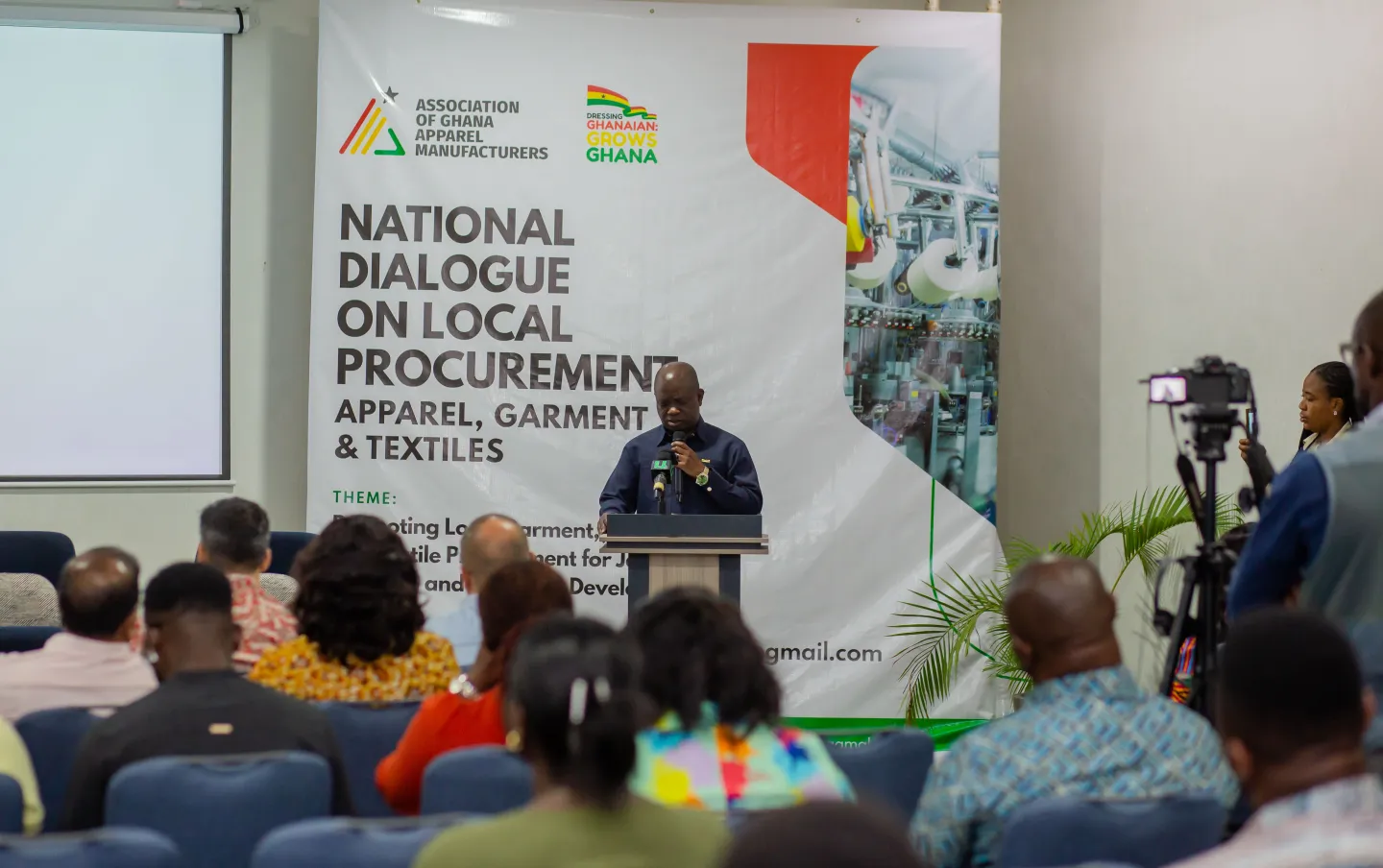
The policy dialogue convened representatives from government, employers’ organizations, industry associations and development partners to discuss reforms needed to strengthen local garment production.
Speaking on behalf of the Director of the ILO Country Office for Nigeria, Ghana, Liberia and Sierra Leone, Dr. Vanessa Phala, Mr. David Marcos, Project Manager of the ILO’s Productivity Ecosystems for Decent Work programme, underscored the textile and garment sector’s longstanding contribution to employment and livelihoods in Ghana.
He noted that predictable and sustained government orders could provide stability for local factories, support productivity improvements and enable future market expansion. He also stressed the importance of maintaining high quality standards in public procurement to ensure competitiveness and sustainability.
During the dialogue, AGAM presented a position paper proposing amendments to the Public Procurement Act to mandate that a significant share of school and security service uniforms be produced locally. The paper also called for improved access to finance and targeted capacity-building support to strengthen manufacturers’ capabilities.
Other stakeholders, including the Ghana Employers’ Association and the Public Procurement Authority, emphasized the need to reduce production costs, stabilize the value chain and enhance coordination across the sector to ensure long-term success.
AGAM indicated that it will continue engaging policymakers and public institutions to advance reforms that promote local sourcing and support the growth of Ghana’s garment industry.
The Productivity Ecosystems for Decent Work programme is a global ILO initiative operating in Ghana, South Africa and Viet Nam. Funded by Switzerland and Norway, the programme promotes productivity growth for decent work at policy, sectoral and enterprise levels, supporting inclusive and sustainable industrial development.