


Ghana charts a path to more productive jobs and better livelihoods
Landmark report is helping Ghana align productivity with decent work, driving evidence-based policies that promote better jobs, fair wages, inclusive growth and improved livelihoods.
6 July 2026
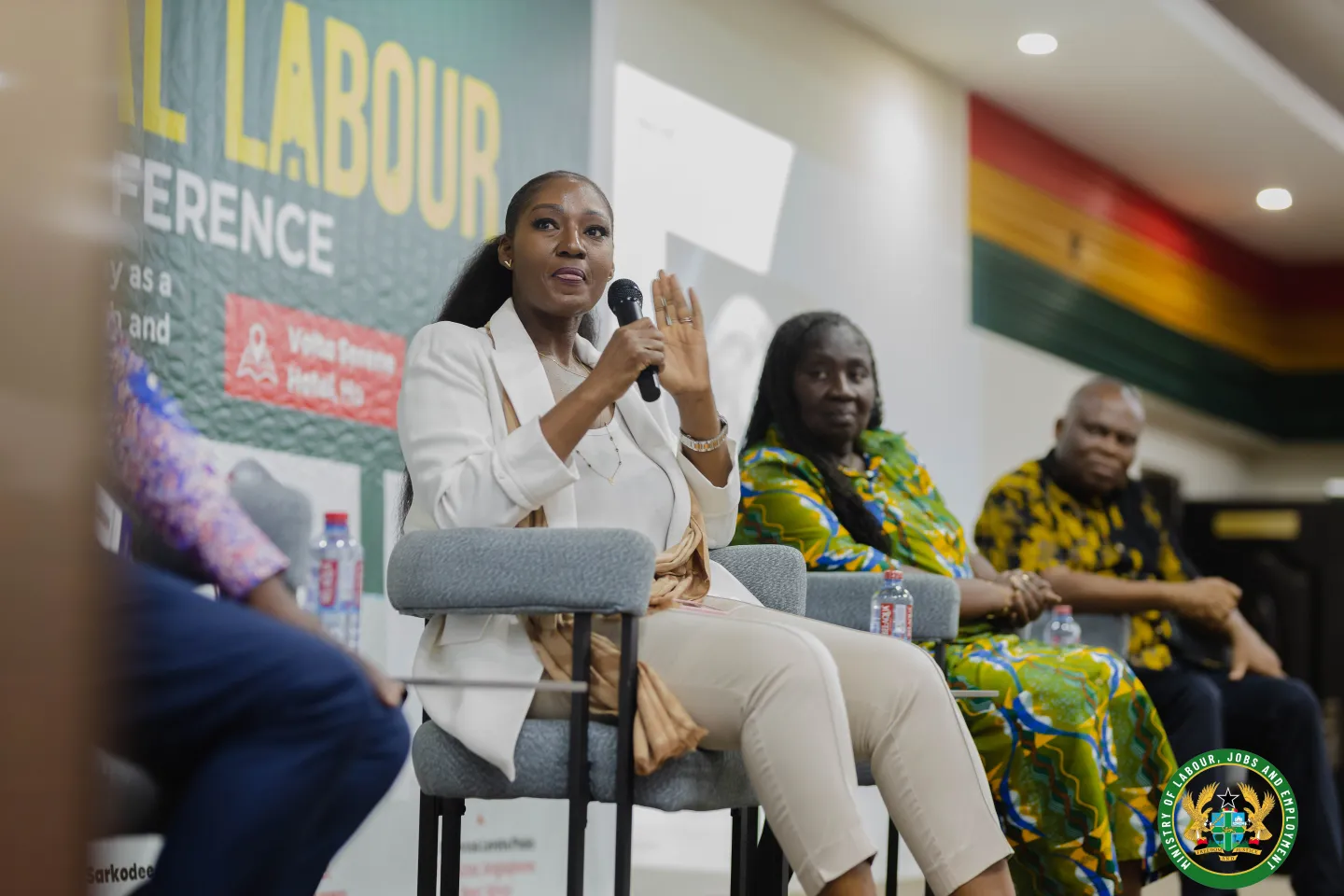
Ho, Ghana – Ghana has taken an important step towards ensuring that economic growth creates better jobs, fair wages and improved livelihoods. During the 2nd National Labour Conference in Ho (26–28 June 2026), the Government, employers' and workers' organizations, together with development partners, launched the Productivity, Employment & Growth Report 2025 and renewed their commitment to turning productivity gains into decent work for all.
The report—the first comprehensive national assessment of productivity, employment and decent work in Ghana—provides policymakers with robust evidence to shape labour market reforms and accelerate inclusive economic transformation. The Ghana Statistical Service (GSS) and the International Labour Organization (ILO), through the Productivity Ecosystems for Decent Work Project, jointly produced the report, which analyses productivity and employment trends from 1991 to 2022 and provides detailed insights into 17 economic sub-sectors between 2013 and 2022.
Government Statistician Dr. Alhassan Iddrisu described the report as a landmark evidence base for strengthening Ghana's employment and economic transformation agenda.
ILO Country Director for Nigeria, Ghana, Liberia, Sierra Leone and Liaison Office for ECOWAS, Dr. Vanessa Phala called for stronger links between productivity and decent work so that economic growth delivers quality jobs, fair wages and shared prosperity.
The findings reinforce the need to link productivity gains with decent work outcomes so that economic growth generates not just higher output, but also quality jobs, fair wages and shared prosperity.
Dr. Vanessa Phala - ILO Country Director for Nigeria, Ghana, Liberia, Sierra Leone and Liaison Office for ECOWAS
The report shows that labour productivity increased by approximately 240 per cent over the past three decades. Yet nearly eight out of every ten workers remain in informal, low-productivity jobs, while wages have failed to keep pace with productivity growth. These trends prevent many workers and their families from sharing fully in Ghana's economic progress.
For workers, the findings strengthen the case for wage policies that better reflect productivity and living costs. Mr. Kenneth Koomson, Deputy Secretary General of the Ghana Federation of Labour, said the report provides strong evidence to review the minimum wage, base pay and the Single Spine Salary Structure by considering productivity gains, the cost of living and accumulated wage erosion.
For employers, the report offers practical evidence to support balanced wage negotiations. Mr. Kingsley Laar, representing the Ghana Employers Association, said the findings will help align wage adjustments with productivity while sustaining business competitiveness and enterprise growth.
Development partners also reaffirmed their support for Ghana's efforts to build a more inclusive economy. Representing the Norwegian Agency for Development Cooperation (NORAD), Ms. Silje S. Vevatne, Counsellor at the Royal Norwegian Embassy, highlighted the strong link between productivity growth, productive employment and stronger labour institutions. Representing the Swiss State Secretariat for Economic Affairs (SECO), Ms. Magdalena Wüst, Deputy Head of Cooperation at the Embassy of Switzerland, underscored the importance of social dialogue, competitive enterprises and trade facilitation in creating better jobs and shared prosperity.
The report sends a clear message: productivity growth alone will not create decent work. Ghana must ensure that higher productivity leads to quality employment, fair incomes and opportunities that benefit workers, enterprises and communities alike.
The ILO will continue working with the Government and employers' and workers' organizations to strengthen social dialogue, expand the use of labour market data and promote evidence-based policies that accelerate structural transformation. Together, these efforts will help convert productivity gains into decent work, resilient enterprises and improved livelihoods for women and men across Ghana.