

Ghana advances social dialogue for better jobs and fairer wages
Ghana’s 2026 National Labour Conference sets a renewed path toward fair wages, job creation and improved living conditions through strengthened social dialogue and cooperation.
7 July 2026
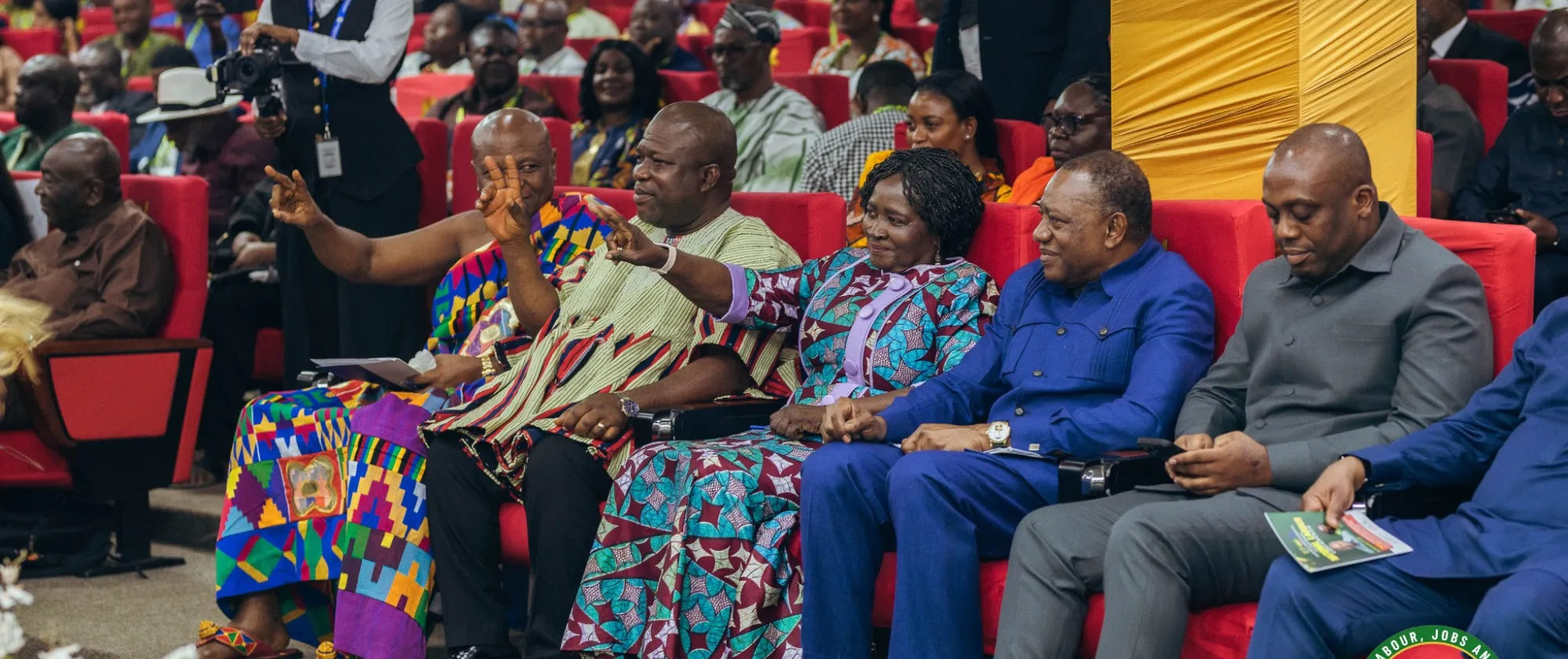
Ho, Ghana – The 2nd National Labour Conference, held in Ho from 26 to 28 June 2026, concluded with a unified commitment to strengthen industrial harmony as a pathway to better jobs, fairer wages and improved living standards for Ghanaians. More than 300 representatives from government, employers, organized labour and development partners participated in the conference, which culminated in the adoption of the Ho Declaration. The Declaration reaffirms that strong cooperation among social partners is critical to ensuring that economic growth translates into tangible benefits for workers, businesses and communities.
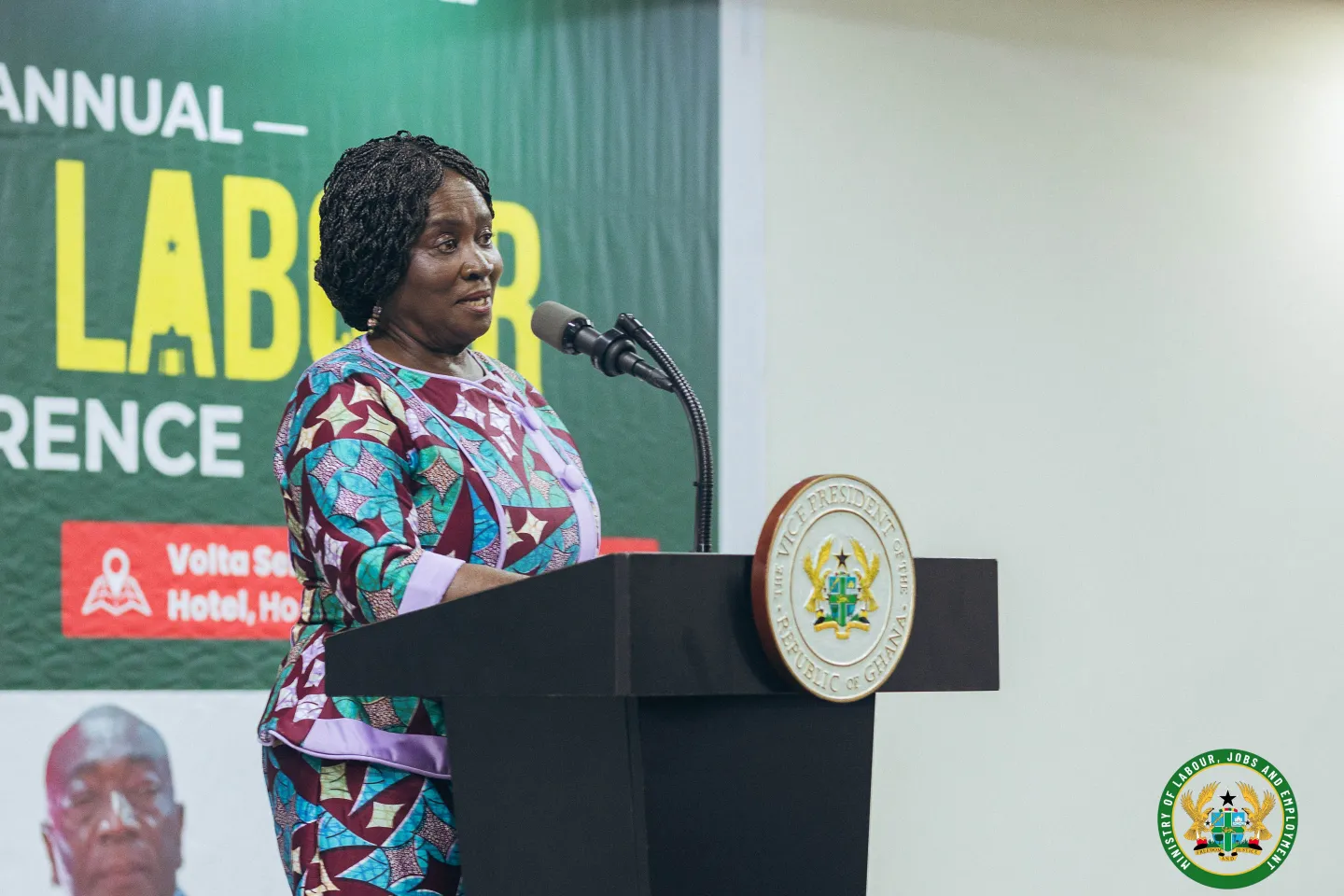
Delivering the keynote address on behalf of the President, John Dramani Mahama, the Vice President H.E. Prof. Jane Naana Opoku-Agyemang described the conference as a defining moment to build “a new social contract” based on trust, fairness and shared responsibility. She emphasized that workplace harmony is essential not only for economic stability but also for ensuring that growth leads to better livelihoods, improved incomes and expanded opportunities for all Ghanaians. The Ghana Employers’ Association reinforced the importance of stable labour relations in driving economic progress. Its President, Nana Dr Emmanuel Adu-Sarkordee Afriyie, underscored that productive social dialogue supports investment and enterprise growth, which in turn generate more jobs, stronger businesses and increased productivity. From the workers’ perspective, the Secretary-General of the Trade Union Congress (TUC), Mr Joshua Ansah, highlighted the need to treat workers as partners in national development. He stressed that meaningful dialogue and fairness at the workplace are key to achieving improved wages, job security and decent working conditions.
The ILO Country Director for Ghana, Dr Vanessa Phala, described industrial harmony as “a productive national asset” that underpins both economic growth and the fair distribution of its gains. She noted that nearly 78 per cent of employment in Ghana remains informal, leaving many workers without adequate protection. Addressing this challenge, she highlighted the need to expand social protection and create pathways to more secure and dignified employment.
Efforts discussed at the conference are expected to deliver greater income security for workers and their families; expanded access to social protection, especially for informal workers; safer and more stable working environments; and increased employment opportunities for youth and women
The Ho Declaration outlines shared priorities aimed at improving the daily lives of Ghanaians by promoting industrial harmony to sustain jobs and economic stability, strengthening labour institutions to better protect workers’ rights, reforming pay and pension systems to ensure fairness and transparency, and supporting job creation through industrialisation and the 24-hour economy. The Declaration also emphasizes that macroeconomic gains must translate into real improvements in wages, employment opportunities and living standards, particularly for vulnerable groups.
The conference marks a significant step toward building a more inclusive and resilient labour market in Ghana. With the Ho Declaration adopted, attention now turns to implementation.
The ILO will support the Government and its social partners through the Decent Work Country Programme III (2026–2030) to ensure that the commitments made lead to more and better-quality jobs, fair and predictable wages, broader social protection coverage and improved economic resilience for households and communities
The message from Ho is clear - industrial harmony is a means to deliver real improvements in people’s lives. For workers, it means more secure employment and fair pay. For businesses, it provides stability and growth. For Ghana, it offers a pathway to a more inclusive economy where the benefits of development are shared by all.