by Resel Melville, ILO Caribbean National Project Officer
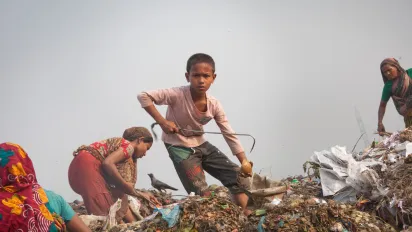
On the 10th of June, even as many of us were putting the final arrangements in place for national observations of the annual World Day Against Child Labour, the ILO and UNICEF unveiled the 6th edition of the Global Estimates on Child Labour and Forced Labour. The key findings were sobering, perhaps scary, but ultimately for many, they were a blasting alarm.
For the first time in 20 years, the number of children, victims of child labour had increased. Further, it became clear from the data that the jump from 154 million children to 160 million over the four-year period since the 2016 global estimates were published, was not due to the effects of the COVID-19 pandemic. Using recent data gathered since the onset of the global crisis and statistical simulations, the UN experts warned that “an additional 9 million children are at risk of being pushed into child labour by the end of 2022 as a result of COVID-19. This could rise to 46 million if critical social protection measures slip.”
The analysis of results by Region however, offers much needed motivation to officials and social partners in Latin America and the Caribbean that their individual and collective efforts are still making a significant dent in an issue that has been a priority of the movement for social justice since the inception of the ILO over 100 years ago. The Region now accounts for 6 per cent or 8.2 million child labourers, down from 7.4 per cent of the previous global estimates. However, the current rate of reduction will not allow us to claim the prize of becoming the first Region in the world to be free of child labour by the ambitious deadline established in SDG Target 8.7.
Though the Caribbean sub-region reports some of the lowest levels of incidence of child labour globally, in the context of 2021 as the International Year for the Elimination of Child Labour, Caribbean countries have renewed their commitment, launching new public information campaigns and taking decisions on real actions to advance protection of children and prevention of child labour.
Trinidad and Tobago, Jamaica and Suriname re-established multi-sectoral, national steering committees, and continue to pursue training and other capacity building actions to augment the coordinated planning and practical interventions to address the social and economic root causes of child labour.
Jamaica has developed Child Labour Risk Maps, using the ILO-ECLAC CL Risk Model, and The Bahamas National Tripartite Council has worked to advance a formal national child labour policy with unique considerations of the impact of disasters and crises on the safety and well being of children.
Other countries, like Saint Kitts and Nevis and Antigua and Barbuda, recently joined nine other Caribbean counterparts as members of the ILO’s Regional Initiative Latin America and the Caribbean Free of Child Labour; and Belize’s new government has re-committed to developing and implementing a child labour policy which also addresses rural development, youth employment and Decent Work, with the support of the ILO.
The ILO Caribbean Office and the ILO Regional Initiative, through a new South-South Cooperation programme with the Government of Brazil, will be providing technical and other support to accompany these national efforts. As the deadline of 2025 approaches, and the threatening effects/ impact of the COVID-19 pandemic multiply, Caribbean countries and officials have shown themselves committed to the cause and are keeping their eyes on the prize.