

CLEAR Supply Chains Project
European Union highlights that complementarity between implementing agencies has been key to advancing towards more responsible supply chains free of child labour
Representatives of the European Union Delegation in Honduras carried out a follow-up mission in the departments of Copán, Lempira, and Intibucá to assess the progress of the CLEAR Supply Chains Project, an initiative co-financed by the European Union and implemented by the International Labor Organization (lead agency), UNICEF, FAO, and ITC.
30 January 2026
Representatives of the European Union Delegation in Honduras carried out a follow-up mission in the departments of Copán, Lempira, and Intibucá to assess the progress of the CLEAR Supply Chains Project, an initiative co-financed by the European Union and implemented by the International Labor Organization (lead agency), UNICEF, FAO, and ITC.
Copán, Lempira, and Intibucá, HONDURAS (ILO News) -
The visit provided first-hand insight into the 2025 results related to the prevention and eradication of child labor in coffee supply chains, as well as gathering input to strengthen the effectiveness and sustainability of actions in the field.
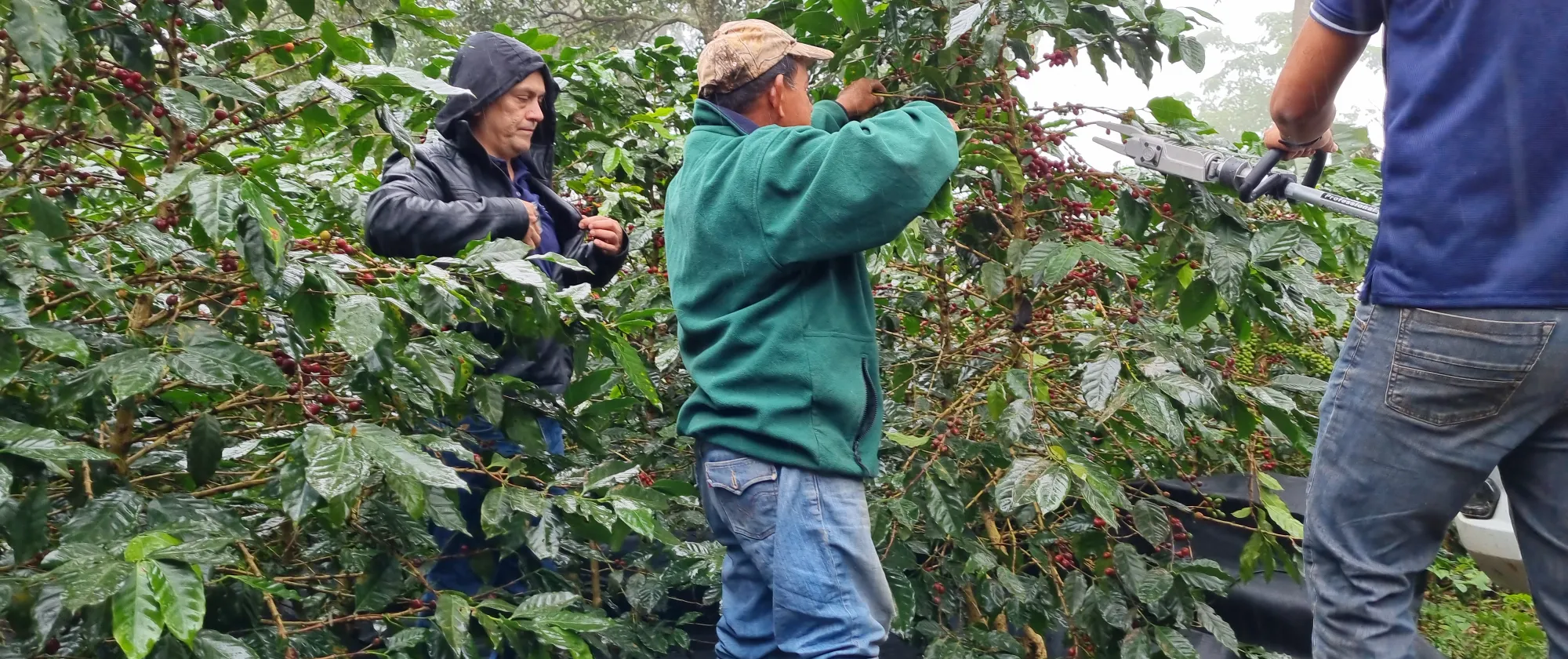
During the mission, the delegation and the implementing agencies held meetings with cooperatives, producers, and local authorities; visited farms and processing plants; and engaged in dialogue with community leaders, teachers, families, and children participating in the project's activities. These interactions facilitated technical feedback and coordination among the various local actors to consolidate responsible practices in the coffee chain.
The mission of the European Union Delegation and the implementing agencies of the CLEAR Project began in Copán with visits to the PROEXO Cooperative, where the delegation learned about harvest mechanization practices, agroforestry, and due diligence processes. The Delegation then toured the CAFICO Cooperative's facilities to review improvements in occupational health and safety resulting from the WIND-ILO[1] methodology and hold technical exchanges with producers and work teams.
The day continued at the CAFESCOR cooperative, where the team observed progress in Human Rights and Environmental Due Diligence (HREDD) and visited the community toy library, before traveling to Lempira to meet with the COCABEL cooperative and learn about progress in labor rights, WIND, and gender inclusion. The mission also included a technical mid-term evaluation session and provided an opportunity to gather key feedback to strengthen the project's operations.
In Intibucá, the Delegation participated in the closing ceremony of the Friendly and Safe Educational Spaces, where families and leaders shared testimonies on the prevention of child labor. It also held a meeting with the mayor's office and the COLOSUCA Association to reinforce local sustainability and community coordination. The mission concluded with the systematization of findings and agreements to continue promoting responsible supply chains.
The European Union Delegation emphasized the importance of inter-agency complementarity and reiterated its commitment to protecting Honduran children. EU financial support is crucial to moving towards more responsible supply chains free of child labor, integrating local governments, the private sector, and communities in a coordinated response.
____________
The European Union is an economic and political union of 27 European countries. It is based on the values of respect for human dignity, freedom, democracy, equality, the rule of law, and respect for human rights, including the rights of persons belonging to minorities. The European Union acts globally to promote the sustainable development of societies, the environment, and economies for the benefit of all people.
The CLEAR Supply Chains project (Ending Child Labor in Supply Chains: Addressing the Root Causes of Child Labor in Supply Chains through an Area-Based Approach) brings together the International Labor Organization (ILO), as the lead agency, the Food and Agriculture Organization of the United Nations (FAO), the International Trade Centre (ITC), and the United Nations Children's Fund (UNICEF) to jointly address the root causes of child labor, focusing primarily on the coffee sector and building on existing efforts in the cobalt sector. The CLEAR Supply Chains project is implemented under the ILO's Accelerator Lab 8.7 initiative.
[1] WIND: Workplace Improvement in Neighbourhood Development
Related content

Child labour
CLEAR Supply Chains: Ending child labour in supply chains
Relevant projects
Child labour
CLEAR Supply Chains: Ending child labour in supply chains