

EU unveils platform to boost proximity and social economy’s role in green and digital transition
ILO delivered a keynote at the inauguration of the new EU platform dedicated to enhancing collaboration, knowledge sharing, and capacity building within the proximity and social economy ecosystem.
25 February 2025
GENEVA (ILO News) – As the world navigates transitions toward a green and digital future, the proximity and social economy have emerged as crucial actors in ensuring these changes benefit workers, communities, and businesses of all sizes. In Europe, the EU’s Transition Pathway plays a key role in guiding industries—including the proximity and social economy—toward sustainable green and digital practices.
On 6 February 2025, the "Transition Pathway: Kick-off for the EU Proximity and Social Economy Platform" online event was successfully held. Opening the launch, Alberto Licciardello, Policy Officer for Proximity and Social Economy of the European Commission, emphasized the platform's role in supporting stakeholders in the proximity and social economy and sustainable businesses. Licciardello encouraged active engagement to further develop the platform.
Ensuing the opening remarks, Simel Esim, Head of ILO Cooperative, Social and Solidarity Economy (COOP/SSE) Unit and Chair of UN Inter-Agency Task Force on Social and Solidarity Economy (UNTFSSE), delivered a keynote speech, highlighting how the EU Transition Pathway supports the proximity and social economy with the green and digital transition.
Simel Esim noted the growing global recognition of the social and solidarity economy (SSE) in tackling economic, social, and environmental challenges. She stressed that the EU’s leadership in fostering a supportive environment and facilitating knowledge exchange remains critical and the importance of ensuring that digital and green transitions generate decent work, strengthen social cohesion and support more inclusive and sustainable economies. She also underscored the significance of the EU Proximity and Social Economy Platform as a space for meaningful collaboration, moving beyond fragmented efforts to drive real impact.
Beyond the twin transition, the SSE is also relevant to broader transformations, including the transition to a more inclusive care economy, the shift from the informal to the formal economy, and the movement from crisis to resilience. However, these models require policy support, financing mechanisms, and investment in skills development to achieve lasting impact. “The real measure of success will not just be how transitions are managed, but how those most affected by change are empowered to shape their futures,” Simel underscored. “SSE entities and the institutions that support them must work together to ensure that economic and financial frameworks prioritize people and the planet.”
Paula de Diego, Policy Lead and Project Officer of Social Economy Europe, provided an update on the ongoing Transition Pathway, highlighting the positive outcomes of the first pledge cycle. A guided tour through the platform was offered, showcasing its user-friendly interface to share knowledge, connect with stakeholders, and locate funding and collaboration opportunities.
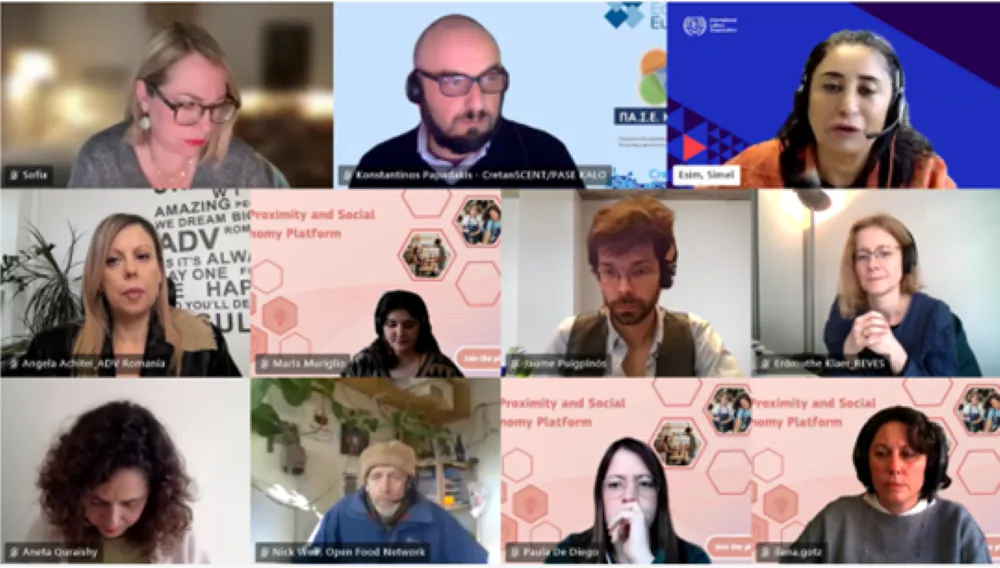
The event also featured the "Voices of the Ecosystem" session, which brought together thought leaders from across the sector. Co-moderated by Aneta Quraishy, Senior Expert at Diesis Network, and Ilana Gotz, Senior Project Manager at EURICSE, the session highlighted key perspectives on the challenges and opportunities presented by the twin transition from influential community members including Nick Weir, Community Facilitator of Open Food Network Europe, Sofia Breitholtz, CEO of Reach for Change and Angela Achitei, President of ADV Group.
The speakers emphasized the critical need for SSE models to bridge the digital divide, particularly for marginalized groups such as people with disabilities. Social enterprises were recognized for their ability to innovate and offer solutions that directly address community needs. The importance of impact measurement and partnerships with actors outside the SSE ecosystem, such as financial institutions and local authorities, was also discussed.
Additionally, the launch event introduced the Ambassador programme for the platform, recognizing influential leaders who are already championing and advancing the proximity and social economy ecosystem. Among them are Erdmuthe Klaer-Morselli from European Network of Cities and Regions for the Social Economy, Jaume Puigpinos from Third Sector Platform of Catalonia, and Konstantinos Papadakis from Union of Social and Solidarity Economy Organizations of Crete.
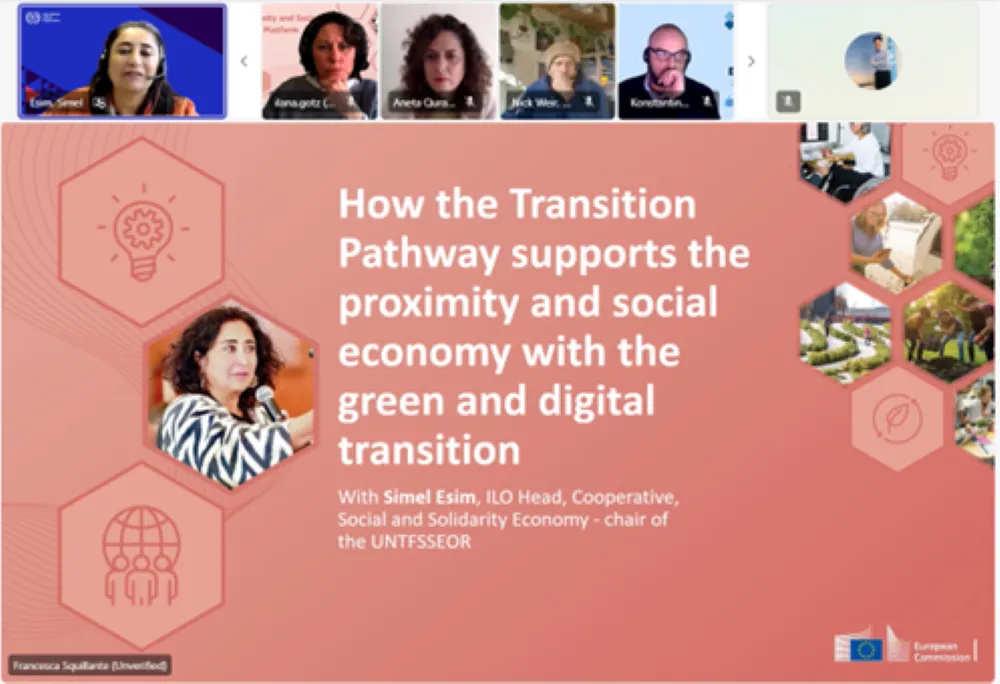
The ambassadors emphasized the need for greater coherence at the European level by strengthening connections between local and regional networks. They discussed the importance of developing joint solutions, providing visibility for local initiatives, and ensuring that the Transition Pathway vision is effectively implemented on the ground.
The event concluded with participants expressing strong support for the platform, viewing it as a valuable tool for bridging gaps and promoting collaboration. They also expressed an interest in exploring more engagement opportunities with the UNTFSSE. Moving forward, the platform is set to serve as a key resource for knowledge sharing and advancing collective action within the proximity and social economy ecosystem.