

Community development
EU-Funded PROSPER Project in Belize brings local economic development closer to action
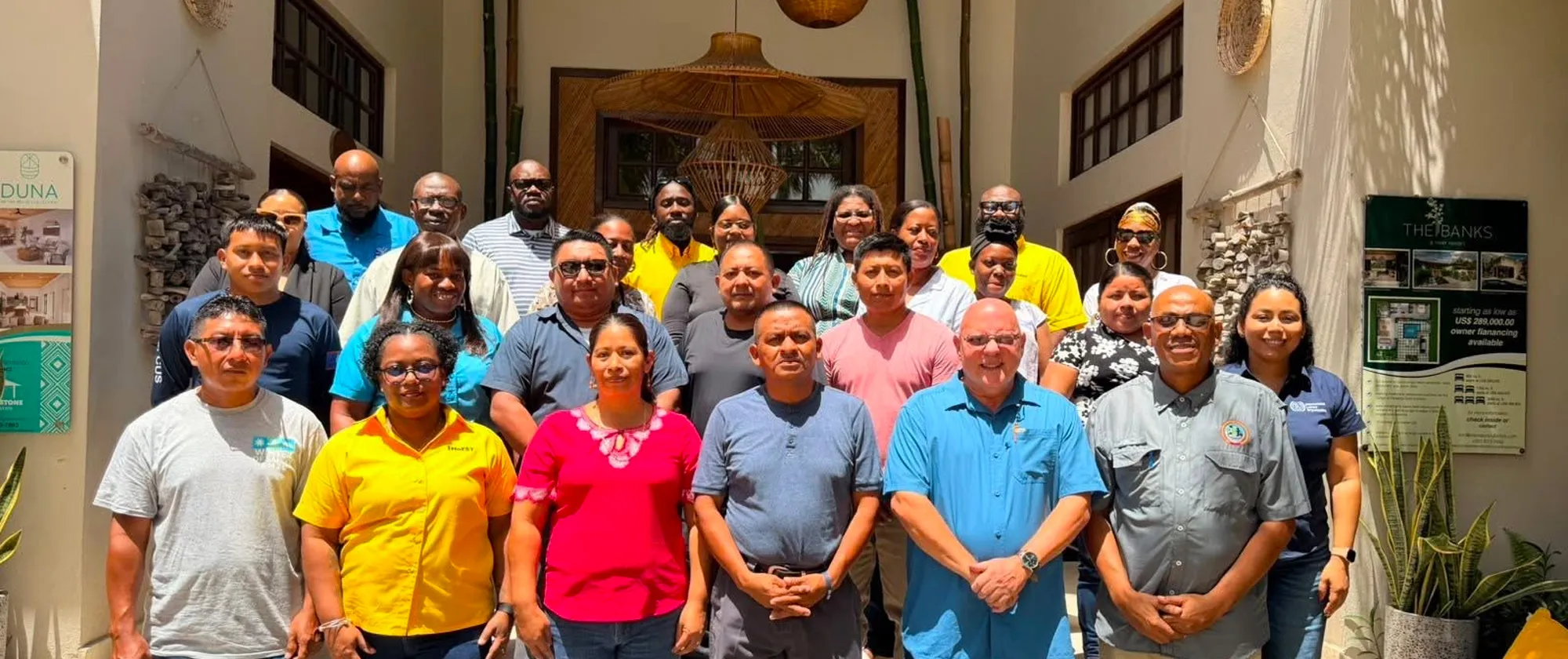
In August, work-based learning, community planning and women’s entrepreneurship activities within the European Union-funded PROSPER project advanced practical preparations for locally-led economic development in southern Belize.
28 August 2026
BELMOPAN, Belize (ILO News) — In village halls and meeting rooms across southern Belize, August was a month of decisions. Women entrepreneurs, Local Action Groups (LAGs) and national institutions engaged with ILO Specialists and the PROSPER Project team in several activities under the EU-funded PROSPER Project- Participation, Ownership and Sustainable Progress for Economic Resilience. Each engagement contributed toward the same architecture: stronger local structures, better evidence and organized systems that put inclusive economic growth within reach of the participating communities.
Work-based learning takes shape
The month opened on 12-13 August in Hopkins, where government representatives and education and training institutions reviewed the underlying concept and principles of work-based learning and began mapping out what a national work-based learning framework would need to contain.
Work-based learning places learners in real workplaces to develop practical skills while they remain enrolled in education or training programmes. The two-day session worked through the framework addressing four interrelated dimensions: employers' engagement and selection of learners; the supervision and safeguarding during work placements; the assessment of learners for certification; governance and financing of the work-based learning system.
Participants provided feedback about challenges and opportunities for the implementation of work-based learning. Instructor shortages, the cost of specialised equipment and competition among institutions for a limited pool of employer placements often constrain how far and how fast such a framework can extend. However, some training institutions have developed structured internship models that provide good examples of work-based learning arrangements. Addressing these challenges and opportunities is necessary to develop solutions combining at-school with at-work learning that can benefit young people and enterprises in southern Belize, while serving as a model for the country.
“The success of a work-based learning framework depends on its ability to balance the needs of learners, employers, and training institutions. Such a framework must establish clear standards for occupational safety, supervision, assessment, and certification of learners, while ensuring that workplace learning opportunities are informed by and responsive to labour market needs, said Ilca Webster, Skills and Lifelong Learning Specialist of the Decent Work Team and ILO Office for the Caribbean.
Communities set their own priorities
Attention then shifted to Toledo, where PROSPER met with residents of San Antonio, San Jose, Laguna, Na-Luum Ca and Pueblo Viejo on 15–16 August. These consultations form part of PROSPER’s work with 15 communities to establish Local Action Groups that will ultimately be responsible for developing Local Economic Development (LED) Plans.
The five villages identified different opportunities – from tourism, cacao and agriculture to arts and crafts, women’s economic activities and youth skills – while raising common concerns about transport, language and literacy, training accessibility, representation, certification and access to markets.
The discussions also helped clarify that the PROSPER project supports training and technical assistance rather than grants, planting material or other direct inputs. That distinction is important as communities decide which priorities are realistic and how Local Action Groups should represent different interests. Tanisha Chavarria, PROSPER Project Coordinator reiterated, “PROSPER is not arriving with a ready-made list of solutions. Our role is to help communities turn what they know about their assets and challenges into realistic priorities, and to work with representative Local Action Groups to foster the skills needed to carry them forward.”
Women’s entrepreneurship development in focus
On 22 August in San Pedro Columbia, women and community members reviewed findings from PROSPER’s Women’s Entrepreneurship Development Assessment, which covers eight communities, drawing on a survey of 72 women entrepreneurs, 15 key informant interviews and two focus-group discussions involving 15 participants.
The evidence points to a gap between services that formally exist and what women can practically access. Among women surveyed, 87.5 per cent had no current access to credit, while 76.4 per cent reported difficulty reaching buyers. Distance, transport, care responsibilities, language, connectivity and limited follow-up after training also affect business development. The community validation gave local women an opportunity to confirm, challenge and prioritize those findings before the report is finalized.
That evidence was then taken into a national stakeholder working session in Belmopan on 24 August, where government partners, ILO specialists and the PROSPER team examined institutional responsibilities, coordination and feasible priorities. The working session was explicitly designed to move “from evidence to ownership” by identifying actions, leadership and ways to keep women and community groups involved.
“The challenge is not simply to create more programmes. Support already exists, but rural women may still struggle to access financing, buyers or sustained business services as it is uncoordinated and fragmented. Validation helps us identify where delivery needs to change and where institutions can work better together,” said John Bliek, ILO Specialist, Sustainable Enterprise Development and Job Creation.
Across three weeks and three districts, the August activities moved PROSPER’s implementation forward in sequence: strengthening the systems that connect skills to work, helping communities organize around their own economic priorities and ensuring that future support for women entrepreneurs is shaped by evidence they have had the opportunity to test.
Relevant projects

An ILO-EU Project
Participation, Ownership and Sustainable Progress for Economic Resilience (PROSPER)