Lesotho’s workforce consists of approximately 1,346,770 people, with women making up 52 percent of this population. Around 670,000 individuals are part of the labour force, either employed (521,445) or unemployed (151,266). A significant portion, roughly 200,000, are employed in the private business sector, including the creative and cultural economy, the government is the biggest employer with a workforce of approximately 54,000.
However, between January and August 2021, 124 workplace accidents were reported, resulting in 25 fatalities and serious injuries to 99 individuals (76 men and 23 women). Major gaps in labour inspections, reporting, and occupational safety and health (OSH) compliance persist. It is estimated that half of the labour force works in the informal economy. Additionally, gender-based violence and harassment (GBVH) and HIV prevalence remain high, with official statistics not fully capturing the gravity of GBVH.
In March 2022, Lesotho ratified three crucial ILO conventions, signaling a strong commitment to improving working conditions in both public and private sectors. The ratified conventions include:
Labour Relations (Public Service) Convention, 1978 (No. 151): Extends rights recognized in the Right to Organise and Collective Bargaining Convention, 1949 (No. 98), to public employees engaged in state administration.
Promotional Framework for Occupational Safety and Health Convention, 2006 (No. 187): Aims to promote continuous OSH improvement to prevent occupational injuries, diseases, and deaths by developing a national policy, system, and program.
Violence and Harassment Convention, 2019 (No. 190): Promotes an inclusive, integrated, and gender-responsive approach to preventing and eliminating violence and harassment in the workplace.
Two significant pieces of legislation were enacted in April 2024 by Lesotho, the Labour Act, 2024, and the Occupational Safety and Health Act, 2024. These laws align with the ILO conventions, creating a conducive legal framework to address OSH, GBV, and non-discrimination issues.
The Safe and Inclusive Work Environments in Lesotho Project
Recognizing this commitment, Lesotho secured financial support from the US Department of Labour (USDOL) for a 4-year project to support safe and inclusive work environments. The project aims to strengthen the capacity of government institutions, employers, workers' organizations, and other key players through enhanced legislative frameworks, policy development, multi-stakeholder collaboration, and operational tools to monitor and enforce compliance with international labour standards related to OSH, anti-discrimination, and countering GBVH in the workplace.
The project seeks to achieve two main outcomes:
Strengthened capacity of relevant government institutions to monitor and enforce compliance with international labour standards related to OSH, anti-discrimination, and countering GBVH.
Enhanced government collaboration with local, national, and regional stakeholders to develop and implement policies, procedures, and services promoting OSH and countering discrimination and GBVH in the workplace.
Project Launch & Inception Meeting
The Project Launch and the Inception Meeting was to position the occupational safety and health of workers, including the elimination of gender-based violence, harassment, and non-discrimination, as key components of Lesotho’s national development priorities. The event highlighted the project's role in achieving Lesotho’s Decent Work Country Programme priorities and contribute to the Lesotho UN Sustainable Development Cooperation Framework for 2024-2028.
The project was officially launched by the Minister of Labour and Employment, Honourable Tšeliso Mokhosi, who said:
the project aims to address low compliance with labour laws and to create a safer work environment for the working population in Lesotho, it also seeks to ensure labour sector stability and promote awareness of labour rights among employees and employers
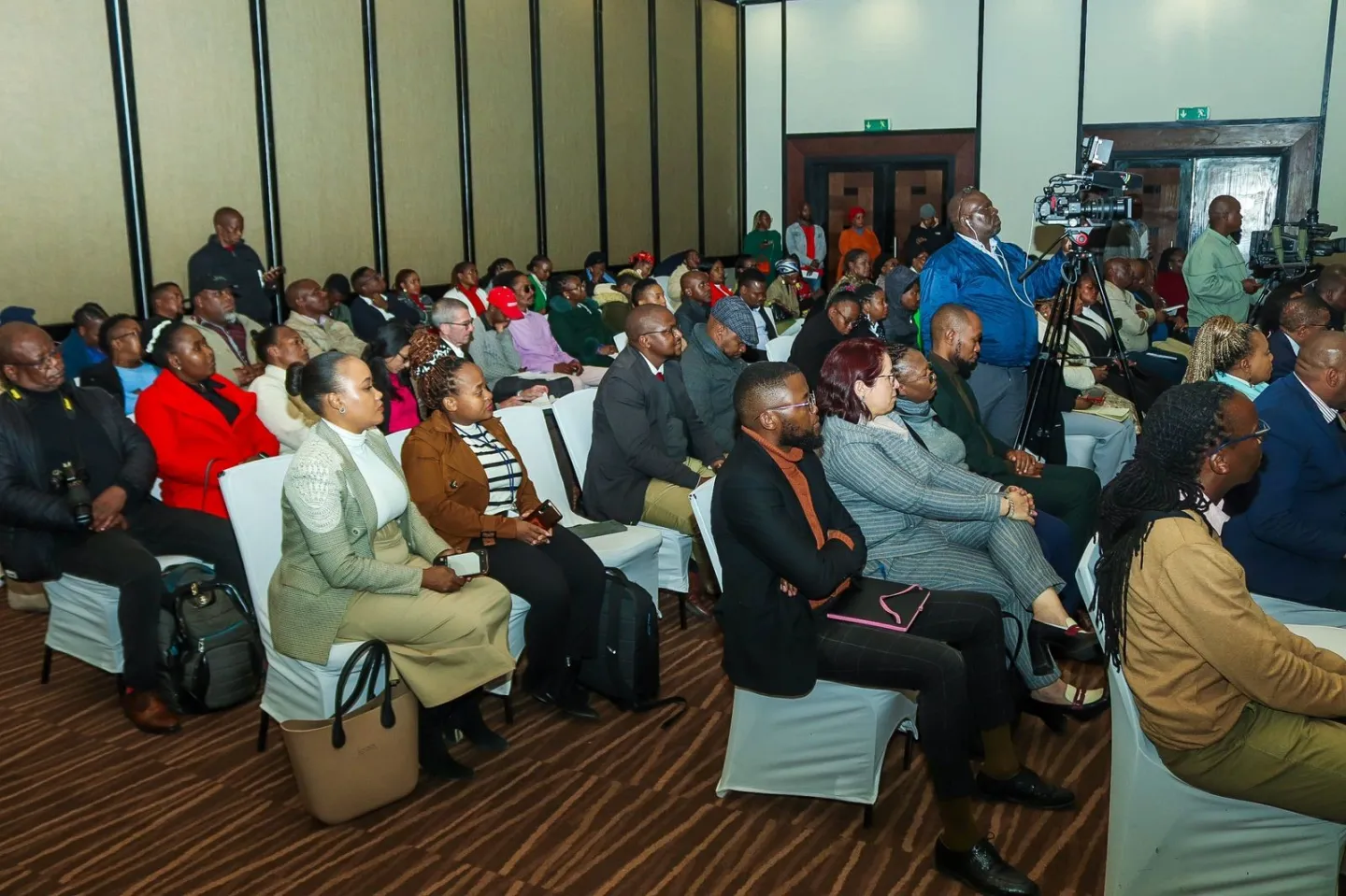
The launch was attended by a wide representation of stakeholders from the world of work including government officials, employers, trade unions, informal economy associations, trade unions, academia, development partners, the UN, and the media.
UN Lesotho Resident CoordinatorAmanda Khozi Mukwashi: “This project is not just a plan on paper; it is a roadmap towards real change. It aligns with the United Nations Sustainable Development Cooperation Framework for Lesotho 2024 – 2028 – "Ka lebelo la Ntšoekhe," underpinning our pillars on good, particularly under the pillar on: ‘Good governance, and social equity, as well as the pillar on: ‘People’s well-being and economic development.
The Association of Lesotho Employers and Business (ALEB) takes occupational safety and health, anti-discrimination and gender-based violence seriously. We are committed to ensuring that workplaces are safe and inclusive. We are committed to providing services, developing workplace policies and drawing workplace strategies for our members. Employers, Advocate Lindiwe Sephomolo
Commitment Statements were also given by the Employers Organisation (ALEB) and the 3 Trade Union Federations: Lesotho Federation of Trade Unions (LFTU), Lesotho Labour Council, and the Lesotho Trade Union Congress.
The US Embassy representative, Jullion Cooper, said they look forward to the fulfilment of the project’s goal and objectives. All speakers at the event expressed their appreciation to the US Government for the support.
Trade Unions remarks: Today's project launch is a beacon of hope for the working women and men of Lesotho. It is a testament to our collective resolve to address these injustices and to build a future where every worker is treated with the respect and dignity they deserve. This project aims to create work environments that are not only safe and inclusive but also equitable and just. We believe that by joining forces, we can maximise the positive outcomes of this project, ensuring that its benefits are felt across all sectors of our economy.
A tripartite plus representative Project Advisory Committee (PAC) will be constituted with a mandate to provide oversight and policy guidance to the Project as it implements activities across the three main pillars of: OSH; GBVH; and Discrimination, and to ensure that lessons and good practices from project implementation are documented and disseminated for scaling up