

Empowering inclusion: ILO equips teams to make infrastructure and employment work for everyone
The ILO has given project teams the tools and confidence to design infrastructure and employment initiatives that include everyone—especially those often left behind.
27 October 2025
Abuja, Nigeria - The International Labour Organization (ILO), through its Employment Intensive Investment Programme (EIIP) under the Rural Access and Agricultural Marketing Project (RAAMP), is changing how Nigeria delivers infrastructure and employment. With support from the World Bank and the French Development Agency (AFD), the ILO is helping ensure that inclusion is not an afterthought—but a foundation.
RAAMP spans 19 states across Nigeria, with the ILO providing technical support in five: Akwa Ibom, Bauchi, Niger, Ogun, and Sokoto.
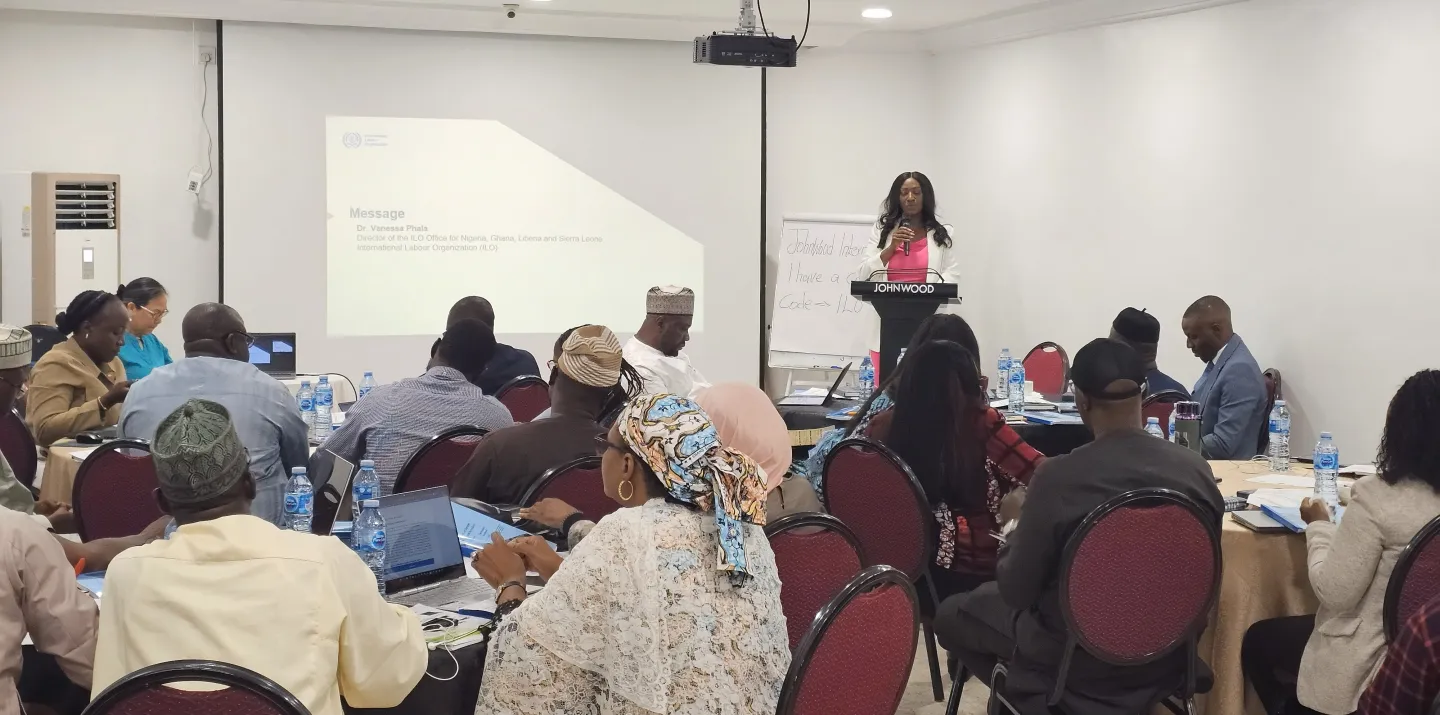
In September 2025, the ILO-RAAMP team hosted a four-day training in Abuja focused on Gender Equality and Social Inclusion (GESI). The training brought together over 30 participants—including staff from the Federal Project Management Unit (FPMU), State Project Implementation Units (SPIUs), field officers, programme managers, World Bank representatives, and technical experts from across Africa and the Middle East. Their shared mission: to make sure infrastructure and employment projects work for everyone—especially women, persons with disabilities, and other marginalized groups.
The training responded to recent assessments that revealed a gap—not in technical know-how, but in applying inclusive practices consistently. The ILO stepped in to close that gap, offering hands-on tools and real-world strategies to help teams break down barriers, challenge stereotypes, and design projects that leave no one behind.
Vanessa Phala, ILO Country Director for Nigeria, Ghana, Liberia, Sierra Leone, and Liaison Office for ECOWAS emphasized that this initiative supports Nigeria’s national development goals and the ILO’s Decent Work Agenda.
We’re not just building roads or creating jobs—we’re building a more just and inclusive society
Vanessa Phala, ILO Country Director for Nigeria, Ghana, Liberia, Sierra Leone, and ECOWAS
Engr. Aminu Mohammed, National Project Coordinator for RAAMP, highlighted the persistent challenges women, persons with disabilities, and other marginalized groups face in accessing decent work. “This training is a turning point,” he said. “It gives us the tools to make inclusive employment and infrastructure a reality.”
Engr. Ibrahim Abdulmalik, Co-Task Team Lead at the World Bank, echoed that sentiment. “This initiative strengthens our commitment to equality, inclusion, and social justice through employment-intensive investments,” he said.
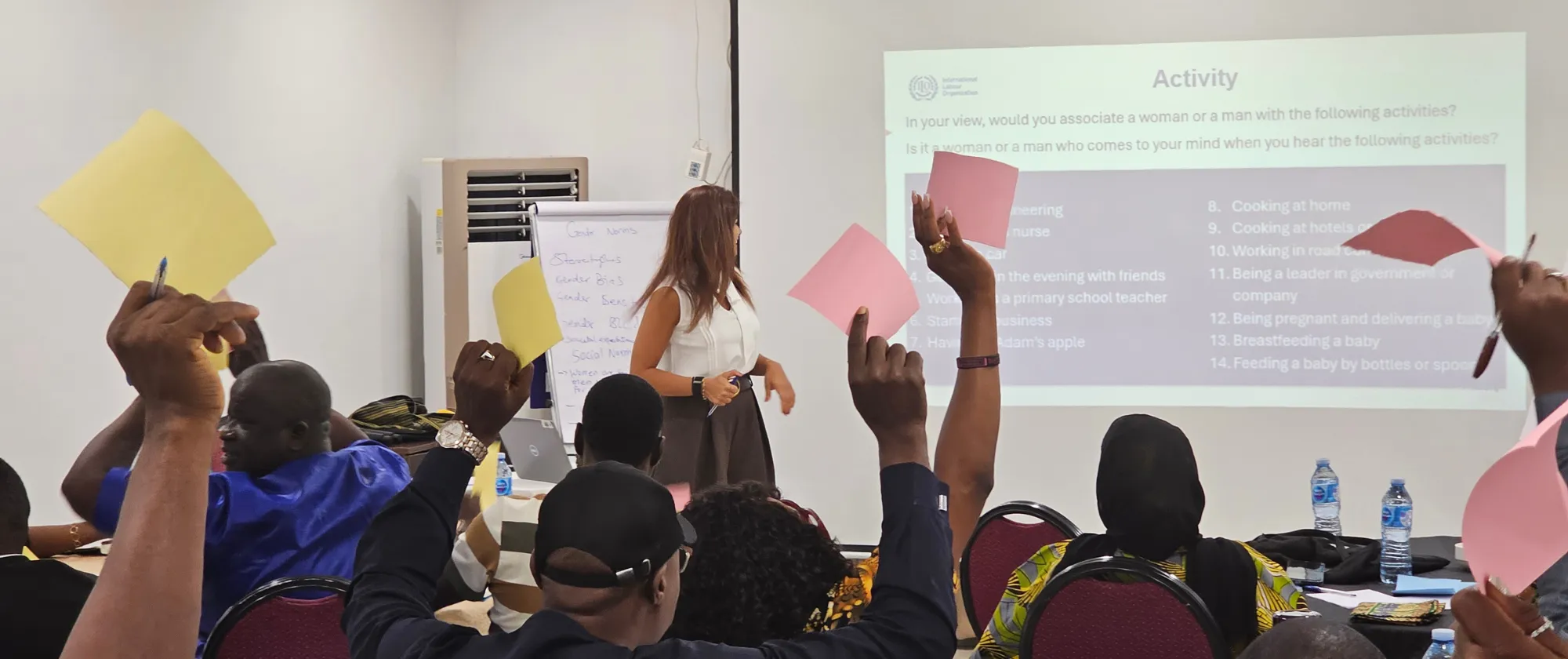
The training took a participatory, hands-on approach, connecting theory to real-life challenges. During the training, participants:
- Explored inclusive infrastructure principles, drawing lessons from Nigeria and Lebanon.
- Tackled gender equality issues like unpaid care work, wage gaps, and workplace safety, with insights from Afghanistan, Tanzania, and Kenya.
- Practiced disability inclusion using real-world scenarios and planning tools.
- Built facilitation skills to train others and spread inclusive practices across their networks.
Participants left with:
- Clear action plans to integrate GESI into their projects.
- New skills and confidence to lead inclusive initiatives.
- A growing peer network to share experiences and support one another.
- Access to practical resources, including toolkits and case studies for everyday use.
This training marks a major step forward in the ILO’s mission to make decent work truly inclusive in Nigeria. By investing in people—especially those who face systemic barriers—the ILO is helping build a future where no one is left behind.
As Nigeria continues to pursue its development goals, the ILO remains a trusted partner in advancing equality, inclusion, and social justice through employment-intensive investments.