

Occupational and qualification standards
Employer engagement strengthens vocational education in Bosnia and Herzegovina
Aligning vocational education with labour market demands remains a significant challenge in Bosnia and Herzegovina. The EU4Education and Employment project, implemented by the ILO with EU funding, aims to address this issue by fostering employer engagement in the development of relevant Occupational and Qualification Standards.
11 March 2025
In Bosnia and Herzegovina, a significant skills mismatch between VET curricula and labour market needs exists. It is caused by a combination of curricula that don’t respond to the labour market, the absence of training standards for most occupations, old-fashioned teaching methodologies, outdated equipment at schools, and low levels of work-based learning. This has contributed to creating skills gaps that hamper the competitiveness, productivity, and innovation capacity of companies. A common root cause of these problems is the lack of adequate employer participation in vocational education and training.
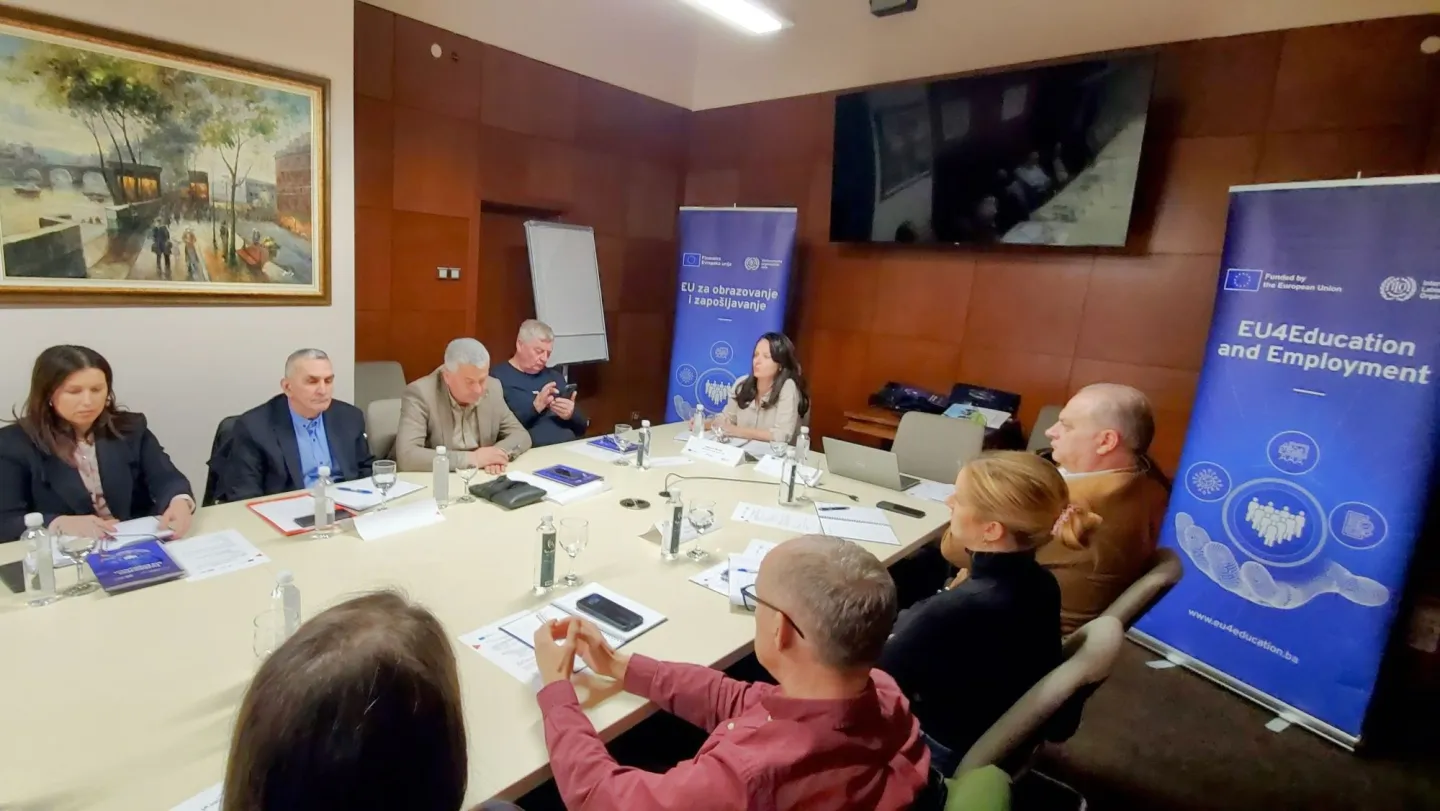
The EU-funded development cooperation project EU4Education and Employment: "EU Support to improved Quality of VET Education", implemented by the ILO, aims to bridge this gap by fostering employer engagement in the development of Occupational and Qualification Standards. Through focus groups and capacity-building activities, the ILO is collaborating with employers to identify the most pressing workforce challenges and propose solutions to enhance vocational education outcomes.
The voice of employers in creating better vocational training standards
Recognizing the importance of employer participation, the project engages businesses in identifying priority occupations for which such standards are urgently needed.
Occupational Standards (OS) are a crucial basis for quality vocational education and training. They define the skills, knowledge, and competencies required to perform a specific job or role effectively within an industry. Qualification Standards (QS) build on occupational standards and specify the criteria, levels of education, training, and assessment methods needed to certify an individual’s competence for a particular occupation or profession. They form the basis of the development of curricula and teacher training, and are therefore essential tools for quality assurance and labour market responsiveness of vocational education and training.
In December 2024, in collaboration with the Employers' Association of the Federation of Bosnia and Herzegovina, the EU4Education and Employment project organized a capacity-building webinar to enhance employer awareness and involvement in the development of Occupational Standards and their overall engagement in VET reforms. The webinar focused on strategies for aligning vocational and technical education with employers’ needs for knowledge, skills and competencies in the workforce.
Subsequently, six Focus Group Discussions were conducted across Bosnia and Herzegovina, to gather industry insights and prioritize occupations in support of the development of Occupational Standards and Qualification Standards, engaging over 50 employers from multiple industries. These discussions were facilitated with the support of local employers' associations and related organisations, ensuring a diverse representation of regional labour market needs. Employers from Sarajevo Canton, Brčko District, Herzegovina-Neretva Canton, Zenica-Doboj, Central Bosnia, Tuzla, Una-Sana, and Posavina Cantons participated, contributing insights on occupational shortages, workforce challenges and skilling and re-skilling needs. The results will help pedagogical institutes and education providers to better align skills training with industry requirements.
Key findings of the focus groups
Employers participating in the discussions highlighted several skills-related challenges:
- Mismatch between VET curricula and labour market requirements, particularly in technical occupations and service sectors.
- Lack of digital competencies and soft skills, including work ethics and communication abilities.
- High turnover rates among young workers, driven by better job prospects abroad.
- Insufficient collaboration between industries, education authorities and vocational schools, leading to outdated training programmes.
The identified priority occupations for which there is an urgent need of skilled workers include engineering technicians, customer service clerks, sales workers, construction trades, plant operators and machine assemblers, among others.
Next steps: Building on the momentum
The insights gathered from these discussions will serve as the foundation for further project activities. In addition, the focus group recommendations will be shared with relevant institutions to support the improvement of educational policies and their alignment with labour market needs.
These activities represent a significant step toward bridging the gap between education and productive employment in Bosnia and Herzegovina. By strengthening employer involvement in the development of occupational and qualification standards, the project aims to create a more resilient and competitive workforce that meets both national and European labour market requirements.
The ILO and its partners remain committed to fostering strong ties between the education sector and employers, ensuring that vocational training is future-proof and responsive to economic trends.
Related content

EU Support to improved quality of VET education (EU4Employment and Education)
Relevant projects
EU Support to improved quality of VET education (EU4Employment and Education)