


Egyptian employers and ILO collaborate to uphold fundamental labour standards in industrial sectors
1 December 2024
The Federation of Egyptian Industries (FEI), the Egyptian Chamber of Apparel and Home Textiles (ECAHT), and the International Labour Organization (ILO) have joined forces to champion compliance with ILO’s fundamental principles and ethical labor standards in Egypt’s industrial sectors.
In a landmark workshop, the partners validated three essential tools designed to address child labor, occupational safety, and workers’ rights. These resources—the Code of Conduct on Child Labour, the Occupational Safety and Health (OSH) leaflet, and the Fundamental Principles and Rights at Work (FPRW) leaflet—aim to empower employers and workers with accessible guidelines for fostering ethical and compliant workplaces.
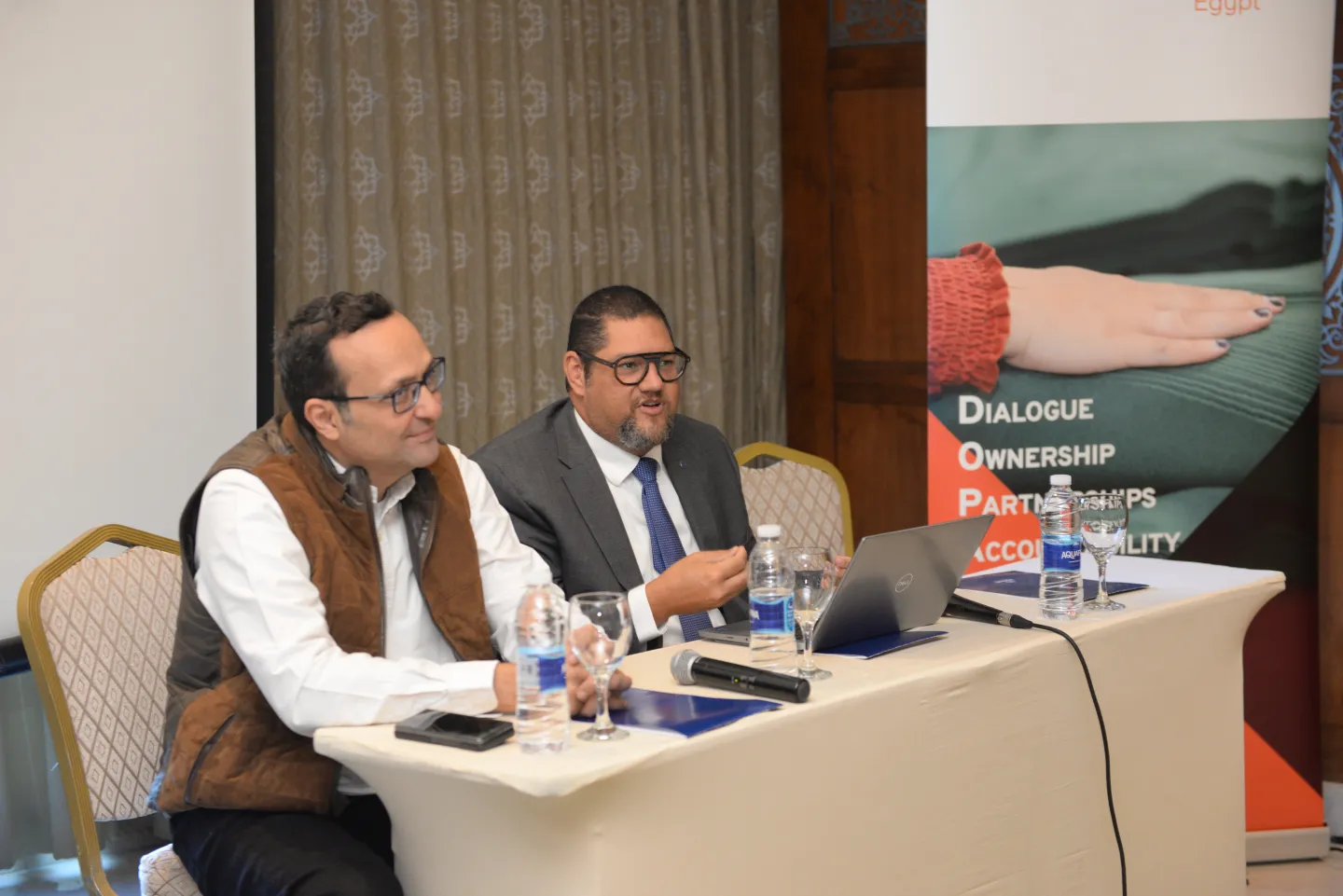
Targeting persistent challenges in the garment industry, these tools align with international labor standards and Egypt’s national regulations. We want to protect companies and employers from unknowingly falling into the trap of practices that either may put them at risk of non-compliance with national and international labour standards that would jeopardize their relations with buyers and consumers and thus, on the bottom line, their sales and exports. This is the case with fundamental principles and rights at work, which includes child labour., said ILO Bureau for Employers' Specialist Farid Hegazy,
We want to protect companies and employers from unknowingly falling into the trap of practices that either may put them at risk of non-compliance with national and international labour standards that would jeopardize their relations with buyers and consumers and thus, on the bottom line, their sales and exports. This is the case with fundamental principles and rights at work, which includes child labour.
Dr Farid Hegazy, ILO ACT/EMP Specialist
By maintaining compliance and eradicating child labour, companies can not only protect their reputation, but also contribute to a more equitable and just global economy. For the FEI to participate in the development and own such a code of conduct strengthens their position vis-à-vis their members through the provision of value-added services, said Dr Farid Hegazy, ILO ACT/EMP Specialist.
Protecting children from exploitation in the workforce is not just a legal obligation, it is a moral imperative that reflects the core of ethical business practices. "In today’s interconnected world, companies that turn a blind eye to child labour not only harm vulnerable children, but also risk their own reputation and long-term viability" emphasized Ms Marwa Salah-Abdou, National Project Coordinator of ETEL Project.
In today’s interconnected world, companies that turn a blind eye to child labour not only harm vulnerable children, but also risk their own reputation and long-term viability.
Ms. Marwa Salah-Abdou, National Project Coordinator of ETEL Project
To address this issue, a Child Labour Code of Conduct has been drafted, drawing from both international frameworks and Egypt’s national legislations, specifically Decree 215 for 2021 that stipulates the law on child employment and trains and profession that children are prohibited to be engaged in.

The FEI underscored the benefits for Egyptian businesses integrating these tools. Strengthening the Fundamental Principles and Rights at Work (FPRW) is essential for the growth of Egyptian exports. Dr. ElSayed Torky, FEI Senior Advisor, affirmed that "by aligning with international labour standards and meeting the expectations of global brands, companies are empowered to enhance working conditions and operational efficiency. Through collaboration with the FEI and ECAHT, this approach strengthens supply chains, opens new opportunities in international markets, and ultimately benefits businesses in Egypt".
By aligning with international labour standards and meeting the expectations of global brands, companies are empowered to enhance working conditions and operational efficiency.
Dr. ElSayed Torky, FEI Senior Advisor
The initiative’s next step is introducing these three resources to the Ministry of Labour (MoL) to be used as references during labour and Occupational Safety and Health (OSH) inspection visits beyond Better Work Egypt (BWEg) registered factories and the garment sector, thus promoting ethical standards and labour rights on a broader scale in Egypt’s industrial sectors,. "Our vision extends beyond BWEg-registered factories and the garment sector. We aim to leverage this partnership and these resources to scale our impact across industries, addressing gender equality, labour rights, and safety regulations, affirmed Mr. Al Saifi, Operations Manager at BWEg Programme.
We aim to leverage this partnership and these resources to scale our impact across industries, addressing gender equality, labour rights, and safety regulations
Mr. Al Saifi, Operations Manager at BWEg Programme.
This cooperation was made possible through the ILO’s Better Work Egypt (BWEg) programme, Combating the Worst Forms of Child Labour in Small Industries and Streets by Supporting the Implementation of the National Action Plan in Egypt project (ETEL).
