

Digital skills for inclusive growth and decent work in Uganda
The second Community of Practice workshop highlighted digital skills development as a key to expanding access to digital work for all.
26 November 2024
Kampala, Uganda (ILO News) - The second thematic discussion of the Community of Practice (CoP) on Decent Work in the Digital Economy focused on digital skills development as a foundation for access to digital work, emphasizing the importance of inclusive opportunities and enabling policies. The workshop was convened on 26 November 2024, bringing together policymakers, representatives from workers’ and employers’ organizations, private sector actors, academia, training providers, and development practitioners.
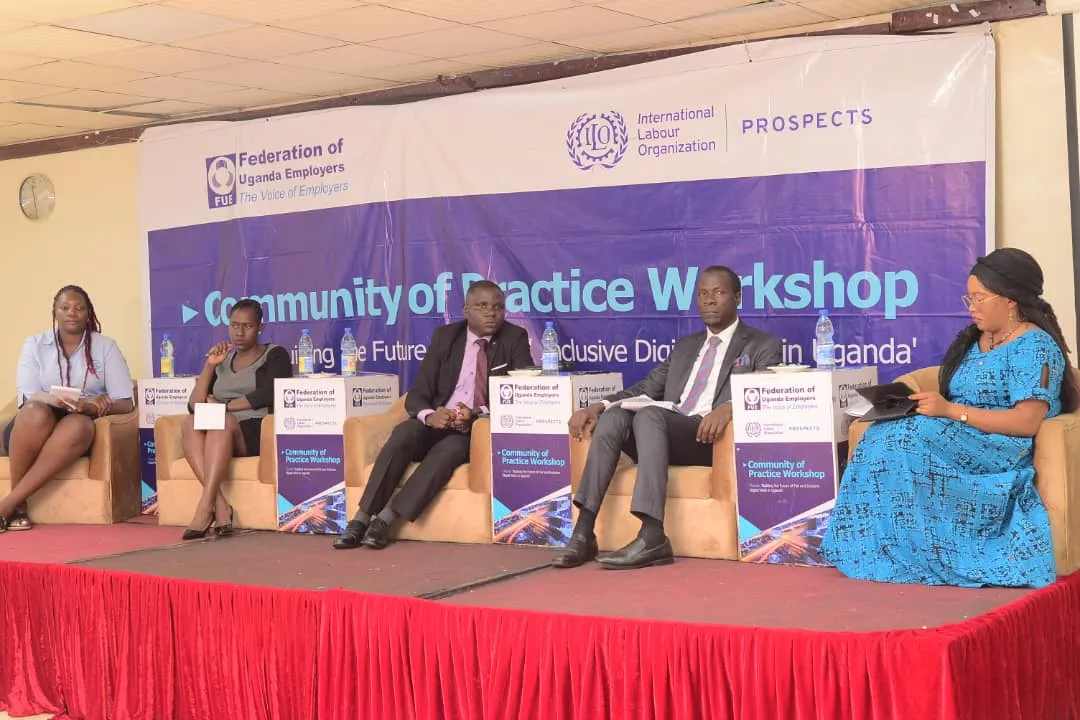
Digital skills as a gateway for the future workforce
Douglas Opio, CEO of the Federation of Uganda Employers (FUE), discussed that Uganda’s digital economy is no longer a future aspiration but a present-day driver of employment and economic transformation. “To harness the potential of new technologies to create decent work opportunities, we must enhance the quality and accessibility of education and training in the digital economy,” Opio added. The development of digital skills is a crucial enabler of workforce adaptability in the context of rapid technological advancements and transformation of labour markets. Basic digital skills are increasingly becoming a requirement, even for entry-level positions, especially as digital tools and technologies are being integrated widely in different sectors of the economy.
Building on this, Isaiah Maziga from the Ministry of Gender, Labour and Social Development (MoGLSD) emphasized the government’s commitment to expanding equitable access to job opportunities and skills development, particularly for underserved groups, including women, rural communities and persons with disabilities. “At the same time, our employment policies must evolve to ensure that workers in the digital economy are adequately protected,” Maziga stated.
Investing in skills and protection to enable participation and competitiveness
Bethelhem Kassa from the ILO shared preliminary findings from an ongoing study on Uganda’s digital economy. The research highlights critical skills mismatches that limit the opportunities of young people and other job seekers to access digital work. These findings underscore the need to align training programmes with market demands in the country, particularly through demand-driven training programmes that lead to recognized certifications, validate competencies and improve employability across diverse population groups in the country.
Dr. Abubakar Wasswa from Makerere University showcased good practice from the institution to undergo a curriculum review process every five years to ensure that academic offerings remain relevant and demand driven. “Our priority is to empower graduates to become competitive both in Uganda and across the region by offering courses that integrate cutting-edge technologies like AI,” he noted.
The CoP also acknowledged the role of private sector actors in upskilling. Victoria Teka, a representative from SafeBoda, presented the platform’s initiatives in training riders on app usage, customer service and financial literacy. Participants agreed that financial literacy should be an integral part of skilling programmes, particularly given the challenges many gig workers face in managing their earnings and planning for long-term financial stability.
Besides platform operators’ investments on skills development, representatives from the Amalgamated Transport and General Workers Union (ATGWU) also called for joint efforts to advocate for extended labour and social protections to boda-boda drivers who are typically excluded to critical employment benefits because of their classification as independent contractors. ATGWU is in discussions with a network of workers in ride-hailing apps that has expressed interest in joining their union, leveraging their experience in collective bargaining.
Esther Namatovu of the National Organization of Trade Unions (NOTU) also emphasized the importance of ensuring that workers understand their rights. “Collaborative efforts among labour unions, platform companies, and policymakers are essential for developing balanced regulatory frameworks that uphold the dignity and rights of all workers, alongside awareness campaigns to educate workers about their rights and responsibilities in the digital economy,” she stated.
Bridging the digital divide in skills development
Inclusion was a central theme throughout the discussions. Participants stressed that digital skills development in Uganda must consider the specific needs of women, persons with disabilities, displaced populations and other underserved groups, including refugees. Expanding rural connectivity infrastructure and promoting basic digital literacy were identified as essential steps to bridge these divides.
Participants also underlined that while skills development is a critical foundation for accessing digital work, it must be complemented by improved access to digital infrastructure, financial services, and strengthened labour and social protections. Together, these measures can help ensure that digital work contributes to economic transformation and the creation of decent jobs for all in Uganda.

***
The CoP is facilitated by the PROSPECTS programme in Uganda and the Opportunity Fund project on the Promotion, inclusion and protection of refugees and host communities in the gig economy, with the generous funding of the Kingdom of the Netherlands.
Relevant projects

Promotion, inclusion and protection of refugees and host communities in the digital and gig economy

PROSPECTS Opportunity Fund project
Advancing Young People’s Engagement and Meaningful Participation in the PROSPECTS Partnership