

Digital financial inclusion key to expanding platform work opportunities for women in India
ILO–NCAER policy brief finds that women’s digital earnings records could unlock access to credit and other financial services, while calling for safeguards to ensure digital finance supports decent work in the platform economy.
24 August 2026
NEW DELHI (ILO News) - Systemic exclusion from formal financial services and gaps in digital literacy remain significant barriers to women participating in platform work in India, according to a new joint policy brief by the International Labour Organization (ILO) and India’s National Council of Applied Economic Research (NCAER).
The policy brief, Advancing Women’s Digital Financial Inclusion in the Platform Economy, examines an increasingly important source of employment in India. The country had an estimated 12 million platform workers by the end of 2025, with that number projected to reach 23.5 million by 2029–30. Yet women remain significantly under-represented.
Platform work, including app-based delivery, ride-hailing and home services, can offer women greater flexibility over when and where they work. However, financial exclusion, gaps in skills and digital literacy, mobility and safety concerns, unpaid care responsibilities and restrictive social norms continue to limit their participation.
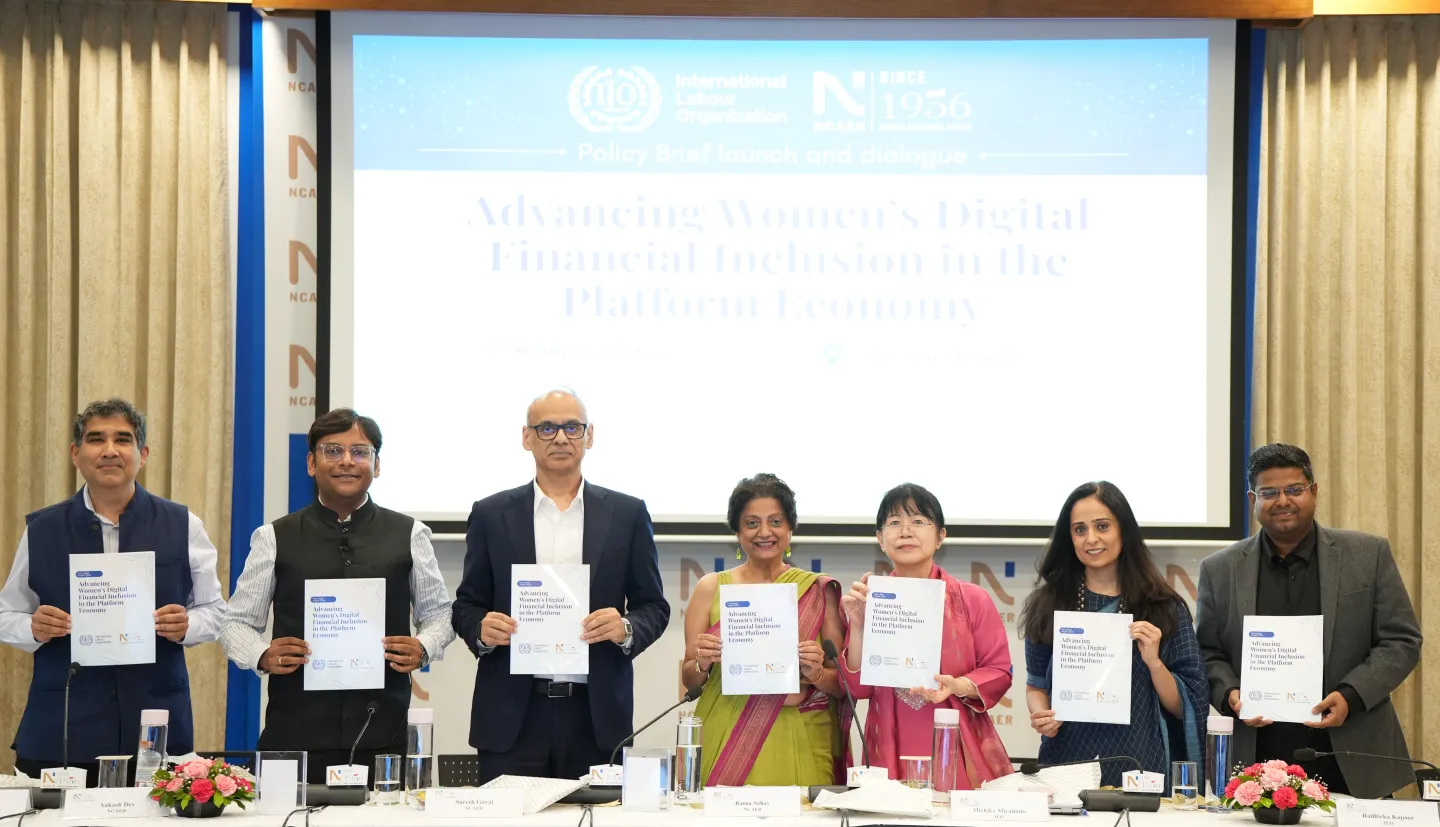
“A woman’s best protection is a little money of her own. Access to credit and mobility are important conditions for women to have better employment opportunities. The gig economy has given that opportunity,” said General Suresh Goyal, NCAER Director.
The brief stresses that financial inclusion means more than having a bank account. While the gender gap in bank-account ownership in India has virtually disappeared, significant gaps remain in women’s ability to use digital financial services independently. In 2022–23, for example, only 25.2 per cent of women aged 15 and above could perform online banking transactions, compared with 47.1 per cent of men.
Women platform workers need different financial services at different stages: start-up credit to purchase a vehicle or equipment; savings, short-term credit and insurance to cope with fluctuating earnings or illness; and longer-term finance to invest, grow their earnings and build greater economic security.
“Digital financial inclusion must enable women to build income security, resilience and sustainable livelihoods,” said Michiko Miyamoto, ILO Country Director for India. “Coordinated action by regulators, platforms and financial service providers can help make digital finance a bridge to decent work and greater economic opportunity.”
A key opportunity identified by the brief comes from the digital records generated through platform work. Each completed job and payment can provide evidence of a worker’s income, potentially allowing lenders to assess her ability to repay based on earnings rather than property or other collateral, assets women are less likely to own.
The brief identifies two ways this could happen. India’s emerging “digital public infrastructure” for finance could allow workers, with their consent, to securely share financial information with different lenders. Alternatively, platforms can partner directly with regulated banks, financial companies and insurers to offer credit, savings and insurance through their apps.
“We need to explore how India’s financial digital infrastructure and systems such as e-Shram can safely expand financial access for women platform workers,” said Radhicka Kapoor, ILO Senior Employment Specialist. “That requires gender-sensitive design, strong consent and consumer protections, and safeguards against algorithmic bias.”
The brief calls for clearer loan terms, informed consent for data sharing, accessible grievance mechanisms and flexible repayment arrangements when workers experience income or health shocks.
NCAER’s Centre for Gender and Macroeconomy Director Prof. Ratna Sahay summarized: “Digital footprint in platform economies can be a game changer for women to access credit, underpinned by regulation that encourages innovation while ensuring consumer protection and financial stability.”