

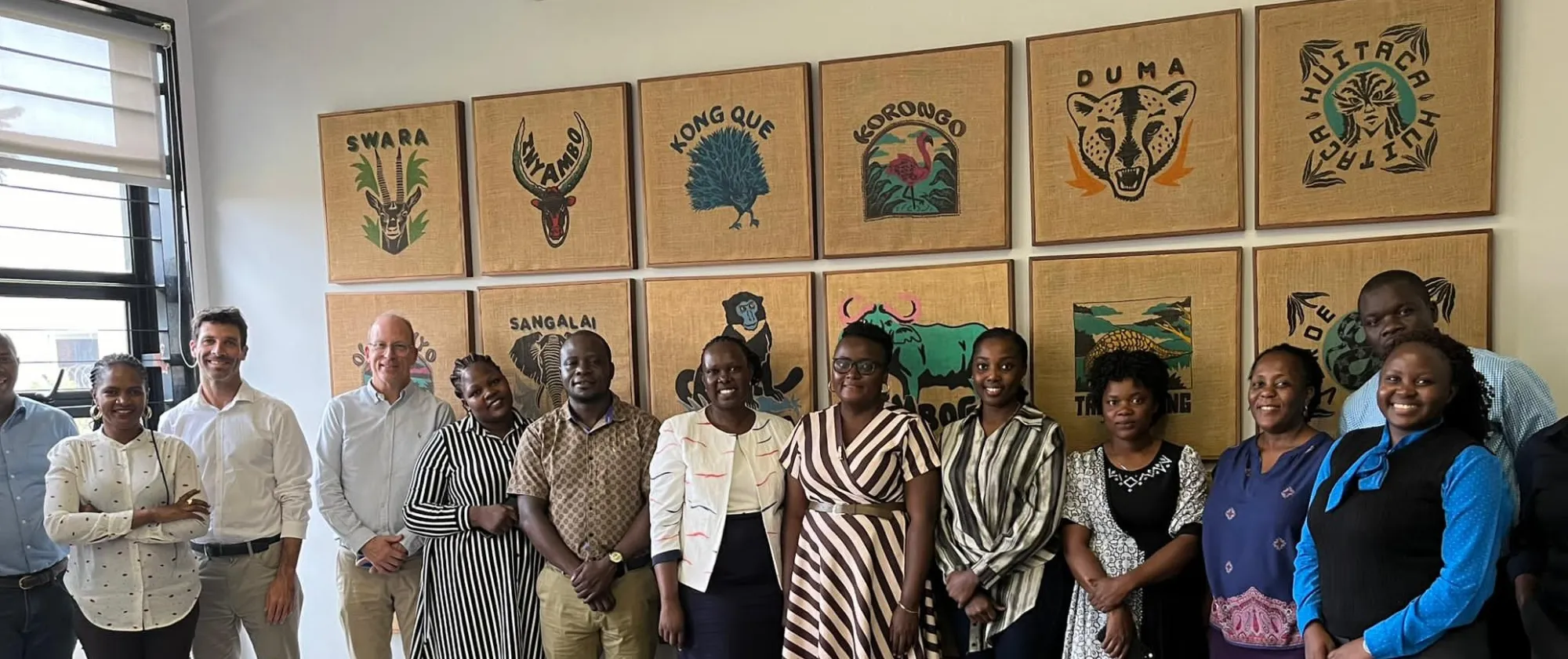
CLEAR Supply Chains project in Uganda
Child labour due diligence capacity building in Uganda
Responsible business conduct is a key component of any action towards the prevention and elimination of child labour in supply chains. As part of an ILO capacity building programme on child labour due diligence and other fundamental principles and rights at work for members of the Child Labour Platform (CLP) and their suppliers, the CLEAR Supply Chains project organized two trainings on child labour due diligence.
30 September 2024
KAMPALA (ILO News) - As part of an ILO capacity building programme on child labour due diligence and other fundamental principles and rights at work for members of the Child Labour Platform (CLP) and their suppliers, the CLEAR Supply Chains project organized two trainings on child labour due diligence.
These training took place in the Ugandan cities of Masaka on the 18th of September and in Kampala on 19th of September, targeting CLP companies in Uganda and local coffee traders. The objectives of these trainings were two-fold: one to have a better idea of the existing knowledge on child labour among coffee traders and companies, and secondly to receive feedback and views on child labour due diligence best practices and on scaling up child labour due diligence efforts throughout Uganda’s coffee supply chain.
Child labour due diligence training for coffee traders based in Masaka.
A half-day training targeting coffee traders who are based in Masaka and sell coffee to major global coffee buyers who are a member of the CLP took place on September 18th, 2024. There were 14 coffee traders present (8 male and 6 female) and the training was centred around the understanding of the basic concepts of child labour among local coffee trades.
The coffee traders were enthusiastic and shared their own understanding and views on the issue of child labour. They elaborated on the different activities that children are engaged in along the coffee supply chain right from planting, weeding, application of fertilizers, watering, pruning, harvesting, drying and transportation. The ILO explained the basic concepts of child labour as well as the provisions on child labour in Uganda’s legal and regulatory framework. Some misperceptions on child labour were corrected, for example that children engaged in coffee production within the household cannot be considered as potential victims of child labour on the assumption that child labour can only take place outside the household.
The traders requested more in-depth training for them to obtain a deeper understanding of the national child labour legislation and considered acquired knowledge on the topic as very useful for their everyday engagements with coffee farmers.
Child labour due diligence training for Child Labour Platform (CLP) members
A second child labour due diligence training was organized in Kampala on September 19th, 2024, targeting staff of CLP coffee members and Uganda Quality Coffee Traders and Processors Association. Seventeen representatives from six coffee companies[1] who are a member of the CLP, one representative of the Uganda Quality Coffee Traders and Processors Association, and one representative of UNICEF Uganda attended the training, which was hosted by UGACOF. The majority of the participants had a good understanding of child labour, and the discussion centred around how to scale up child labour due diligence all the way down to the coffee farmer. CLP members indicated that their agricultural/commercial extension agents as well as farmer structures could be valuable assets to roll out child labour due diligence to the smallholder coffee farmer.
The training also provided a great opportunity to discuss child labour monitoring and remediation system in Uganda, the importance of avoiding parallel mechanisms and the need for aligning child labour monitoring and remediation with national systems. The ILO and UNICEF informed CLP members about the Child Wellbeing Information Management System (CWIMS) that the Government of Uganda is developing as well as the existence of government-led Child Wellbeing Committees (CWC) at district and sub-county level. With support from stakeholders, this CWIMS and CWC structures could embed a national child labour monitoring and remediation system for Uganda’s coffee value chain.
Both child labour due diligence trainings were a precursor for the roll out of an ILO child labour due diligence and other fundamental principles and rights at work capacity building programme that will start in January of 2025. This capacity building programme will respond both to the CLP’s request for support on child labour due diligence as well as the need to prepare Ugandan coffee supply chain actors on the upcoming mandatory due diligence legislation as well spelled out in Uganda’s 2024 National coffee value-chain based action plan for achieving compliance with the European Union’s Corporate Sustainability Due Diligence Directive and the Regulation on Deforestation free products.
Related content

Child labour
CLEAR Supply Chains: Ending child labour in supply chains
Relevant projects
Child labour
CLEAR Supply Chains: Ending child labour in supply chains