


Central American countries share good experiences for measuring child labour within the framework of the ILO AccioNNAr project
A coordination mechanism, gathering representatives from statistical institutes from Mexico, Belize, Guatemala, Honduras, and El Salvador was generated.
5 November 2024
CHIAPAS, MEXICO (ILO News).- The “Technical table to share experiences and good practices among statistical institutions for the generation of data on child labour, forced labour, and human trafficking” was inaugurated.
This working table, which takes place on November 5th and 6th, aims to generate a coordination mechanism, gathering representatives from statistical institutes from Mexico, Belize, Guatemala, Honduras, and El Salvador. Hence, they exchanged information about the instruments and good practices regarding the measurement of child labour, forced labour and human trafficking.
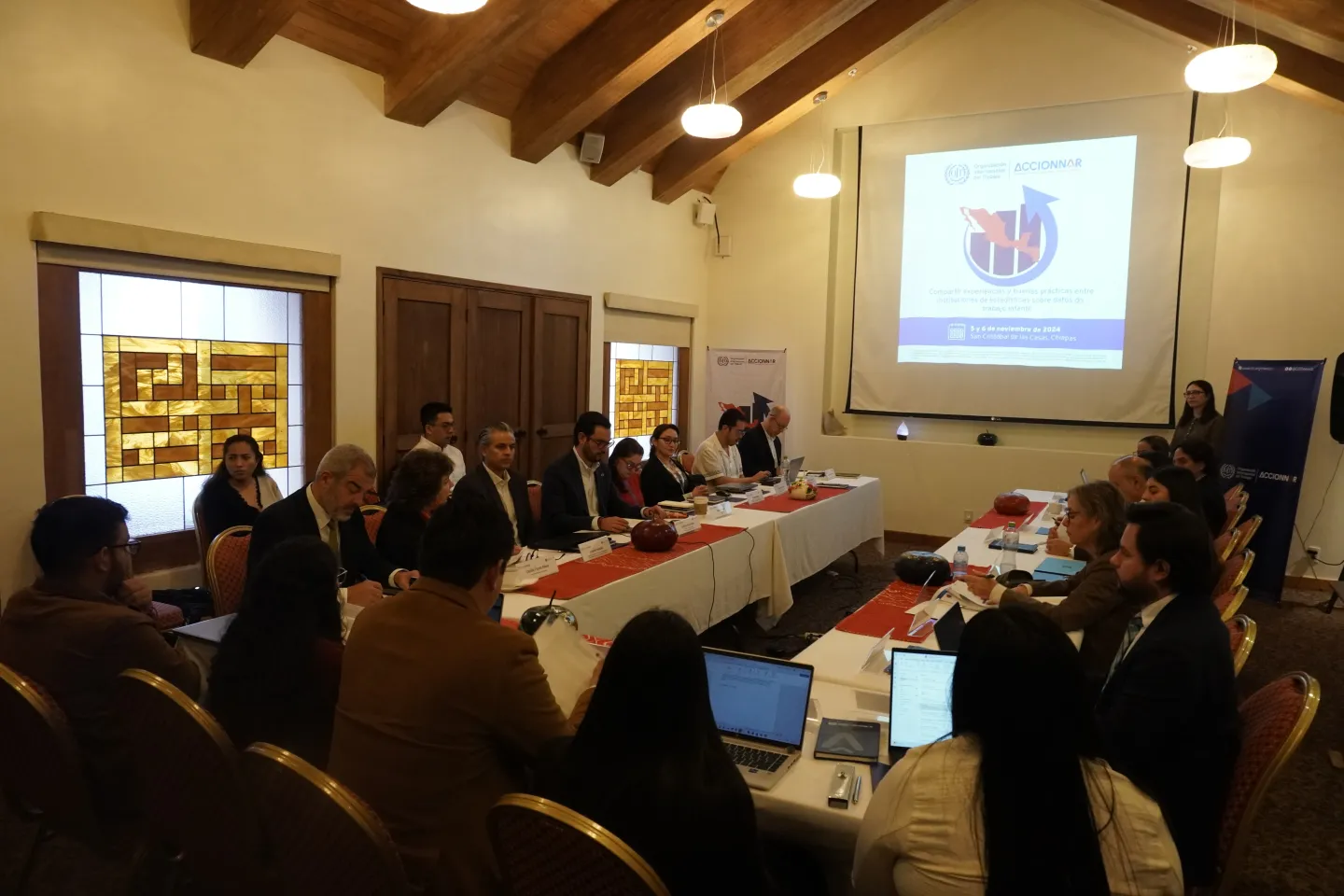
The main objective of AccioNNAr project is to increase government capacities to eradicate and combat child labour, forced labour, and human trafficking through interventions at the federal, state and municipal levels in Yucatán, Quintana Roo, and Chiapas. In addition, it also has activities that involve the countries of northern Central America (Belize, Honduras, Guatemala, and El Salvador).
This event was organized by the AccioNNAr project, implemented by the ILO’s Office for Mexico and Cuba, and financed by the United States’ Department of Labor (USDOL). Within the framework of the project, participants from the federal, state and municipal governments were integrated into the table.
Among the instruments and good practices that were highlighted at this event, the work carried out in Mexico through the National Institute of Statistics and Geography (INEGI) with the elaboration of the ENTI 2022, together with the Secretariat of Labor (STPS) and the ILO’s was presented.
During this event, Belize shared that they have a Population and Housing Census and the Multiple Indicator Cluster Survey. In Guatemala, the Guatemalan National Statistics Institute (INEG) carries out National Survey of Employment and Income, the Population and Housing Census, and the National Survey of Living Conditions, from the National Statistics Institute (INE). In El Salvador, the Banco Central de Reservas operates the Multiple Purpose Household Survey and the Population and Housing Census. And in Honduras, the Honduran National Child Survey (ENTIH)was developed by the National Statistics Institute (INE) and with the technical support of the ILO.

In addition to the representatives of statistical institutes, Marcela Cabezas, the ILO’s regional specialist in labor statistics, technically accompanied this event, as well as Pilar Colil Ríos, Project Coordinator for the Ministry of Social Development of Chile’s Project Survey of Activities of Children and Adolescents; and Claudia Guidi, USDOL’s Senior Research Advisor in Mexico.
The event began with a Keynote Conference on the “Measurement of child labor and the new resolution of child labour statistics” by Federico Blanco, principal researcher in the Department of Fundamental Principles and Rights of the ILO. During his presentation, he highlighted key definitions of the measurement of child labour, as well as the regulatory framework, particularly Conventions 138 and 182.
Furthermore, Federico spoke about the need to have specialized surveys and include modules on forced child labour, as well as strengthen the definitions of permitted and non-permitted work and how the ILO’s International Conference of Labour Statisticians has set standards for the measurement of child labour. He pointed out the challenges of measuring child labour periodically and taking into account criteria not only of prevalence, distribution, and characteristics but also using risk estimates. Finally, Federico Blanco detailed some definitions and elements to understand the worst forms of child labour.
Subsequently, the AccioNNAr project team presented the results of the “Diagnosis for strengthening institutional capacities to improve inter-institutional coordination on child labor, forced labor and migration at the regional level.” Recommendations were highlighted to improve information systems and strengthen regional coordination that focuses on information collection periods, national statistical systems, the need to have open and friendly data for the public and decision-makers, as well as to have coordination mechanisms regarding the generation and exchange of statistical data.
Afterward, Pilar Colil presented Chile's experience in measuring child labour, which stands out for the design and implementation of instruments that focused on direct consultation with children and adolescents. For the implementation of these instruments, various efforts were carried out, such as having cardholders and support material for interviews, informational brochures for the home, and the design of protocols to know how to approach children and adolescents.
The day continued with an exchange among representatives of the statistical institutes of Belize, Guatemala, Honduras, El Salvador, and Mexico on subregional experiences and good practices. Each representative shared the progress in measuring child labor and reflected on good practices from other countries.
During the evening, Jorge Arturo Ríos Badillo, STPS’ General Director of Institutional Relations presented “Mexico's international mechanisms and spaces on forced labor”. In this presentation, emphasis was placed on the national and international regulatory framework, as well as regional spaces, such as Alliance 8.7. and the role of Mexico as a pioneer country. Also, protocols and advances regarding forced labour were mentioned and it was highlighted that synergies through the AccioNNAr project were highlighted as good practices.
The day concluded with reflections from Marcela Cabezas to continue with the formation of a subregional coordination mechanism on the statistical measurement of child labour.
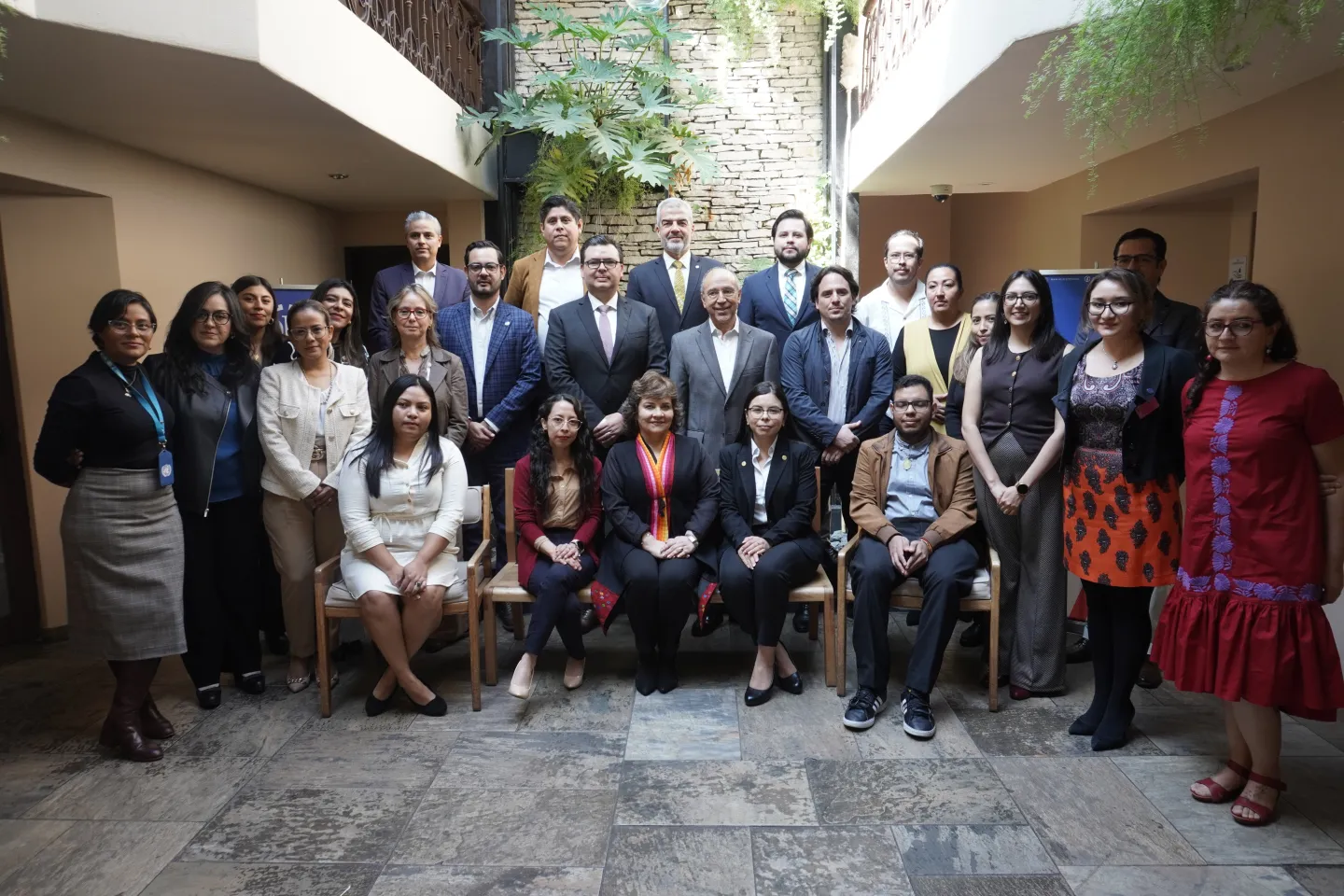
The second day of the event a conference on the Measurement of forced labor and human trafficking was held and a space was created to share the experiences of the Dominican Republic and Peru, INEGI's experience on the ENTI and the worst forms of child labour.
Participants also discussed statistical tools to measure crimes related to forced labour and human trafficking and other purposes of labour exploitation, the Child Labour Risk Identification Model (CLRISK) and a workshop was held to define a coordination mechanism, to establish a schedule meeting format, roles and responsibilities, and a preliminary agenda.
This is the first time that a subregional activity has been carried out with emphasis on the generation and exchange of statistical data on child labour.
------------------------------------------------------
Funding is provided by the United States Department of Labor under cooperative agreement number IL-38041-22-75-k-. 100 percentage of the total costs of the project or program is financed with Federal funds, for a total of 13 million dollars. This material does not necessarily reflect the views or policies of the United States Department of Labor, nor does mention of trade names, commercial products, or organizations imply endorsement by the United States Government.