

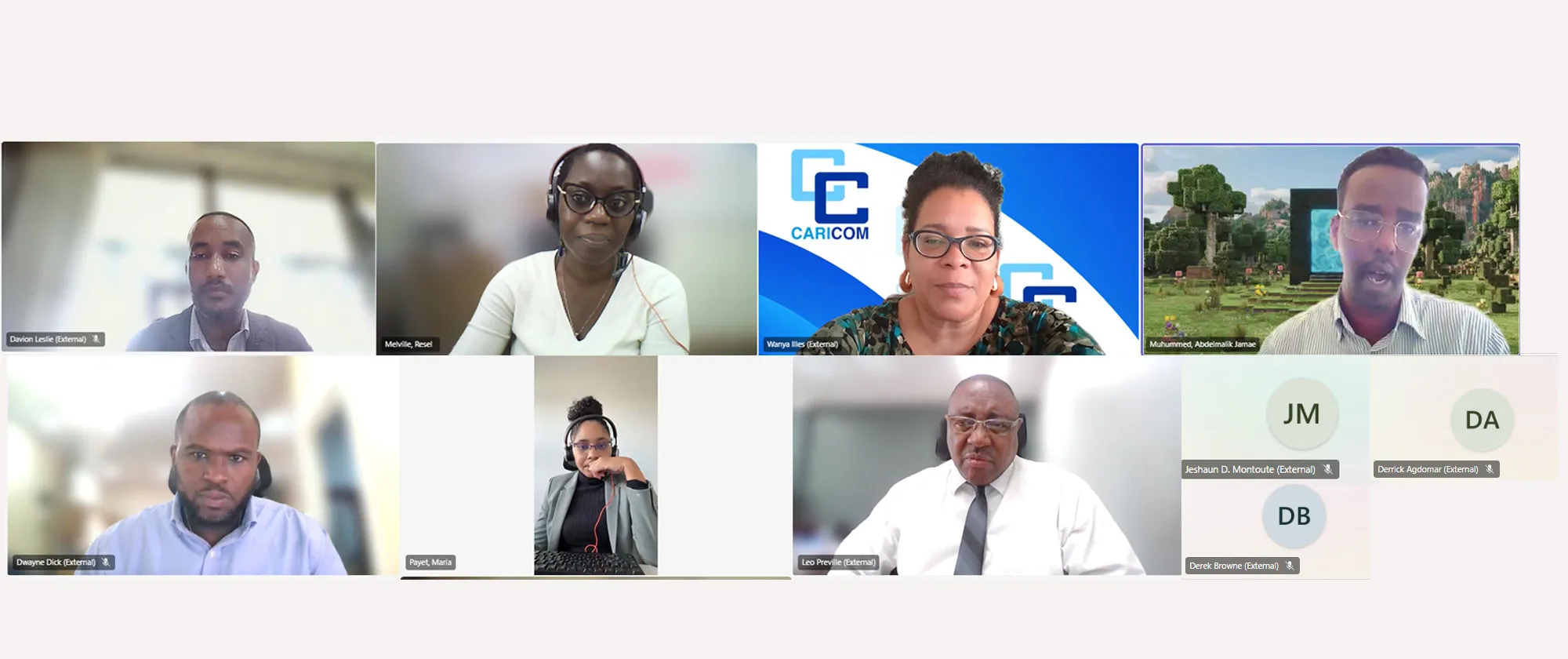
CARICOM gains labour market information system insights from SADC
The knowledge exchange between the Caribbean and the Southern African Development Community (SADC) regions showcased SADC’s ongoing experience with Labour Market Information Systems (LMIS), emphasizing the need for inter-country institutional coordination, integrated data harmonization, and strengthened national capacity building.
9 May 2025
PORT OF SPAIN, Trinidad and Tobago (ILO News) - In a timely exchange of regional expertise, the International Labour Organization (ILO) facilitated a knowledge-sharing session between the Southern African Development Community (SADC) and the Caribbean Community (CARICOM) on 8 May 2025. The session focused on developing and operationalizing effective Labour Market Information Systems (LMIS) to support evidence-based decision-making and promote decent work.
Lessons from SADC: Building systems that work
Ms. Maria Payet, ILO Labour Statistician at the Decent Work Team and Country Office in Pretoria and lead technical advisor on LMIS development across 20 SADC countries, shared how years of dedication, learning by doing, and strong regional collaboration have culminated in the creation of a Labour Market Observatory (LMO). More than just a data hub, the LMO is designed to harmonize and integrate information on employment, skills, labour migration, providing policymakers with a single, trusted platform to track trends and make faster, evidence-based decisions.
Ms. Payet outlined several key lessons from SADC’s experience:
- Governance is essential: Strategic decisions made through regular labour ministers’ meetings, supported by an agreed statistical standards framework, have been central to SADC’s success.
- Capacity before compilation: Investing in national capacity and ensuring data availability before aggregating at the regional level reduces dependency on external consultants and improves sustainability.
- System resilience: Creating systems that serve both national and regional needs help ensure continuity, even as leadership or funding sources change.
The SADC experience underscored the importance of appointing national focal points and clarifying the roles of employment and statistics departments—issues that have caused delays in both regions. Without clear mandates and effective governance, even the best IT infrastructure cannot deliver a functional LMIS.
Caribbean perspectives and challenges
Caribbean counterparts, including Ms. Wanya Illes and Mr. Leo Preville, acknowledged their region's long-standing ambition to establish an LMIS, with discussions ongoing since 2013. While governance frameworks involving Ministries of Labour, statistics departments, and national insurance agencies have been developed, they require activation through political will and regional coordination. “We already have the building blocks in place,” said Illes. “What we need now is the commitment to put them to work for better labour market decisions and better outcomes for people.”
One of the webinar’s most pressing topics was harmonizing labour definitions, especially concerning age and employment classifications. While most SADC countries align with ILO standards, outdated practices in some, remain a barrier to regional comparability. The Caribbean faces similar challenges, with CARICOM actively pushing to standardize definitions and improve data collection. “We can’t move forward without common definitions,” said Mr. Preville. “If we don’t align our data, we’re comparing apples to oranges and we lose the power to act regionally.”
The meeting concluded with a renewed commitment to shared action. Key next steps include:
- Sharing the SADC LMIS best practices with CARICOM;
- Mapping existing labour indicators in the Caribbean;
- Holding follow-up sessions to support data harmonization efforts.
By learning from each other and aligning with ILO standards, SADC and CARICOM are laying the groundwork for labour markets that are more transparent, inclusive, and responsive to the needs of workers and employers alike.