


Care economy
Care Work and Care Jobs: Prerequisites for Decent Work and Social Justice
30 October 2024
DHAKA (ILO news)- The term "care economy" is now widely used. All types of work and jobs related to care falls under the care economy. Due to changes in the nature of work, migration, inflation, and the effects of climate change, the traditional family-dependent care system is no longer suitable for today’s workplaces.
Although Bangladesh encourages women's economic participation, traditional systems where care work within families mainly depends on women still exist. This hinders women’s opportunity to gain necessary skills to access and sustain education and employment, where they can contribute to the national GDP. Women's participation rate in Bangladesh’s labour market is only 21.25 percent.
The prevalent areas of care work in Bangladesh include domestic work, healthcare, elder care, childcare, and nursing. To analyse the extent to which decent work is practiced in these areas, the Bangladesh Institute of Labour Studies (BILS) conducted a study, with technical support from the International Labour Organization (ILO).
On the occasion of International Care and Support Day, BILS and ILO jointly presented this study to stakeholders. Based on the findings, a national dialogue on “Decent work in care work in Bangladesh” was held with representatives from 14 labour organizations, the Ministry of Women and Children Affairs, the Ministry of Labour and Employment, the National Skills Development Authority, Bangladesh Technical Education Board, and representatives from private and public care-giving institutions.
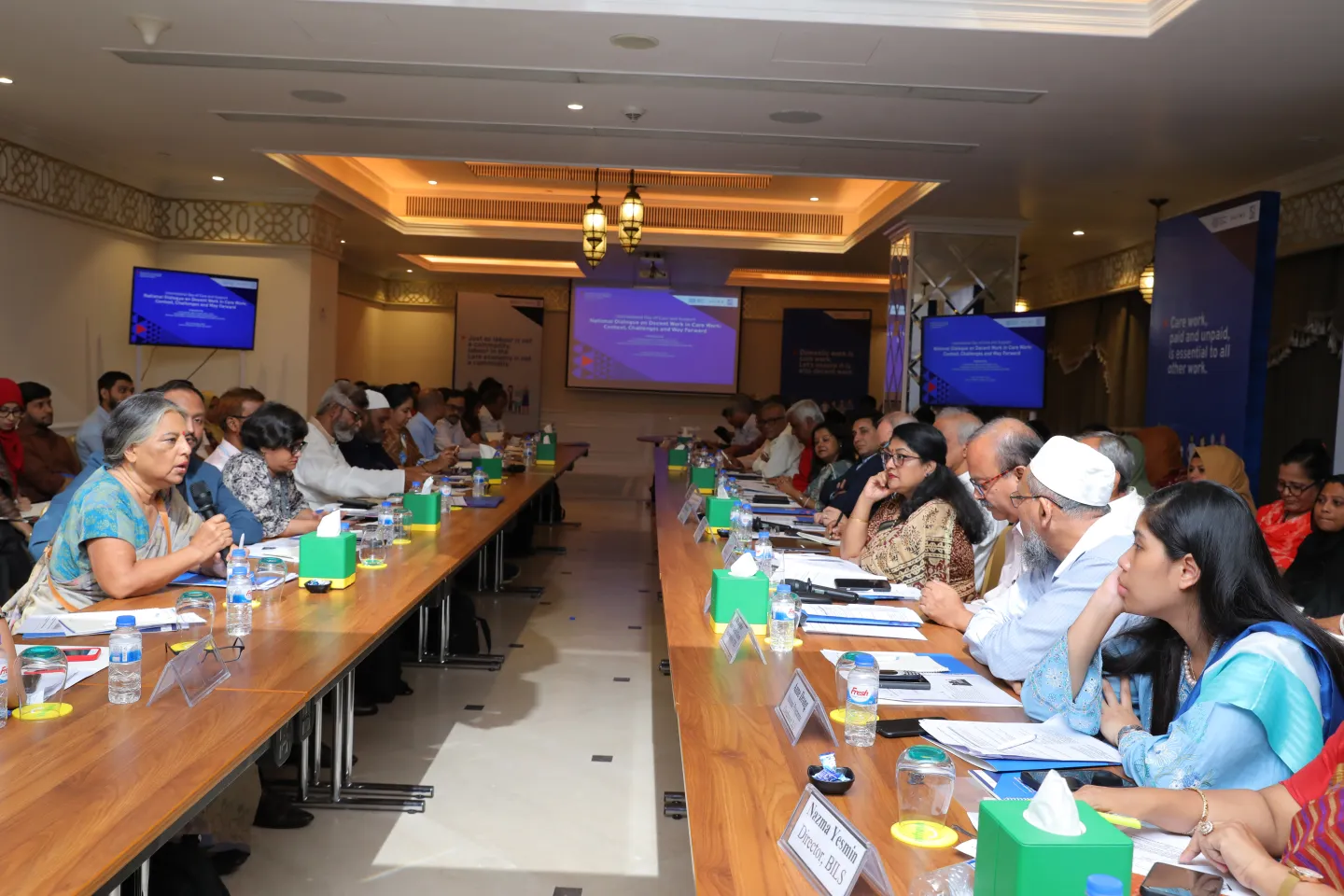
The recommendations from this meeting included standardizing the recruitment process for care workers, improving regular employment contracts and job security, enforcing fair working hours and overtime pay, promoting fair treatment and protection from arbitrary dismissal, ensuring wage protection and living wages, strengthening work-life balance policies, enhancing occupational safety and health (OSH) standards, ensuring a discrimination- and harassment-free workplace, increasing access to training and certification, enhancing access to social security and benefits, ensuring representation and trade union rights, and supporting policy and law reforms to ensure fair working conditions.
ILO Country Director Tuomo Poutiainen emphasized the need to first create qualified caregivers who can deliver quality services. While professional skills are crucial, so is the recognition and protection of the care workers in this regard. Only then can caregivers negotiate for their rights and wages. We must work to change public perceptions about this profession as a dignified one. And the trade unions have a supporting role to play in this.
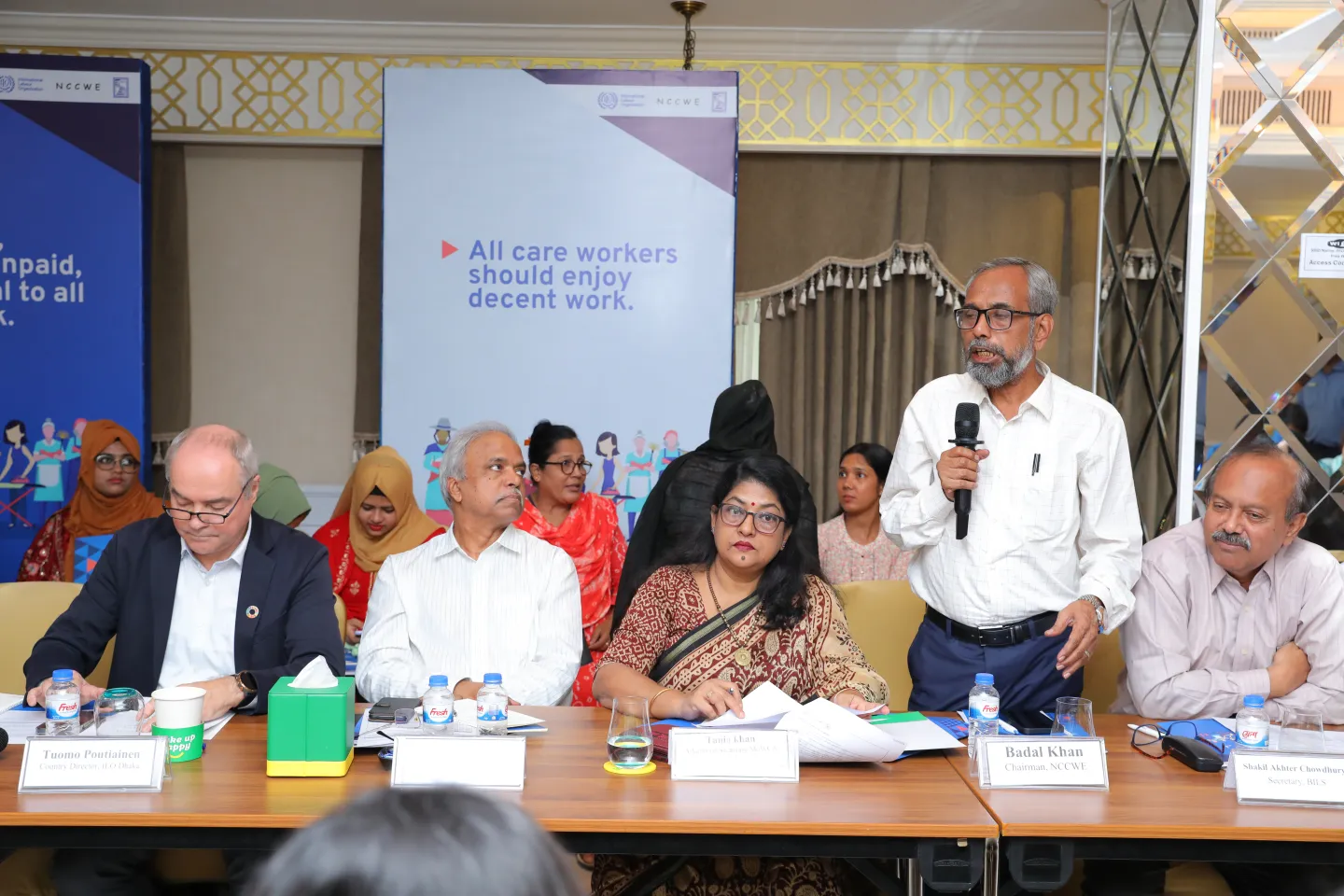
Tania Khan, Additional Secretary of the Ministry of Women and Children Affairs and Director General of the Shishu Academy, highlighted various positive steps taken by the Government of Bangladesh to create policies for care workers and to recognize them as formal workers.
This study was conducted by Associate Professor Mostafiz Ahmed of Jagannath University. Development partners’ representatives also shared their views. Syed Sultan Uddin Ahmed Executive Director, BILS and Chief of the Interim Government’s Labour Reform Commission, stated that BILS will pursue to recognize care workers as formal workers when amending the 2013 Labour Law.